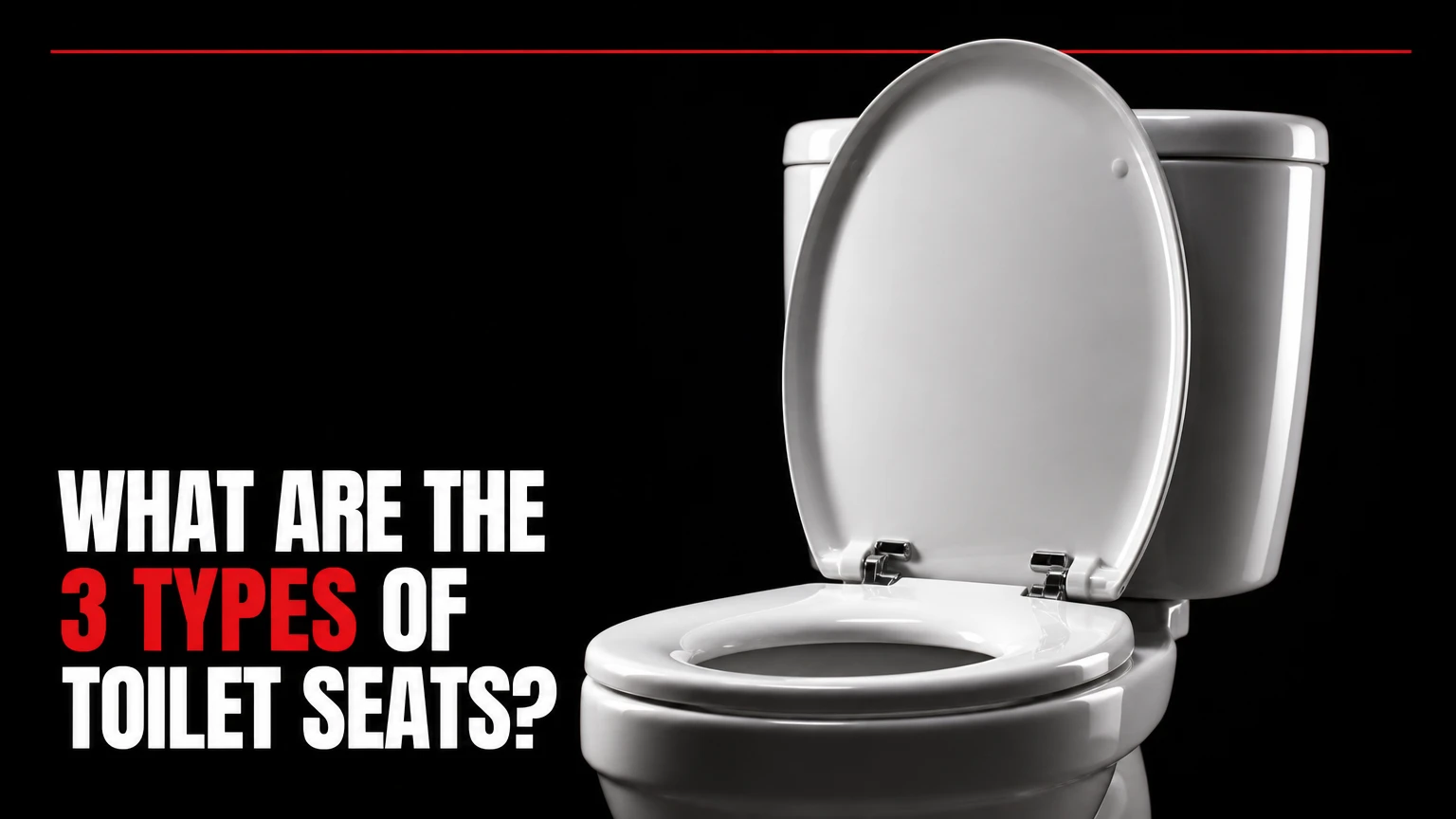
The three types of toilet seats are round, elongated, and D-shaped. Round seats fit compact 16.5-inch bowls. Elongated seats match standard 18.5-inch oval bowls. D-shaped models feature a straight back and fit modern European wall-hung toilets measuring 16.5 to 19 inches. Matching seat shape to bowl geometry prevents sliding and cracking.
At a Glance: Key Measurements and Facts
- US and Canadian toilet seat bolt holes measure exactly 5.5 inches apart on center.
- Round toilet bowls measure 16.5 inches from the mounting holes to the front rim.
- Elongated toilet bowls measure 18.5 inches from the mounting holes to the front rim.
- Skirted toilets require specialized top-fix mounting hardware with expanding rubber anchors.
- Polypropylene plastic toilet seats offer superior longevity and hygiene compared to enameled wood models.
How do you measure a toilet bowl to find the right replacement?
To find the right replacement, you must measure the bolt spread, the maximum width, and the total length of the porcelain bowl. Measuring the length dictates whether the fixture requires a round or an elongated model.
- Measure the bolt spread: Place a tape measure across the center of the two mounting holes at the back of the bowl.
- Measure the width: Find the widest physical point of the porcelain rim and measure across the bowl from outside edge to outside edge.
- Measure the length: Place the end of the tape measure exactly between the two bolt holes. Extend the tape straight forward to the outermost front edge of the porcelain lip.
Using these three numbers guarantees a precise fit. The American Society of Plumbing Engineers (2023) notes that “incorrect seat sizing causes up to 40 percent of premature hinge failures in residential bathrooms.” Getting these dimensions wrong leads to uncomfortable seating, loose hardware, and damaged hinges.
| Seat Category | Standard Length | Typical Width | Primary Application |
|---|---|---|---|
| Round | 16.5 inches | 14.0 – 14.5 inches | Compact residential bathrooms |
| Elongated | 18.5 inches | 14.0 – 14.5 inches | Modern adult bathrooms |
| D-Shaped / Square | 16.5 – 19.0 inches | 14.2 – 14.6 inches | European wall-hung toilets |
What is the standard bolt spread for US and UK toilets?
The standard bolt spread for US and Canadian toilets is exactly 5.5 inches. European and UK toilet bowls utilize a highly variable bolt spread ranging from 5.1 to 6.3 inches (130-160 mm).
Manufacturers in North America standardized this dimension decades ago. This uniformity means you can buy almost any domestic seat and trust the hinges will align perfectly with the porcelain holes. Homeowners only need to worry about length and width when shopping at local hardware stores.
European plumbing standards evolved differently. Manufacturers produce proprietary dimensions based on the specific aesthetic of the wall-hung fixture. British and European seats often include adjustable rotating hinge plates. These rotating discs allow the mounting posts to slide inward or outward to accommodate the variable 130-160 millimeter spread. You must check the exact measurement of a UK fixture before ordering a replacement.
What happens if you install an elongated seat on a round bowl?
Installing an elongated seat on a round bowl creates a two-inch overhang at the front and exposes the porcelain rim at the back. This mismatched configuration looks unsightly and structurally compromises the seating material.
Toilet seats require the solid porcelain rim underneath for physical support. When an elongated seat hangs past a round bowl, the front lip of the seat floats in the air. Sitting down forces the unsupported plastic to bend downward. This extreme flexing eventually snaps the hinge brackets at the back or cracks the seat ring completely in half.
The interior opening also misaligns. The extended front reduces the functional space inside the bowl. Adult users find the reduced opening highly uncomfortable, and the exposed rear porcelain catches unhygienic overspray. You must always match the seat length directly to the specific bowl shape.
How do skirted toilets require different seat mounting hardware?
Skirted toilets require top-fix hardware because the smooth porcelain sides block access to the underside of the mounting holes. Standard toilets feature an exposed trapway with open space beneath the bowl. Standard seats use bottom-fix bolts that pass through the porcelain and secure with a plastic nut twisted from underneath.
Modern skirted designs hide the plumbing trapway behind a seamless porcelain wall. This design makes the bathroom easier to clean. It also completely seals off the bottom of the hinge holes.
You cannot reach under a skirted bowl to thread a nut onto a bolt. Standard plastic bolts become entirely useless on these fixtures. Installers must use specialized blind-hole hardware that secures the hinges strictly from the top surface of the bowl.
What is a top-fix blind hole toilet seat installation?
A top-fix blind hole installation uses expanding rubber anchors pushed into the porcelain holes from above. Plumbers tighten a metal screw down into the anchor, causing the rubber sleeve to expand and lock tightly against the inside walls of the hole.
This mechanism operates exactly like a drywall anchor. The installer drops the rubber plug into the hole until the top flange rests flat on the porcelain. Placing the seat hinge over the hole, the installer drives the machine screw downward. The compression forces the rubber to bulge outward.
This outward pressure creates massive friction. Heavy enameled wood seats installed with top-fix anchors frequently loosen because the heavy wood generates severe shear torque. Most practitioners recommend pairing top-fix anchors exclusively with lighter polypropylene plastic seats to prevent sliding.
Why do Kohler French Curve toilets need proprietary seats?
Kohler French Curve toilets require proprietary seats because the porcelain tank curves seamlessly forward into the bowl area. Standard replacement seats feature flat rear hinges that collide with this curved tank face when opened.
Attempting to install a generic seat on a French Curve model results in a lid that cannot stand up independently. The lid hits the porcelain curve before leaning far enough back to pass its center of gravity. The heavy lid will immediately slam shut on the user.
Kohler designed specialized seats with deeply recessed hinges and a sculpted rear profile. These proprietary hinges shift the pivot point several inches forward. This forward pivot clears the tank curve and allows the seat to rest safely in the upright position. Owners of these legacy models must source exact factory replacements.
How do bidet attachments change toilet seat compatibility?
Bidet attachments reduce toilet seat compatibility by pushing the seating ring forward and requiring a perfectly flat porcelain rim. Electronic bidet seats house a water heater and mechanical pump in a thick rear casing. This bulky housing forces the actual seat opening significantly closer to the front lip of the bowl.
On compact round toilets, this forward shift drastically reduces the usable opening size. According to a 2022 survey by the National Kitchen & Bath Association, “bidet seat adoption has exposed the dimensional limitations of standard round toilet bowls, driving a rapid shift toward elongated fixtures.” Adult men frequently find bidet-equipped round toilets unusable.
Bidet plates also add a quarter-inch of thickness under the hinges. This elevation can cause the front bumpers of a standard seat to hover above the porcelain rim. Weight applied to a hovering seat causes rapid hinge failure. Specialized bidet seat thickness requires a minimum of 1.5 inches of clearance from the bolt holes to the tank face.
Which replacement seat material is better between plastic and enameled wood?
Polypropylene plastic is objectively better than enameled wood for longevity, hygiene, and modern features. Plastic seats resist harsh chemical cleaners, mold perfectly to ergonomic shapes, and support quick-release button mechanisms.
Wood seats feel significantly sturdier and stay warmer to the touch during cold winter months. Many homeowners prefer the heavy, solid feel of enameled compressed wood. The primary failure point of wood seats involves the painted enamel coating.
Once a wood seat chips from a dropped bottle or heavy use, the exposed compressed wood absorbs bathroom moisture. The wood swells, cracks the surrounding paint, and creates porous areas that harbor dangerous bacteria. A 2021 material durability study by the International Association of Plumbing and Mechanical Officials found that polypropylene plastic seats outlast enameled wood models by an average of four years in high-humidity environments.
| Feature | Polypropylene Plastic | Enameled Wood |
|---|---|---|
| Hinge Durability | Excellent (molded directly) | Moderate (screwed into wood) |
| Surface Hygiene | High (non-porous) | Medium (porous if chipped) |
| Weight Capacity | 250 – 300 pounds | 300 – 350 pounds |
| Thermal Feel | Cool to touch | Retains ambient room heat |
What is the typical weight limit for standard versus heavy-duty seats?
Standard toilet seats support a weight limit of 250 to 300 pounds. Heavy-duty bariatric toilet seats support between 500 and 1200 pounds by utilizing solid steel hinges and reinforced structural resin.
Commercial plumbing supply distributors report that standard residential hinges routinely deform when subjected to weights exceeding 300 pounds. The plastic posts stretch, and the seat begins to shift laterally.
Bariatric models from specialty brands feature a wider seating surface and oversized synthetic rubber bumpers. These massive bumpers distribute the user’s weight evenly across the entire porcelain rim. Heavy-duty seats also use stainless steel mounting bolts rather than standard nylon fasteners. This metal hardware prevents the shearing forces that destroy standard plastic hinges under heavy loads.
Why does a new toilet seat slide from side to side?
A new toilet seat slides from side to side because standard porcelain mounting holes are purposely manufactured 5/8-inch wide to allow for minor alignment adjustments. A standard 3/8-inch plastic bolt shifts freely inside this oversized hole.
Using generic plastic bolts without stabilizing components guarantees the seat will eventually loosen. Every time a person sits, lateral body weight pushes the bolt against the side of the porcelain hole. The plastic nut underneath slowly backs off the threads.
Upgrading to an engineered tightening system prevents this sliding. Products like the Bemis STA-TITE system feature specialized nuts that snap off at the exact correct torque limit. Adding conical rubber bushings inside the oversized holes also fills the empty gap. The rubber grips the bolt and eliminates all side-to-side movement.
How do you fix a creaking toilet seat on a sloped bowl?
You fix a creaking toilet seat on a sloped bowl by installing specialized rubber gap bumpers or shims underneath the floating sections of the seat ring. Mismatched slopes occur when a perfectly flat wrap-over seat meets a porcelain bowl that curves slightly downward at the back.
This gap leaves the rear section of the seat unsupported. Sitting on the fixture forces the rigid plastic or wood to flex downward to meet the porcelain. This extreme flexing causes the loud creaking noise. The constant bending will eventually snap the rear hinge pins completely off.
Plumbers fix this by measuring the gap while the seat rests empty. The installer glues thick rubber bumpers directly onto the bottom of the seat to fill the empty space. These added bumpers transfer the weight directly to the porcelain and stop the damaging flex.
How much does it cost to replace a toilet seat?
Replacing a toilet seat costs between $15 and $600 depending entirely on the material quality and integrated technology. Basic residential replacement seats require minimal investment, while electronic washlet systems represent a major appliance purchase.
Standard polypropylene seats with basic bottom-mount hardware cost $15 to $25 at retail hardware stores. Upgrading to a model with slow-close hinges and quick-release cleaning buttons pushes the price to the $35 to $60 range.
Specialty seats carry a significant premium. Heavy-duty enameled wood models run between $45 and $80. Electronic bidet seats with heated water and air dryers start at $250 and easily exceed $600 for premium Japanese models. A homeowner replacing a seat themselves pays zero labor costs, as the process takes fewer than 15 minutes.
| Seat Feature Level | Average Material Cost | Expected Lifespan | Typical Application |
|---|---|---|---|
| Basic Standard Mount | $15 – $25 | 3 – 5 years | Rental properties, half baths |
| Slow-Close / Quick-Release | $35 – $60 | 5 – 8 years | Primary residential bathrooms |
| Integrated Toddler Seat | $45 – $75 | 4 – 6 years | Family bathrooms |
| Electronic Bidet Seat | $250 – $600+ | 7 – 10 years | Luxury master suites |
Can you repair a broken slow-close toilet seat hinge?
You generally cannot repair a broken slow-close toilet seat hinge. Manufacturers build slow-close dampers as sealed, fluid-filled cylinders pressed permanently into the plastic hinge housing.
These dampers rely on thick silicone grease and tight internal tolerances to provide mechanical resistance. When a user forces a slow-close lid shut manually, the pressure blows out the internal seals. The silicone fluid leaks out, and the seat loses all resistance. The lid will then slam loudly against the bowl.
Because the cylinders are completely sealed at the factory, homeowners cannot refill them with fluid or replace the tiny internal gaskets. A failed slow-close damper requires you to purchase a completely new seat. Some high-end European brands sell replacement hinge cartridges, but standard domestic seats require total replacement.
How do you safely clean a soft-close toilet seat hinge?
You safely clean a soft-close toilet seat hinge by wiping it with mild soap and water rather than harsh chemical sprays. Soft-close hinges contain small internal plastic components and delicate rubber seals. Heavy bleach or corrosive bathroom cleaners strip the protective factory lubricants from the exposed hinge pins.
When users spray aggressive cleaners directly onto the hinge mechanisms, the liquid seeps into the joints. This chemical intrusion hardens the internal rubber friction dampers. The hinges begin to squeak loudly when opened.
Eventually, the hardened dampers crack, and the lid loses its soft-close capability. Practitioners recommend removing the seat completely using the quick-release buttons found on modern models. You can then wash the seat in a bathtub or sink using dish soap, keeping harsh toilet bowl chemicals far away from the mechanical hinge assemblies.
How do you identify an unknown toilet brand for a replacement seat?
You identify an unknown toilet brand by looking inside the porcelain water tank or examining the area directly behind the toilet seat hinges. Plumbers locate the manufacturer name, the model number, and the production date stamped directly into the wet clay before the toilet is fired in the kiln.
Lift the heavy porcelain tank lid and check the back inside wall above the water line. You will usually find a four-digit number stamped in black or imprinted in the ceramic. For example, a Kohler toilet might show the number 3402. Searching this specific model number online instantly reveals the correct bowl shape and required dimensions.
If the tank lacks a stamp, check the space between the seat hinges and the tank face. Many modern manufacturers place a discrete logo sticker or faint etching in this location.
The Bottom Line
The three main types of toilet seats are round, elongated, and D-shaped. Round seats fit 16.5-inch compact bowls, elongated seats match 18.5-inch standard oval bowls, and D-shaped models fit modern wall-hung European fixtures. Identifying your exact bowl length and determining whether you have a standard or skirted trapway ensures a perfect fit. Precision matters immensely, as mismatched sizes cause cracked hinges, sliding hardware, and severe user discomfort.