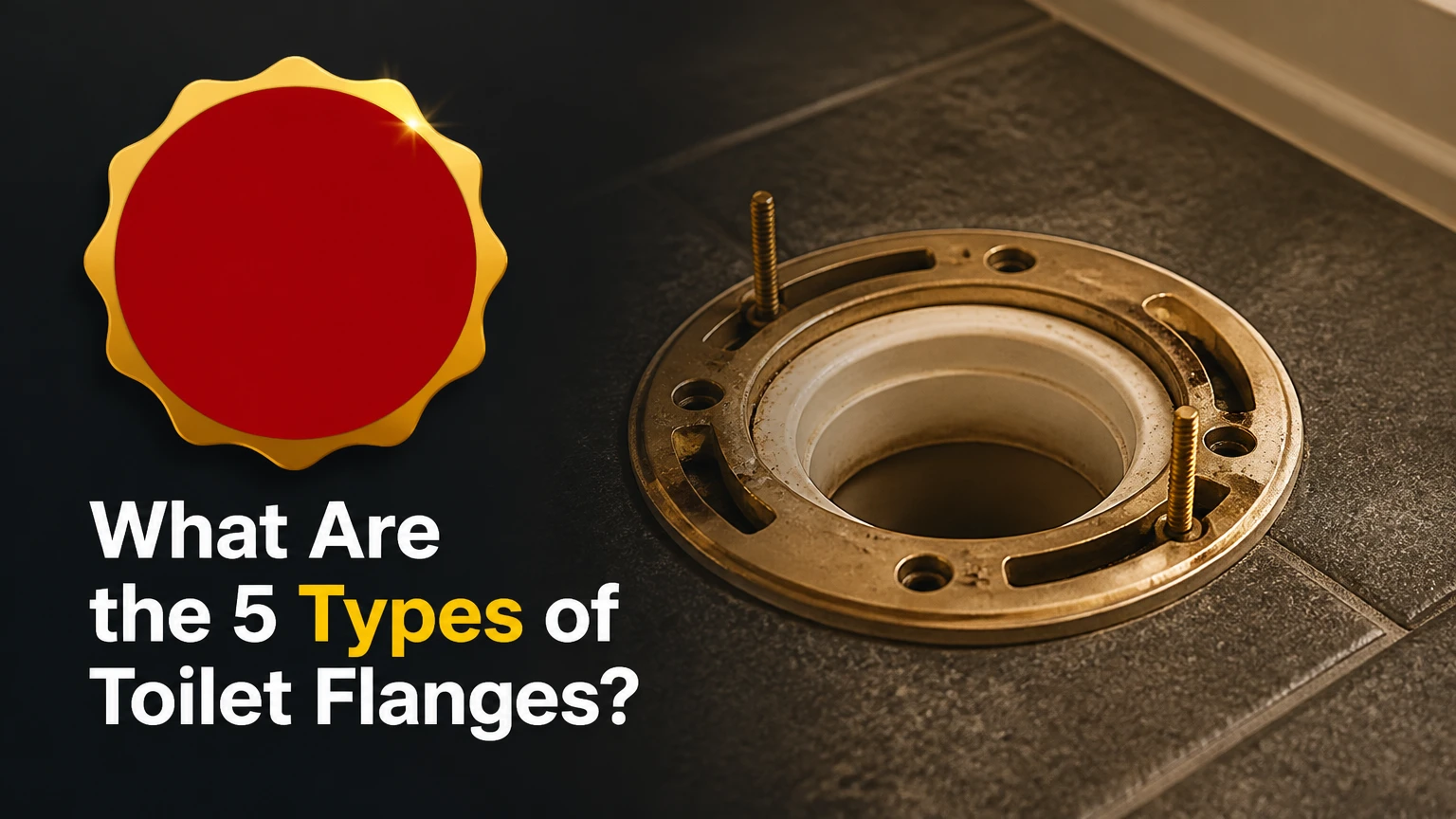
The 5 types of toilet flanges are PVC, ABS, cast iron, brass, and repair or offset models. These mechanical pipe fittings anchor a toilet to the floor and connect the porcelain drain securely to the underlying sewage system. Choosing the incorrect material causes severe structural rot and hazardous leaks.
At a Glance
- PVC flanges suit modern residential homes utilizing white Schedule 40 drain, waste, and vent piping.
- ABS flanges integrate with black plastic pipes common in mobile homes and West Coast construction.
- Cast iron flanges provide heavy-duty connections for pre-1970s plumbing utilizing lead joints or rubber compression gaskets.
- Brass flanges offer extreme durability for commercial applications and copper drainage systems.
- The bottom edge of any newly installed toilet flange must sit exactly on top of the finished floor.
What are standard toilet flange dimensions and specifications?
Standard toilet flanges feature an outer ring diameter of 7 inches and accommodate inner pipe diameters of either 3 inches or 4 inches. The anchoring slots on the outer ring are spaced 6 inches apart to align perfectly with the mounting holes on the base of a standard toilet bowl.
The physical dimensions determine how the fitting interacts with your existing drain, waste, and vent (DWV) system. A standard 3×4 combination flange fits outside a 3-inch pipe or slides directly inside a 4-inch pipe. Plumbers measure the pipe diameter from the inside edges to determine compatibility before purchasing parts. The outer ring always contains two distinct shapes: elongated slots for sliding closet bolts into place, and round holes for securing the ring into the wooden or concrete subfloor.
| Flange Specification | Measurement | Compatibility Notes |
| Outer Ring Diameter | 7 inches | Universal standard for modern residential toilets. |
| Inner Pipe Diameter | 3 or 4 inches | Matches standard PVC, ABS, and cast iron soil lines. |
| T-Bolt Slot Spacing | 6 inches | Aligns with standard toilet bowl base holes. |
| Ring Thickness | 1/4 inch to 1/2 inch | Brass rings are thinner; plastic rings require more bulk for strength. |
When should you use a PVC versus an ABS toilet flange?
You must use a PVC flange when connecting to white Schedule 40 PVC plumbing lines, and you must use an ABS flange when connecting to black ABS plumbing lines. The choice depends entirely on matching the existing pipe material in your home to ensure a chemically bonded, leak-proof joint.
PVC (polyvinyl chloride) and ABS (acrylonitrile butadiene styrene) require completely different chemical welding processes. PVC requires a purple primer to soften the plastic before applying clear solvent cement. ABS requires a specialized one-step black or clear cement without any primer. If you attempt to glue an ABS flange to a PVC pipe using standard cements, the joint will simply dry out and crack under structural shifting. To safely bridge a transition between these two plastics, the Uniform Plumbing Code (UPC) mandates the use of a specialized green transition cement (ASTM D3138) or a mechanical rubber shielded coupling.
How do cast iron flanges differ from modern plastic options?
Cast iron flanges differ from modern plastic models by utilizing extreme weight and friction to seal heavy-duty soil pipes rather than chemical solvent cements. A standard cast iron flange weighs between 3 and 5 pounds and connects to pre-1970s plumbing systems using either a poured lead joint or a mechanical compression gasket.
Older installations relied on a complex process of packing oiled oakum rope into the gap between the pipe and the flange, followed by pouring molten lead over the rope to create an impenetrable seal. Modern plumbers bypass this dangerous process entirely. Today, professionals use specialized push-in cast iron repair flanges equipped with ribbed rubber gaskets. The installer pushes the ribbed gasket deep into the cast iron pipe, and tightening a series of stainless steel screws expands the rubber to create a watertight mechanical seal against the rough interior pipe walls.
Why use a brass toilet flange for commercial plumbing?
Plumbers use brass toilet flanges for commercial plumbing because the rigid metal withstands decades of heavy commercial use without flexing, cracking, or breaking under the weight of shifting toilets. Installers solder (sweat) these metal fittings directly onto copper DWV pipes or caulk them onto cast iron lines.
Brass fittings offer superior structural integrity for high-traffic environments like stadiums, restaurants, and office buildings. The 1/4-inch thick brass ring does not suffer from the plastic fatigue that ruins PVC and ABS models over time. However, brass requires careful installation to avoid galvanic corrosion. If a brass fitting comes into direct contact with raw steel screws or iron subfloor anchors in a damp environment, the dissimilar metals will react, causing the fasteners to rust rapidly. Commercial installers prevent this by using specialized brass or coated stainless steel fasteners exclusively.
What is the exact purpose of repair and offset flanges?
Repair flanges provide a rigid replacement ring to fix broken bolt slots on an existing fitting, while offset flanges shift the center drain location by 1 to 1.5 inches to bypass floor joists or correct improper wall spacing. Both are specialty solutions designed to fix installation errors without tearing up the underlying subfloor.
A standard plastic outer ring frequently snaps when homeowners overtighten the T-bolts holding the toilet down. Instead of cutting the pipe to install an entirely new fitting, a plumber simply screws a stainless steel split-ring repair flange directly over the broken plastic. Offset flanges handle a different problem entirely. If a bathroom remodel involves thicker drywall or new cabinets, the existing drain might sit too close to the wall for a standard toilet to fit. An offset fitting angles the drain path slightly, providing the necessary clearance without requiring major joist modifications.
What is the correct height for a toilet flange?
The correct height for a toilet flange is exactly flush with or up to 1/4 inch above the finished floor surface. The outer ring must rest solidly on top of the tile, vinyl, or hardwood, rather than resting down on the raw wooden subfloor beneath the finished layer.
Installing the fitting at the correct height ensures the wax ring compresses evenly when the porcelain bowl is lowered into place. If the flange sits too high (more than 1/4 inch above the finished floor), the toilet will teeter on the pipe rather than resting its weight on the floor. Tightening the bolts in this scenario will crack the porcelain base. If the fitting sits below the finished floor, the wax ring cannot bridge the gap to the toilet base, resulting in raw sewage leaking directly into the subfloor structure.
| Flange Position | Height Measurement | Required Wax Ring Configuration |
| Optimal | 1/4 inch above finished floor | Standard single wax ring. |
| Flush | Exactly level with finished floor | Extra-thick (extra-deep) wax ring. |
| Mildly Low | Up to 1/4 inch below floor | Stacked wax rings (one sleeved, one plain). |
| Severely Low | More than 1/4 inch below floor | Flange extension ring kit required. |
How do you fix a toilet flange that sits below the finished floor?
You fix a low toilet flange by installing a mechanical extension ring directly over the existing fitting to raise the mounting surface flush with the finished floor. Screwing a rigid plastic or metal spacer down onto the old flange prevents sewage from escaping into the subfloor void.
Homeowners frequently create low flanges accidentally by installing thick ceramic tile or heated floor mats over an existing bathroom floor. If the new tile raises the floor level by half an inch, the old plumbing fitting is left stranded down in a hole. Plumbers fix this using a tiered extension kit. The installer applies a thick layer of 100 percent silicone sealant between the old flange and the new extension ring, presses the extension into place, and drives extra-long stainless steel screws through both rings and directly into the subfloor framing to lock the entire assembly together.
Can you stack two wax rings on a low toilet flange?
Yes, you can stack two wax rings on a low toilet flange, provided you place a standard sleeved wax ring on the bottom and a plain, sleeveless wax ring directly on top. You must never stack two rings that both feature plastic internal sleeves.
Stacking rings offers a quick solution when a flange sits marginally below the floor line (up to 1/4 inch). The plastic sleeve on the bottom ring acts as a funnel, directing waste safely past the structural ring and down into the pipe. The top ring provides the extra bulk needed to reach the porcelain toilet base. If an amateur plumber mistakenly stacks two sleeved rings, the hard plastic funnel from the top ring will crush down into the bottom funnel, severely restricting the pipe diameter and causing chronic blockages every time the toilet is flushed.
How do you replace a broken toilet flange ring?
You replace a broken toilet flange ring by securing a heavy-duty stainless steel split-ring directly over the damaged plastic tabs, screwing it firmly into the surrounding subfloor. This method bypasses the need to cut the PVC or ABS pipe and install a completely new fitting.
When the side slots crack, the T-bolts pull upward, causing the toilet to rock violently. The repair process is straightforward:
- Turn off the water supply and remove the toilet bowl.
- Scrape all old wax and debris off the broken plastic fitting.
- Slide the two halves of a stainless steel repair ring (such as the Superior Tool Super Ring) under the lip of the broken plastic tabs.
- Align the new bolt slots parallel to the wall behind the toilet.
- Drive heavy gauge wood screws through the repair ring holes directly into the structural subfloor.
- Insert new T-bolts and mount the toilet over a fresh wax seal.
Are offset toilet flanges legal and safe to use?
Offset toilet flanges are legal under some local codes but are strictly prohibited by the Uniform Plumbing Code (UPC) for use on 3-inch drain lines due to severe clogging hazards. They are generally considered a last-resort fix rather than a standard, safe plumbing practice.
The internal geometry of an offset fitting creates a harsh slope to achieve the required 1.5-inch directional shift. Solid waste and toilet paper hit this angled internal ledge, drastically slowing down the flow velocity before the waste enters the vertical pipe. On a standard 3-inch line, this bottleneck routinely causes backups. Plumbers only deploy offset models when structural floor joists make moving the vertical pipe impossible. If you are forced to use an offset fitting, you must use a 4×3 model that attaches to a larger 4-inch drain pipe to mitigate the restricted flow path.
How much does a toilet flange replacement cost?
A professional toilet flange replacement costs between $150 and $350 for labor and standard parts. For homeowners completing the work themselves, a DIY replacement costs between $10 and $50 for the physical flange, a new wax ring, and replacement closet bolts.
The final price depends entirely on the condition of the subfloor and the type of pipe material involved. Replacing a cracked PVC ring on a solid wood subfloor takes a plumber less than an hour. However, if a leaking wax ring has rotted the wooden subfloor beneath the toilet, the plumber must cut out the damaged wood and rebuild the structural support before installing the new plumbing fixture. Repairing cast iron pipes in older homes also drives up labor costs due to the specialized cutting tools and heavy rubber compression fittings required.
| Repair Scenario | Average Parts Cost | Average Labor Cost | Total Estimated Cost |
| DIY Split-Ring Repair | $15 – $25 | $0 | $15 – $25 |
| Professional PVC Flange Swap | $20 – $40 | $130 – $200 | $150 – $240 |
| Professional Cast Iron Replacement | $40 – $70 | $200 – $300 | $240 – $370 |
| Flange Replacement + Subfloor Repair | $50 – $100 | $350 – $600 | $400 – $700 |
Does a rocking toilet indicate a broken flange or a floor issue?
A rocking toilet can indicate either a broken flange ring pulling away from the floor or an uneven finished floor surface preventing the porcelain base from seating flat. You must remove the toilet to visually inspect the hardware to determine the true cause.
If the installer set the fitting too high (more than 1/4 inch above the tile), the porcelain bowl rests entirely on the plastic pipe rather than the structural floor. The toilet acts like a seesaw on a fulcrum. Tightening the nuts on the closet bolts to stop the rocking will instantly shatter the porcelain base. If the flange is perfectly flush but the floor is uneven, the solution is to slide hard plastic toilet shims under the low side of the porcelain base until the unit sits dead level, and then seal the gap with a high-quality bathroom caulk.
Can you seal a toilet flange with silicone instead of a wax ring?
No, you cannot use silicone caulking to seal the connection between a toilet base and a plumbing flange. Silicone degrades rapidly when exposed to continuous moisture and corrosive sewer gases, and it lacks the structural volume needed to bridge the gap.
Traditional wax rings work because they possess a pliable “memory.” When the heavy toilet bowl squashes the wax, the material permanently molds perfectly into the microscopic gaps between the porcelain horn and the plastic pipe, blocking all sewer gas and water. Silicone simply cures into a thin rubber layer that tears the moment the toilet shifts. If you want an alternative to messy wax, plumbers recommend modern polyurethane foam rubber gaskets (like the Fluidmaster Better Than Wax seal). These engineered rubber rings compress to form a tight seal and bounce back if the toilet shifts slightly over time.
How long does a toilet flange actually last?
A toilet flange lasts between 30 and 50 years under normal household conditions. The exact lifespan depends on the base material, the stability of the subfloor, and how frequently the toilet bowl requires plunging or augering.
Data from plumbing supply manufacturers indicates that cast iron and brass fittings easily survive 50 years without structural failure, provided they do not face extreme chemical corrosion. PVC and ABS plastic models generally last 30 to 40 years before the plasticizers break down, causing the bolt slots to become brittle. The most common cause of premature failure is a loose toilet bowl. If the mounting nuts back off slightly, the shifting weight of the user exerts massive localized pressure on the plastic tabs, snapping a brand new fitting in a matter of months.
How do you identify your drain pipe size without cutting it?
You identify your drain pipe size by measuring the inside diameter of the open hole leading down into the floor. If the opening measures roughly 3 inches across, you have a 3-inch pipe. If it measures roughly 4 inches across, you have a 4-inch pipe.
Homeowners often confuse pipe sizing because they measure the outer diameter of the existing broken flange rather than the pipe itself. The standard outer ring is always 7 inches wide regardless of the pipe size below it. To get an accurate reading, take a tape measure and place it inside the dark hole in the floor. A helpful visual reference used by DIYers: a 4-inch pipe opening is roughly the exact width of a standard compact disc, while a 3-inch pipe opening is closer to the width of a standard baseball.
The Bottom Line
The five types of toilet flanges serve specific roles based on your existing pipe material and the physical condition of your subfloor. You must match PVC fittings to white pipes, ABS fittings to black pipes, and utilize heavy-duty cast iron or brass for commercial and vintage repairs. Always ensure your new hardware sits completely flush with the top of the finished floor to guarantee a proper wax seal. Selecting the correct replacement part prevents catastrophic sewage leaks and extends the life of your bathroom flooring by decades.