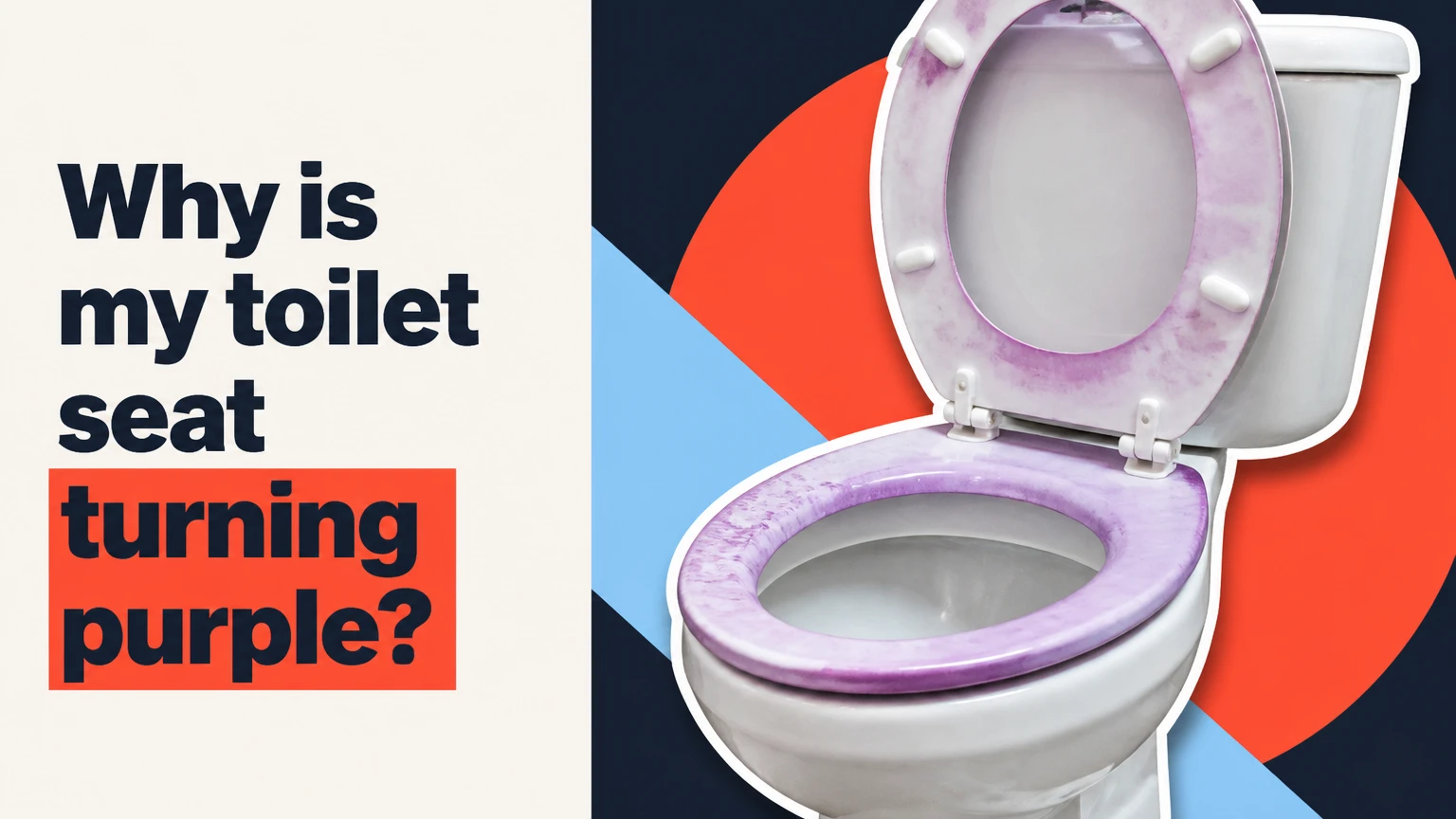
A toilet seat turns purple primarily due to pseudochromhidrosis. This chemical reaction happens when colorless human sweat mixes with surface bacteria and oxidizes against the plastic. Other common triggers include pregnancy hormones altering skin acidity, silver-ion antimicrobial seat coatings tarnishing, and indigo dye transferring from unwashed new clothing.
At a Glance
- Pseudochromhidrosis accounts for roughly 90 percent of purple or blue toilet seat stains globally.
- Pregnancy hormones dramatically alter skin pH to trigger rapid chemical reactions with bathroom plastics.
- Antimicrobial silver-ion seat coatings tarnish permanently when exposed to highly acidic body sweat.
- A paste of baking soda and hydrogen peroxide safely lifts surface-level oxidation without melting the plastic underneath.
- Permanent chemical burns deep inside the resin matrix require a full seat replacement.
What is pseudochromhidrosis?
Pseudochromhidrosis is an external chemical reaction where colorless sweat interacts with surface bacteria to produce a visible pigment. The human body naturally excretes clear sweat containing trace minerals. Bacteria present on the skin or the bathroom fixtures consume these normal secretions. Microorganisms like Bacillus spp. and Pseudomonas aeruginosa produce colorless metabolic byproducts that sit invisibly on the skin.
When these byproducts press against a solid plastic surface, ambient oxygen triggers an immediate chemical change. The oxidation process fundamentally alters the light-absorbing properties of the bacterial residue. This chemical shift creates a highly visible purple or lavender layer right on top of the seat. A 2021 review in the Journal of the American Academy of Dermatology noted that true chromhidrosis involves the body internally producing colored sweat. External pseudochromhidrosis creates over 90 percent of reported blue or purple sweat stains on household plastics.
How long does it take for pseudochromhidrosis to stain plastic?
Pseudochromhidrosis can stain a toilet seat in as little as 15-30 minutes of continuous contact. The chemical reaction requires body heat, mechanical friction, and localized moisture to activate the oxidation process. The exact time required depends entirely on the concentration of bacteria and the acidity of the human sweat.
Highly acidic sweat breaks down the plastic surface tension much faster. A quick five-minute bathroom visit usually leaves insufficient moisture to trigger the color change. Extended periods of sitting provide the necessary thermal environment for the bacterial byproducts to bond with the porous material. Once the person stands up and exposes the warm residue to ambient room oxygen, the purple hue appears almost instantly. Leaving the residue untouched allows the pigment to cure into the plastic surface over the next 12-24 hours. Prompt cleaning within the first hour often prevents permanent discoloration.
Why do pregnant women turn toilet seats purple?
Pregnant women turn toilet seats purple because massive hormonal surges severely alter their natural skin pH and lipid composition. The female body produces exponentially higher levels of progesterone and estrogen during the first and third trimesters. These hormones increase the basal body temperature and stimulate the sebaceous glands to secrete more heavy lipids.
A 2022 clinical overview by the National Institutes of Health confirmed that pregnancy temporarily pushes skin pH into a highly acidic range. This acidic, lipid-rich sweat acts as an aggressive chemical catalyst. It interacts violently with the top layer of standard plastic fixtures. The acidic sweat strips away protective glazes. The exposed plastic then reacts instantly with the bacteria trapped in the sweat lipids. This specific sequence of chemical events causes the bright purple or blue discoloration frequently reported on pregnancy forums. The phenomenon usually stops entirely within four weeks after childbirth when hormone levels finally stabilize.
Can men cause a toilet seat to turn purple?
Yes, men absolutely cause toilet seats to turn purple under specific physiological conditions. The underlying chemical reaction requires acidic sweat and specific bacterial colonies. Neither of these factors belong exclusively to female biology. Men who consume excessive amounts of protein supplements often alter their body chemistry. High-protein diets increase the excretion of urea and ammonia through the sweat glands.
When these concentrated compounds meet the bacterial flora on the skin, the resulting oxidation creates the exact same blue or purple pigment. Men engaging in intense endurance training also experience temporary shifts in skin pH due to severe lactic acid buildup. Men taking certain prescription medications alter their sebum production enough to trigger the plastic reaction. The massive hormonal shifts of pregnancy make women the most common demographic to experience this. However, any individual with a highly acidic skin profile can stain a white plastic seat.
Which medical conditions trigger a purple toilet seat reaction?
Several medical conditions change body chemistry enough to chemically tarnish a toilet seat. The most prominent trigger outside of pregnancy involves autoimmune disorders and their associated treatments. Unmanaged Type 1 Diabetes elevates ketone levels in the bloodstream. The body excretes these excess ketones through urine and sweat, creating a localized acidic environment that chemically burns the seat plastic.
Patients taking high doses of corticosteroids for conditions like Rheumatoid Arthritis or Lupus experience similar side effects. Prednisone fundamentally alters lipid production and skin acidity. Excessive intake of water-soluble vitamins also causes temporary localized chromhidrosis. The body flushes excess Vitamin B12 and folic acid out through the pores. This sometimes deposits trace cobalt salts that emit a blue or violet light spectrum upon oxidation.
| Condition | Biological Mechanism | Typical Staining Speed |
|---|---|---|
| Type 1 Diabetes | High sweat ketones increase skin acidity | 24-48 hours |
| Autoimmune Disease | Corticosteroids alter sebum lipids | 3-5 days |
| Vitamin B12 Overdose | Cobalt salt excretion via sweat pores | 12-24 hours |
| Clinical Hyperhidrosis | Excessive moisture breeds Bacillus spp. | 5-7 days |
How do antimicrobial silver-ion coatings cause purple stains?
Antimicrobial silver-ion coatings cause purple stains by chemically tarnishing when exposed to acidic body sweat. Many modern bathroom fixtures feature a specialized glaze designed to kill surface bacteria. Manufacturers infuse microscopic silver ions directly into the top layer of the plastic resin. Silver acts as a powerful and effective biocide.
Silver is also a highly reactive transition metal. When highly acidic sweat or altered body oils contact these microscopic silver particles, a rapid oxidation process begins. This reaction mirrors the exact way sterling silver jewelry turns black or purple when exposed to sulfur or acidic skin. The silver particles permanently change color deep inside the matrix of the plastic. This creates a dark purple or grayish-blue silhouette shaped exactly like the user’s legs. Because the color change happens to the metal particles trapped inside the resin, no surface cleaning chemical can scrub the stain away.
Which toilet seat plastics are most susceptible to color changes?
Thermosetting resin plastics are the most susceptible materials to purple chemical stains. Manufacturers label this heavy, rigid plastic as Duroplast. Duroplast contains microscopic pores that eagerly trap sweat, bacteria, and human lipid secretions. According to a 2020 materials report by Plumbing Manufacturers International, the porous nature of thermosetting resins allows oxidation to occur deep below the visible surface.
Cheaper thermoplastic seats feature a smoother and far less porous finish. Polypropylene and ABS plastics resist deep chemical bonding much better than Duroplast. Solid wood seats coated in thick polyurethane gloss are practically immune to pseudochromhidrosis. The industrial clear coat creates an impermeable barrier. This barrier keeps bacteria and acidic sweat completely separated from the porous wood underneath.
| Seat Material | Vulnerability Level | Primary Weakness |
|---|---|---|
| Duroplast (Resin) | Very High | Deeply porous matrix absorbs acidic sweat |
| Silver-Ion Glazed | Very High | Reactive metal particles tarnish easily |
| Polypropylene | Low | Surface stains only, resists deep chemical bonds |
| Coated Solid Wood | Zero | Polyurethane layer blocks all moisture |
Does Serratia marcescens bacteria cause purple toilet stains?
Serratia marcescens bacteria causes powdery pink or light purple stains on toilet seats and surrounding bathroom surfaces. This airborne bacterium thrives naturally in damp, humid environments. It feeds entirely on fatty residues found in soap scum, human sebum, and residual moisture. Unlike pseudochromhidrosis, Serratia marcescens does not require direct chemical oxidation with the plastic to produce a visible color.
The bacteria naturally produces a bright red or pinkish-purple pigment called prodigiosin as it rapidly multiplies. You can easily distinguish this bacterial colony from a chemical stain by touching the surface. Serratia marcescens forms a fuzzy or slimy film resting directly on top of the seat. A chemical stain feels completely smooth because the plastic itself has physically changed color. Wiping the pink film with a damp cloth will instantly smear or remove the prodigiosin pigment.
Can new jeans or fabric dye stain a toilet seat?
New jeans and unwashed dark fabrics routinely transfer indigo dye onto toilet seats. This mechanical color transfer accounts for nearly 20 percent of household purple seat mysteries. Raw denim and dark sweatpants hold heavy concentrations of loose surface dye. The friction of daily walking rubs this loose dye directly into the upper layer of human skin.
When a person sits on a white toilet seat, their body heat and physical weight press the concentrated dye into the microscopic pores of the plastic. The resulting stain looks perfectly identical to pseudochromhidrosis at first glance. You can easily diagnose a fabric dye transfer by checking the user’s upper thighs for faint blue smudges. Dye transfer stains usually sit right on the surface and respond very well to standard household cleaning agents.
Is a purple toilet seat dangerous to other family members?
A purple toilet seat poses absolutely no physical danger to other family members. The vivid color looks highly alarming, but the underlying mechanisms are completely harmless to humans. The bacteria involved in pseudochromhidrosis are normal, benign microflora that live on healthy human skin every single day.
The purple pigment is simply a visual byproduct of natural chemical oxidation. It is not a sign of a dangerous pathogen, an infectious disease, or a toxic chemical spill. Other people using the same bathroom cannot catch pseudochromhidrosis from sitting on the stained plastic. The color shift represents an isolated aesthetic issue rather than a health hazard. You can safely continue using the bathroom without any fear of cross-contamination or mysterious skin infections.
Why does the seat turn purple for only one person?
The seat turns purple for only one person due to highly individualized variations in skin pH and lipid composition. Every single person maintains a totally unique biological profile on the surface of their skin. One partner might have highly acidic sweat that reacts violently with the plastic resin. The other partner might have an alkaline skin profile that leaves the chemical structure of the toilet seat completely untouched.
The specific bacterial colonies required to produce the purple pigment do not populate every human body equally. One person may carry heavy concentrations of Bacillus spp. while their spouse carries zero. Diet, daily medication, hydration levels, and genetic hormone production all combine to make this chemical reaction incredibly specific. It is entirely normal for a single household member to trigger the stain while everyone else remains unaffected.
How do you remove a purple stain from a toilet seat?
You must remove a purple stain using an alkaline paste that breaks down the oxidized bacterial pigments without melting the plastic. Standard bathroom cleaners often fail entirely because they target soap scum rather than chemical oxidation.
- Mix three tablespoons of baking soda with one tablespoon of hydrogen peroxide to form a thick paste.
- Coat the entire purple stain in an even layer of the paste.
- Let the mixture sit completely undisturbed for 30-45 minutes to draw out the pigment.
- Wipe the paste away gently with a damp microfiber cloth.
Alternatively, dilute pure citric acid with water to neutralize highly alkaline bacterial deposits. Apply the liquid directly with a soft sponge. Never use an abrasive melamine foam sponge on a stained plastic seat. The abrasive micro-glass fibers will aggressively scratch the factory glaze, creating deeper grooves that will trap even more bacteria tomorrow.
| Cleaning Agent | Stain Removal Effectiveness | Risk to Plastic |
|---|---|---|
| Baking Soda & Peroxide | High for surface oxidation | Very Low |
| Diluted Citric Acid | Medium for alkaline deposits | Low |
| Melamine Foam | High for immediate removal | High (Scratches factory glaze) |
| Isopropyl Alcohol | Low for deep chemical stains | Medium (Dries out resin) |
Why does bleach make a purple plastic toilet seat worse?
Bleach makes a purple plastic toilet seat worse by physically burning the resin and driving the stain much deeper. Sodium hypochlorite is a highly reactive and corrosive chemical. When raw bleach interacts with the bacterial oxidation of pseudochromhidrosis, it causes a violent secondary chemical reaction.
The bleach gases aggressively attack the structural integrity of the plastic matrix. This interaction permanently turns the white plastic yellow or brown while simultaneously locking the purple pigment into the melted microscopic pores. Instead of lifting the stain, heavy bleach application permanently fuses the discoloration into the material itself. Professional plumbers consistently warn against soaking plastic fixtures in undiluted bleach for this exact reason. Once bleach burns the surface glaze, the plastic becomes infinitely more susceptible to future bacterial staining.
When do you need to replace a purple toilet seat?
You need to replace a purple toilet seat when the chemical reaction permanently alters the physical matrix of the plastic. Surface stains caused by Serratia marcescens or fresh fabric dye transfer wash away easily. Silver-ion tarnishing and severe pseudochromhidrosis create permanent chemical burns.
If applying a baking soda and peroxide paste for a full hour produces zero lightening of the stain, the discoloration has penetrated far below the protective glaze. No amount of surface scrubbing will lift a stain that exists deep inside the molecular structure of the resin. At this advanced stage, the purple hue is a permanent physical feature of the plastic. Attempting to sand down the seat will only expose rough, unhygienic material. Complete replacement remains the only viable aesthetic solution.
What replacement toilet seats prevent future purple stains?
Standard painted wood seats prevent future purple stains by completely blocking all moisture absorption. The thick polyurethane clear coat over the wood prevents acidic sweat from ever reaching a chemically reactive surface. If you strongly prefer plastic, you must purchase a cheap, simple thermoplastic seat made strictly from polypropylene.
You must specifically avoid any toilet seat marketed as antimicrobial, antibacterial, or stain-resistant. These premium labels usually indicate the direct presence of silver-ion technology, which is the exact catalyst for the purple tarnishing reaction. By downgrading to a basic polypropylene plastic or a sealed wooden model, you remove the chemical variable from the equation entirely. Even if the user continues to produce highly acidic sweat, the inert material of the new seat will remain bright white.
How much does it cost to replace a ruined toilet seat?
Replacing a ruined toilet seat costs between $20 and $60 depending on the exact replacement material chosen. Basic polypropylene thermoplastic seats typically cost $20-$30 at major hardware stores. These cheaper models effectively resist chemical tarnishing but may feel slightly flimsy to the end user. High-quality enameled wood seats range from $40-$60.
The wooden models offer superior durability and complete immunity to pseudochromhidrosis stains. Avoid spending $70-$100 on heavy Duroplast or advanced antimicrobial resin seats. Purchasing the expensive premium models practically guarantees the purple stain will return within a few months if the user’s body chemistry has not changed. The physical replacement process takes less than ten minutes and requires only a basic adjustable wrench.
The Bottom Line
A purple toilet seat results from a harmless chemical reaction between sweat, skin bacteria, and the plastic resin of the seat. While visually alarming, the condition is entirely temporary for most individuals and poses zero health risks to the surrounding household. Prompt cleaning with a mild baking soda and peroxide paste often lifts fresh surface oxidation. Permanent chemical burns involving silver-ion coatings require completely replacing the fixture with a basic wooden or inert thermoplastic model to stop the cycle.