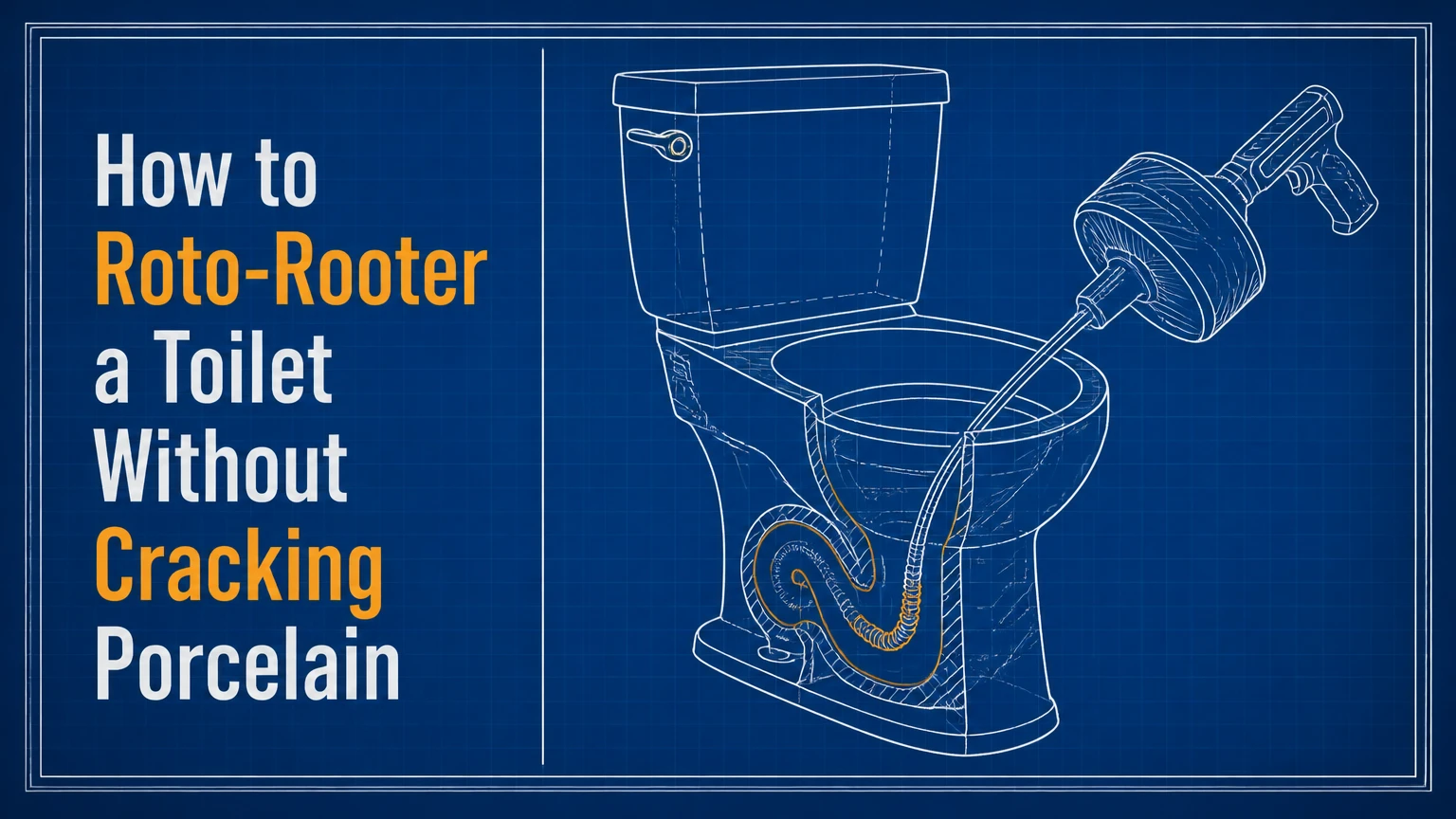
To roto-rooter a toilet, use a porcelain-safe toilet auger, also called a closet auger, to push and rotate a protected cable through the toilet trapway. The typical job takes 5-15 minutes: stop the water, position the curved sleeve, crank through the obstruction, withdraw the cable, and test the drain gradually.
Key Facts at a Glance
A toilet auger normally reaches 3-6 feet and is designed to protect glazed porcelain.
A standard bare-metal sink snake can scratch the bowl and damage the trapway.
Do not use a toilet auger after pouring chemical drain cleaner into the bowl.
Stop flushing when the water rises, then close the toilet’s water-supply valve.
A shower or bathtub that backs up when the toilet flushes usually indicates a deeper drain or sewer-line blockage.
A successful auger job should restore a strong flush without slow drainage, gurgling, or rising water.
What Does Roto-Rootering a Toilet Mean?
Roto-rootering a toilet means mechanically clearing a blockage with a rotating cable, although homeowners usually need a manual closet auger rather than a commercial Roto-Rooter machine. The brand name Roto-Rooter originated with a plumbing company founded in 1935; “roto-rooter” is now commonly used as a generic verb for mechanical drain cleaning.
A toilet auger has three functional parts: a crank or handle, a flexible steel cable, and a curved protective tube. The tube follows the toilet’s internal bend while keeping the cable from rubbing directly against the ceramic surface.
The tool may pierce paper and organic waste, hook cloth or wipes, or push soft debris beyond the trap. It cannot reliably dissolve hard toys, metal objects, mineral scale, or a broken toilet component. Those blockages require retrieval, toilet removal, or professional inspection.
How does the cable clear the blockage?
The cable advances while rotating clockwise, allowing the tip to bore into or catch the obstruction. A plumber may pull the material back, or the cable may break a soft obstruction into smaller pieces that can pass into the branch drain.
The toilet trap is the key limitation. A closet auger is intended for the toilet and nearby branch line, while a long drain machine is intended for an exposed drain opening or sewer cleanout. Sending a large motorized cable through a toilet can damage the fixture, the drain connection, or the operator’s hands if the cable binds.
What You Need Before You Start
A typical homeowner needs a 3- or 6-foot manual toilet auger, heavy rubber gloves, eye protection, old towels, a bucket, a cup, and a trash bag. Shutoff access and the absence of chemical drain cleaner are prerequisites.
| Item | Typical specification | Purpose |
|---|---|---|
| Toilet auger | 3-6 ft cable, protected elbow | Clears the bowl trapway |
| Rubber gloves | 10-15 mil nitrile or neoprene | Protects hands from contaminated water |
| Eye protection | Sealed or wraparound glasses | Limits splash exposure |
| Bucket and cup | 1-5 gallon bucket, 8-16 oz cup | Controls bowl level and catches debris |
| Towels or plastic sheet | 2-4 old towels or 1 sheet | Protects flooring |
| Trash bag | 13-33 gallon heavy-duty bag | Contains retrieved waste or objects |
Safety checks
- Stop flushing. Repeated flushing is the fastest way to turn a partial clog into an overflow.
- Close the supply valve. Turn the valve clockwise until it stops. The valve is usually on the wall below the tank.
- Check the bowl level. If water is near the rim, remove enough to leave approximately 2-3 inches in the bowl.
- Ask about chemical cleaner. If drain opener was added, do not auger the toilet. Chemical residue can splash onto skin or eyes.
- Protect the floor. Place towels around the base, especially where the bowl may spill during cable withdrawal.
A toilet auger is usually inexpensive. Typical retail pricing is $15-$55 for a manual model, while a professional service call commonly ranges from $150-$450 depending on location, access, urgency, and whether the toilet must be removed.
How to Roto-Rooter a Toilet Safely
Follow the sequence below for a toilet clog that is confined to one fixture and does not cause other drains to back up. The most important success factor is controlled rotation with light pressure, not force.
Step 1: Position the toilet auger
Pull the auger handle fully upward so the cable tip remains inside the protective sleeve. Place the curved plastic or rubber-coated elbow firmly against the opening at the bottom of the toilet bowl.
The sleeve should sit flat and stable. If the elbow shifts while you crank, stop and reposition it rather than allowing the exposed cable to contact the porcelain.
You’ll know it is positioned correctly when the auger rests securely against the bowl outlet and the cable begins below the waterline without scraping the ceramic.
Common mistake: Starting with the cable tip extended outside the sleeve. That exposes the bowl to metal contact before the blockage is reached.
Step 2: Feed and rotate the cable
Hold the auger body steady with one hand. With the other hand, push the handle downward slowly while turning the crank clockwise.
Use short, controlled movements. When the cable meets resistance, maintain gentle forward pressure and rotate several turns. If the cable stops abruptly, turn counterclockwise briefly to release tension, then resume clockwise rotation.
A typical closet auger cable is 1/2 inch in diameter and reaches 3 feet; telescoping models extend to about 6 feet. The cable should bend through the trapway, but violent cranking can kink it or transfer excessive force to the toilet.
You’ll know the cable is advancing when the handle moves downward gradually or the resistance changes from a hard stop to a softer, uneven drag.
Common mistake: Leaning body weight onto the handle. A rigid obstruction may be a toy or other foreign object, and forcing the cable can wedge it more tightly.
Step 3: Work the obstruction and withdraw it
When the handle reaches its lower travel limit, rotate the cable several more times, then begin pulling the handle upward while continuing to rotate. Keep the tip inside the sleeve as it leaves the trapway.
Inspect the cable tip as it emerges. A wad of paper or wipes may come back attached. Place retrieved material directly into a trash bag rather than returning it to the bowl.
If you suspect a child dropped a toy or another solid object into the toilet, favor retrieval over aggressive pushing. Pushing a rigid object into the branch drain can create a second blockage that is harder to reach.
You’ll know the obstruction has been recovered when the cable returns with debris or the bowl begins draining at normal speed after the tool is withdrawn.
Common mistake: Pulling straight upward without rotation. A corkscrew tip can remain engaged with fabric, wipes, or hair-like material.
Step 4: Reset the bowl and repeat once
Examine the bowl water before testing. If the level falls slowly but does not clear, repeat the augering cycle once, changing the cable angle slightly while keeping the sleeve against the bowl.
Do not perform unlimited repetitions. Two unsuccessful cycles suggest that the obstruction may be beyond the auger’s reach, unusually hard, or caused by a fixture or drain defect.
You’ll know the second attempt is worthwhile when the bowl level changes between attempts or the cable encounters a different resistance pattern.
Common mistake: Continuing to crank after the cable has become immovable. Reverse rotation gently and withdraw the tool; do not yank it.
Step 5: Test the toilet without risking an overflow
First pour approximately 1 gallon of water into the bowl from a low height. Watch whether the level rises, then drains quickly. If the test succeeds, open the supply valve and allow the tank to refill.
Flush once while watching the bowl. A normal result includes a rapid water movement, no rising level near the rim, and refill without continuous bubbling or gurgling.
A bucket test is safer than an immediate full flush because it does not add the entire tank volume at once. If the bowl rises, close the supply valve again and stop testing.
You’ll know the line is probably clear when the bucket drains rapidly and one flush produces a strong siphoning action without slow recovery.
Common mistake: Testing with several consecutive flushes. A partial obstruction may pass one flush but fail when additional paper accumulates.
Which Toilet Snake Is Safest?
A manual toilet auger is the safest first-choice snake for a clogged toilet because its curved sleeve protects porcelain and its limited reach reduces the chance of damaging a deeper drain. A motorized machine becomes appropriate only when the obstruction is beyond the fixture and the operator can access a cleanout or an opened drain connection.
| Equipment | Reach and cable | Typical cost | Appropriate use |
|---|---|---|---|
| Flange plunger | 12-18 in. cup, no cable | $8-$25 | Soft bowl or trap clogs |
| Manual toilet auger | 3-6 ft, about 1/2 in. cable | $15-$55 | Most toilet-trap blockages |
| Cordless trap snake | Approximately 25 ft, often 1/4-3/8 in. cable | $75-$250 purchase | Repeated fixture work by trained users |
| Rental drain machine | 50-100 ft, often 5/8-3/4 in. cable | $40-$60 per day | Open cleanouts and deeper branch lines |
| Professional drain service | 50-100+ ft commercial cable | $150-$450 service call | Main lines, roots, foreign objects, recurring failures |
A standard sink snake is not automatically dangerous because it is “a snake,” but its exposed metal cable and straight housing are poorly suited to a toilet. The cable can leave gray metal transfer marks, scratch the glaze, catch in the trapway, or fail to follow the fixture’s engineered bend.
A power drill attached to a small auger also requires caution. High torque can spin the cable faster than the obstruction allows, increasing the risk of cable kinking, tip detachment, or damage at the toilet flange.
When is a motorized rooter appropriate?
A motorized rooter is appropriate when the clog lies in a branch drain or sewer lateral that a manual closet auger cannot reach, provided the machine is used from a cleanout or after removing the toilet. Commercial machines commonly use 5/8- or 3/4-inch inner-core cable and may reach 50-100 feet.
A motorized machine is not a better first step for an ordinary bowl clog. The extra reach and torque create more ways to damage plumbing, and a machine cannot tell the operator whether the cable is cutting roots, breaking a pipe, or pushing a child’s toy deeper into the system.
Manual Auger, Plunger, Chemicals, or Plumber?
A flange plunger is the lowest-risk first attempt for a soft, recent clog, while a toilet auger is the better tool after plunging fails or when a solid obstruction may be involved. Chemical drain cleaners are a poor choice for toilet clogs because they often remain trapped in the bowl and create splash hazards without removing the object.
| Method | Typical time | Typical cost | Best result and main limitation |
|---|---|---|---|
| Flange plunger | 5-10 minutes | $8-$25 | Moves soft waste; cannot retrieve toys |
| Toilet auger | 5-15 minutes | $15-$55 | Clears or retrieves trap clogs; limited to 3-6 ft |
| Hot water and detergent | 10-20 minutes | $2-$8 | Softens some paper; cannot clear hard objects |
| Chemical drain opener | 15-60 minutes | $8-$20 | Unreliable in toilets; creates chemical exposure |
| Licensed plumber | 30-120 minutes onsite | $150-$450 typical | Handles deep, recurring, or structural blockages |
Hot water should be warm, not boiling. Very hot water can stress or crack porcelain, especially in a cold bathroom. Dish detergent may lubricate a soft paper clog, but it is not a substitute for mechanical clearing.
The U.S. Environmental Protection Agency advises consumers not to flush wipes, including products marketed as flushable, because wastewater systems and household plumbing may not move them reliably. Wet wipes commonly entangle on cable tips or lodge at fittings.
What If the Auger Does Not Clear the Toilet?
An auger that fails after one or two careful attempts usually indicates a deep blockage, a hard foreign object, a damaged toilet, or a larger drainage problem. Continuing to force the cable can worsen the obstruction and may damage the fixture.
The cable will not pass the first bend
Retract the cable slightly, press the curved sleeve more firmly against the bowl outlet, and change the tool angle by a few degrees. Resume clockwise cranking with light downward pressure.
The first bend is often a positioning problem rather than a severe blockage. If the handle stops against a rigid object immediately, stop forcing and consider whether a toy, deodorizer block, or cleaning attachment entered the trap.
The cable is stuck
Stop pushing and rotate counterclockwise slowly while applying gentle upward traction. Reverse rotation should release a corkscrew from an obstruction; it should not become the main operating direction because repeated reverse cranking can loosen or deform some cable tips.
If the cable remains stuck, do not yank the handle or use pliers to increase leverage. A plumber may need to remove the toilet and recover the cable from the underside.
The handle is fully depressed but drainage remains poor
A fully extended 3- or 6-foot auger with no improvement points toward a blockage beyond the toilet trap. Look for a nearby cleanout, but do not open a capped cleanout casually if wastewater may be under pressure.
The next professional step may involve a longer cable, high-pressure water jetting, or a sewer camera. A camera is valuable when roots, collapsed pipe, offset joints, or repeated paper blockages are suspected.
When Is the Problem in the Main Sewer Line?
A main-line blockage is more likely when multiple fixtures drain slowly, the shower or bathtub backs up during a toilet flush, or several toilets gurgle at once. A single clogged toilet with normal nearby fixtures is more likely to have a local trapway obstruction.
| Symptom | Likely location | Safe next action |
|---|---|---|
| One toilet full of water | Toilet trap or branch outlet | Use flange plunger, then closet auger |
| Toilet and sink drain slowly | Shared branch drain | Stop water use and inspect cleanout |
| Shower rises when toilet flushes | Main drain or sewer lateral | Stop snaking the toilet and call a plumber |
| Several fixtures gurgle | Vent or main drain system | Arrange drain diagnosis |
| Repeated clog after augering | Structural or usage issue | Request camera inspection or plumber evaluation |
Do not keep flushing to “test” a suspected main-line obstruction. Every flush adds wastewater to a system that may already be backing up through the lowest fixture, often the bathtub or shower.
Roots require a separate distinction. A root-cutting cable may open a sewer line temporarily, but root intrusion returns unless the defective pipe is repaired or replaced. Professional drain cleaning restores flow; it does not correct a cracked joint or collapsed lateral.
Why Does the Toilet Keep Clogging?
Recurring toilet clogs usually result from excessive paper, wipes or foreign objects, inadequate flush performance, a partial branch blockage, or a sewer defect. A toilet that clogs weekly should be diagnosed rather than repeatedly augered.
Check the following causes:
- Flush performance: Low water in the tank, a restricted rim jet, or a failing flapper can produce a weak siphon.
- Toilet design: Some older low-flow toilets have narrower passages than newer high-performance models.
- Paper and wipes: Large paper loads and all wipes increase the chance of snagging.
- Vent blockage: A blocked vent can cause gurgling and poor drainage, although it does not explain every recurring clog.
- Drain geometry: A sagging, offset, or improperly sloped branch line can collect solids.
- Sewer intrusion: Roots, scale, or a damaged lateral can cause repeated blockages farther from the fixture.
A useful practitioner rule is to compare the toilet with another fixture on the same branch. If the toilet alone fails, investigate the fixture and trap. If the shower, sink, or second toilet changes at the same time, investigate the shared drain.
What Should You Do in Specific Situations?
Different blockage types require different handling. A soft paper clog, a dropped object, and a main-line backup should not receive the same tool or force.
If the toilet is overflowing
Close the supply valve immediately and lift the tank lid if the valve continues to run. Press the rubber flapper closed or raise the float temporarily, then remove bowl water until 2-3 inches remain.
Do not plunge or auger a bowl filled to the rim. Contaminated water can splash onto the floor, and tool movement becomes less controlled.
If a child dropped a toy into the toilet
Do not flush and do not push aggressively with an auger. A visible object may be reachable with gloved hands or tongs, but do not reach blindly into a trap that may contain sharp edges.
If the object is lodged, toilet removal may be safer than pushing it into the branch drain. Reinstalling the toilet generally requires a new wax ring or approved replacement seal.
If the toilet is slow but not blocked
Start with a controlled bucket test and inspect the tank water level. A weak flush may come from a fill-valve setting or mineral deposits rather than a drain clog.
If the bowl rises during the test, treat the condition as a blockage. If the bowl drains quickly but the flush is weak, inspect the fixture before using a snake.
If sewage backs up into the bathtub
Stop using all water in the home and contact a licensed plumber or drain-service provider. Bathtub backup is a strong sign that the shared drain or sewer lateral is restricted downstream of the toilet.
A toilet auger cannot resolve a blockage several feet into the main line. Professional access through a cleanout usually avoids unnecessary toilet removal.
How Much Time and Money Should You Expect?
A manual toilet-auger attempt typically takes 5-15 minutes and costs $15-$55 for the tool. Professional service commonly costs $150-$450 for a standard residential visit, while deeper line cleaning, emergency hours, difficult access, camera inspection, or repairs can increase the total.
| Scenario | Typical duration | Typical expense | Decision point |
|---|---|---|---|
| Plunge a soft clog | 5-10 min | $8-$25 | Use before augering |
| Auger one toilet | 5-15 min | $15-$55 tool | Best homeowner method |
| Rent a power machine | 1-3 hr including setup | $40-$60/day | Use only with open access |
| Standard plumber visit | 30-60 min onsite | $150-$450 | Best for failed DIY clearing |
| Sewer camera and cleaning | 1-3 hr | Often $300-$900 | Useful for recurring blockages |
Prices vary substantially by region, emergency timing, access, and whether the quote includes disposal, toilet removal, a new seal, or camera diagnosis. Ask whether the service price covers clearing only or also includes repairs if the cable encounters roots or a damaged pipe.
Common Mistakes and How to Fix Them
Using a bare-metal sink snake
Problem: The exposed cable scratches the bowl or catches in the trapway.
Fix: Stop and switch to a closet auger with a protective elbow.
Forcing the crank
Problem: Excessive torque kinks the cable, wedges a foreign object, or stresses the toilet.
Fix: Reverse briefly, reduce forward pressure, and stop if the obstruction feels rigid.
Using chemical cleaner first
Problem: Residual cleaner can splash during plunging or augering and burn skin or eyes.
Fix: Do not mechanically work the toilet after chemical treatment. Tell the plumber exactly what product and quantity entered the bowl.
Repeatedly flushing a partial clog
Problem: Additional tank water can overflow the bowl and spread contaminated water.
Fix: Use a low-volume bucket test after the water level stabilizes.
Pushing a solid object deeper
Problem: The object may lodge in the branch line where a toilet auger cannot retrieve it.
Fix: Prioritize recovery; call a plumber if the object is not reachable.
Ignoring a successful but temporary clearing
Problem: Root intrusion, scale, or a damaged line remains untreated.
Fix: Arrange a camera inspection when the same toilet clogs repeatedly within days or weeks.
The Bottom Line
To roto-rooter a toilet safely, use a 3- or 6-foot closet auger, keep its protective sleeve against the porcelain, rotate clockwise with light pressure, withdraw the cable while rotating, and test with about 1 gallon of water before flushing. Stop when the cable binds, a foreign object is suspected, or other fixtures back up. A manual toilet auger is the correct first tool for most isolated toilet clogs, while a professional drain machine belongs at an accessible cleanout or an opened drain line.
Frequently Asked Questions
Can I use a regular plumbing snake on a toilet?
A regular sink snake may reach a toilet clog, but its exposed metal cable can scratch porcelain and its straight housing may not follow the trapway. Use a closet auger for an isolated toilet blockage. Use a longer drain machine only from a cleanout or after removing the toilet when the blockage is beyond the fixture.
Is a toilet auger better than a plunger?
A toilet auger is better for a solid obstruction, a clog that resists plunging, or material lodged in the trapway. A flange plunger is faster and cheaper for a soft paper clog. Start with the plunger when the bowl level is safe, then use the auger if controlled plunging does not restore normal drainage.
Can I use boiling water to unclog a toilet?
Boiling water is not recommended because sudden heat can stress or crack porcelain and damage some toilet seals. Warm water with a small amount of dish detergent may soften a minor paper clog, but mechanical clearing is more reliable when water drains slowly or the obstruction is solid.
How far can a toilet auger reach?
Most manual toilet augers reach 3 feet, while telescoping models reach approximately 6 feet. That distance covers many toilet traps and short outlets but not most main-line blockages. If the cable reaches its limit without improving drainage, stop forcing it and investigate cleanout access or professional service.
Why does my toilet gurgle when the shower runs?
A gurgling toilet while the shower runs often indicates restricted flow or trapped air in a shared branch drain, although a vent problem can produce similar sounds. If water also rises in the shower or bathtub, stop using fixtures and arrange a main-drain inspection instead of repeatedly augering the toilet.
Do I need a new wax ring after snaking a toilet?
You normally do not need a new wax ring when a closet auger clears the toilet from above. You do need a new wax ring or approved replacement seal whenever the toilet is lifted from the floor, because the existing seal may not reseat reliably and can leak at the base.