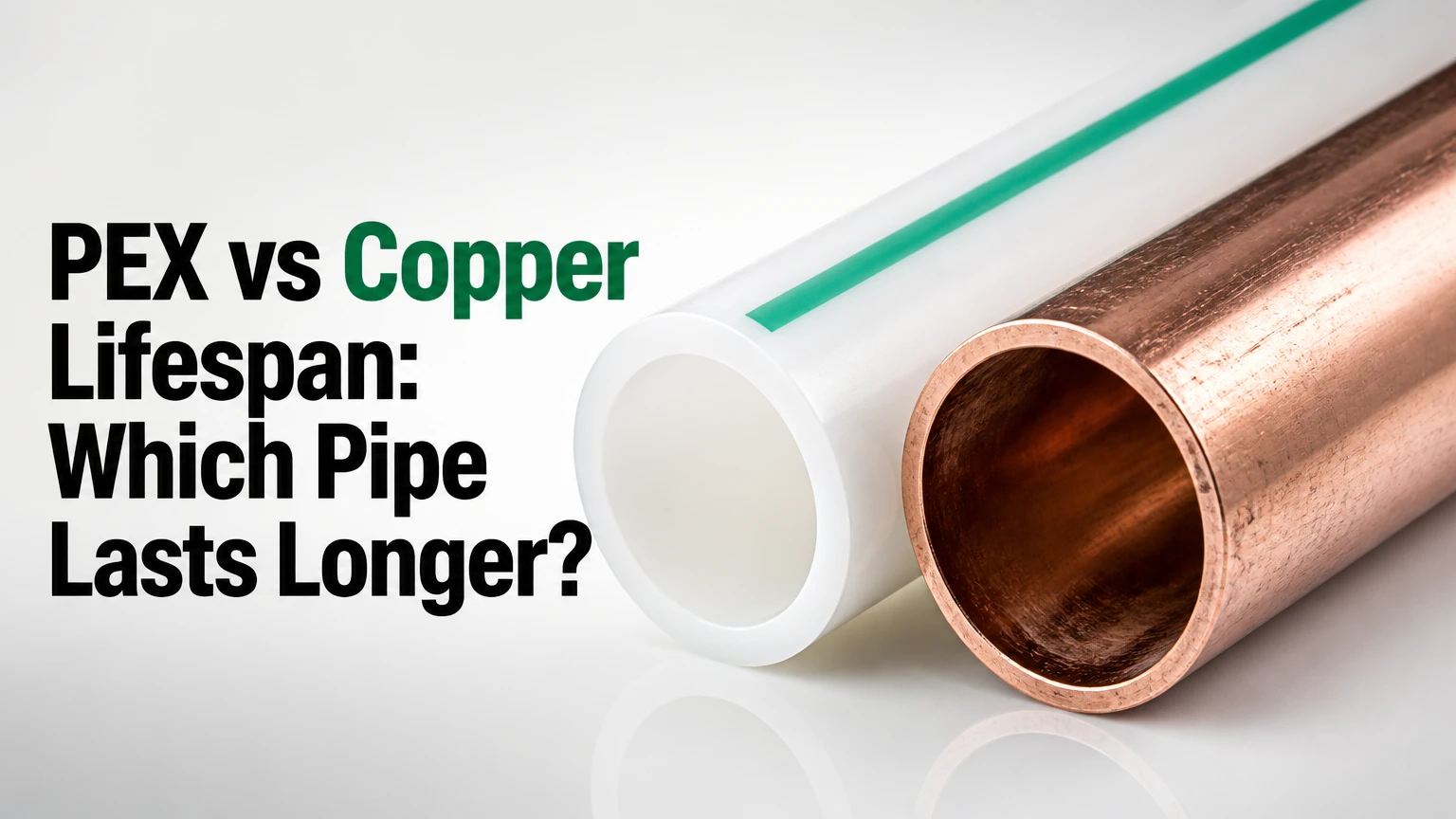
PEX pipe lasts 30 to 50 years, while copper pipe lasts 50 to 70 years under ideal operating conditions. Although copper provides superior longevity and structural rigidity in standard municipal water environments, PEX offers exceptional flexibility, resistance to acidic water, and lower overall installation costs. Selecting the right material requires evaluating your specific water chemistry, local climate, and installation budget.
At a Glance: PEX vs Copper Comparison
- Copper offers a traditional lifespan of 50 to 70 years when paired with neutral pH water between 7.0 and 7.8.
- PEX delivers a reliable lifespan of 30 to 50 years when fully protected from UV radiation and extreme chlorine.
- Acidic water with a pH below 6.5 destroys copper via pinhole leaks in under 10 years while leaving PEX unaffected.
- Ultraviolet light degrades PEX plastic molecular structures, causing complete structural failure within 30 to 180 days of direct exposure.
- Copper costs significantly more than PEX due to high raw material pricing and the intensive labor required for torch soldering.
How long does PEX last vs copper?
PEX pipe lasts between 30 and 50 years, whereas copper pipe lasts between 50 and 70 years when installed in optimal conditions. Copper serves as the traditional gold standard for durability in residential plumbing systems due to its rigid metallic composition. PEX, known chemically as cross-linked polyethylene, provides modern flexibility and resilience against freezing temperatures, though its polymer matrix degrades faster than metal when subjected to continuous environmental stressors.
Longevity depends heavily on external factors rather than the material alone. For example, a home supplied with aggressive well water will see copper fail prematurely, while that same water chemistry allows PEX to reach its maximum design life. Plumbers evaluate local water reports before choosing between the two materials to prevent catastrophic early failures.
What are the primary failure modes of copper plumbing?
Copper plumbing fails primarily through pinhole leaks, pitting corrosion, and joint failure caused by chemical reactions or physical wear. Over decades of service, aggressive water chemistry gradually strips away the protective interior oxide layer inside the pipe. Once this layer erodes, minerals in the water eat away at the copper wall until a microscopic hole develops, leading to hidden water damage behind drywall or beneath floors.
Joint failure also occurs when flux or solder was improperly applied during the initial installation decades prior. Furthermore, high water velocity exceeding five feet per second scours the interior walls of the pipe, thinning the copper elbows and tees until structural integrity is compromised. Homeowners typically detect these failures only after water stains appear on ceilings or water bills spike unexpectedly.
What causes PEX pipes to fail prematurely?
PEX pipes fail prematurely due to ultraviolet light degradation, oxidative breakdown from high chlorine levels, and physical damage from rodents or sharp construction debris. Because PEX is a plastic polymer, exposure to direct sunlight breaks the carbon bonds holding the material together, making the pipe brittle within months. Additionally, continuous contact with high levels of chlorine disinfectants in municipal water supplies causes micro-cracking along the interior wall of the pipe.
Incorrect installation practices also shorten PEX longevity. Stretching the pipe too tightly around corners or using outdated brass insert fittings that suffer from dezincification can compromise the system. Installers must follow manufacturer guidelines regarding bend radii and support spacing to ensure the piping network reaches its 50-year design potential.
How does water chemistry affect copper and PEX lifespans?
Water chemistry dictates whether copper or PEX achieves maximum longevity, with acidic parameters destroying copper and high oxidizer levels harming PEX. Water with a low pH or high mineral content reacts aggressively with metal surfaces, while balanced municipal water preserves metal integrity for generations. Conversely, chemical disinfectants like chlorine dioxide and free chlorine attack cross-linked polyethylene molecules over time, particularly in hot water applications.
Plumbers test local water supplies for pH balance, total dissolved solids, and sanitizer concentrations prior to selecting pipe materials. Homes utilizing private wells often require specialized filtration systems to neutralize aggressive water chemistry before it enters either copper or PEX distribution lines.
Why does acidic water destroy copper pipes so fast?
Acidic water with a pH below 6.5 destroys copper pipes rapidly by dissolving the interior metal walls, resulting in pinhole leaks in under 10 years. Low pH water acts as a mild solvent, stripping away the natural protective patina that forms inside copper tubing. As the metal ions leach into the water supply, the pipe walls become progressively thinner until pressure causes a rupture.
Homeowners experiencing green-blue stains in sinks or a metallic taste in their drinking water often suffer from acidic water corrosion. Installing a calcite neutralizer tank or a chemical feed pump raises the pH of the water to a neutral range, halting the destructive dissolution of the copper plumbing network.
How does UV light impact PEX plumbing?
Ultraviolet light destroys PEX plumbing by breaking down the molecular bonds of the polymer, causing the pipe to become brittle and fail within 30 to 180 days. Sunlight passing through windows or illuminating an outdoor installation initiates rapid photo-oxidation. This process turns flexible PEX rigid and crumbly, ultimately leading to catastrophic bursting under standard household water pressure.
Building codes strictly prohibit storing PEX outdoors in direct sunlight or leaving stub-outs exposed during construction phases without protective sleeves. Plumbers use opaque conduit or UV-resistant covers whenever PEX must run through areas exposed to natural light.
Does PEX leach harmful chemicals into drinking water?
New PEX pipe leaches trace amounts of volatile organic compounds, including methyl tert-butyl ether and tert-butyl alcohol, during the initial weeks of installation. This chemical migration typically manifests as a slight plastic taste or odor in the tap water. Extensive testing by public health organizations shows that these trace levels decrease rapidly and fall well below safe drinking water standards after a few weeks of regular household water usage.
Homeowners bothered by initial taste issues can flush their plumbing lines thoroughly by opening all faucets for several minutes. Certified PEX products bear NSF or ANSI approval marks, verifying that they pass rigorous extraction testing for safe potable water distribution.
Can you connect PEX directly to a water heater?
Building codes prohibit connecting PEX directly to a standard water heater, requiring a minimum of 18 inches of copper or flexible metallic piping before transitioning to plastic. Water heaters frequently experience temperature spikes or thermostat malfunctions that generate excessive heat. Direct contact with this elevated temperature melts or deforms PEX pipe near the connection port, leading to catastrophic joint separation and flooding.
Plumbers install metal nipples or flexible stainless steel braided connectors directly to the water heater tank outlets. This thermal break dissipates excess heat safely before the water enters the PEX distribution manifold.
Is PEX truly vulnerable to rodents?
Mice and rats easily chew through PEX piping because the soft polymer material offers little resistance to sharp rodent incisors, whereas copper is completely impenetrable to pests. Rodents are often attracted to PEX pipes carrying warm water because the tubing provides both a localized heat source and an obstacle in their travel paths. Once a mouse breaches the pipe, massive water damage occurs within minutes.
Homeowners with active rodent infestations in crawlspaces or attics must seal entry points thoroughly before installing plastic plumbing. In high-risk pest areas, professionals often recommend running metal piping through vulnerable zones or encasing PEX lines in protective metallic conduit.
Why is copper plumbing significantly more expensive than PEX?
Copper plumbing costs substantially more than PEX due to high global commodity pricing for raw copper and the intensive labor required for professional installation. Soldering copper joints demands skilled craftsmanship, precise torch handling, flux application, and strict safety precautions. Each connection takes several minutes to prep, heat, and seal correctly.
PEX systems utilize mechanical expansion or crimping tools that reduce installation labor time by up to seventy percent. The lightweight coils of plastic pipe eliminate the need for dozens of rigid elbows and couplings, further reducing material costs for residential construction projects.
How do internal fitting restrictions impact water pressure in PEX vs copper?
PEX insert fittings reduce the internal diameter of the piping connection point, slightly restricting water flow compared to copper sweat fittings that maintain a uniform interior bore. While traditional copper fittings allow unrestricted water movement through identical pipe diameters, PEX expansion fittings or crimp rings narrow the flow path at every junction.
Engineers account for these flow restrictions during system design by sizing PEX manifolds and trunk lines appropriately. In practice, modern homes experience virtually identical fixture water pressure whether plumbed with copper or PEX, provided the layout avoids excessive sharp bends.
Will home insurance deny claims for PEX plumbing failures?
Home insurance companies rarely deny claims for standard PEX plumbing failures unless the installation violated local municipal building codes or manufacturer instructions. Insurers scrutinize claims involving older plastic pipe generations, such as polybutylene from the 1980s, but modern cross-linked polyethylene enjoys widespread industry acceptance.
Homeowners completing DIY plumbing upgrades must pull proper permits and pass municipal inspections. Unpermitted plumbing work or improper crimp tool calibration can provide insurance adjusters grounds to deny water damage payouts following a fitting separation.
Do copper or PEX pipes accumulate more biofilm and bacteria?
Copper possesses natural antimicrobial properties that actively inhibit bacterial growth, whereas PEX plastic surfaces can accumulate microbial biofilms more readily under stagnant water conditions. Metal ions released from copper inhibit the proliferation of pathogens like Legionella inside the pipe network. Plastic polymers lack this oligodynamic effect, meaning stagnant water in rarely used guest bathrooms can foster bacterial colonization inside PEX runs.
Flushing rarely used fixtures regularly and maintaining proper hot water recirculation temperatures prevents biofilm accumulation in PEX systems. Municipal water treatment facilities also maintain residual disinfectant levels that suppress bacterial growth across all pipe types.
How do you repair a damaged PEX pipe compared to a copper pipe?
Repairing a damaged PEX pipe requires cutting out the compromised section with plastic shears and securing a replacement segment using mechanical crimp rings or expansion sleeves. This repair takes minutes and requires minimal clearance around the pipe. Repairing a copper pipe requires shutting off the main water supply, completely draining the line, cleaning the wet metal, and using a propane torch to sweat in a new coupling and pipe section.
Plumbers appreciate PEX repair speed during emergency service calls, especially in tight wall cavities where open flames pose fire hazards. Copper repairs demand experienced soldering skills and fire-resistant shielding cloths to protect surrounding framing.
What building codes restrict the use of PEX pipe?
Specific municipal building codes restrict PEX pipe installations in return-air plenums, high-temperature solar thermal loops, or areas with severe chemical soil contamination. Certain jurisdictions require metal piping within commercial buildings or multi-family dwellings to meet strict fire-resistance ratings. Additionally, some local codes mandate specific rodent protection barriers when plastic water lines pass through concrete slabs or wooden floor joists.
Contractors verify local municipal amendments before starting any repiping project. Consulting the International Plumbing Code and local authority having jurisdiction ensures complete legal compliance and long-term insurance validity.
The Bottom Line
PEX and copper serve different needs in residential plumbing, with copper offering a 50 to 70-year lifespan and PEX delivering a cost-effective 30 to 50-year service life. Copper outperforms plastic in areas with high rodent activity or direct sunlight, while PEX excels against acidic well water and freezing temperatures. Evaluate your local water chemistry, budget, and environmental exposure carefully to choose the optimal piping material for your home.