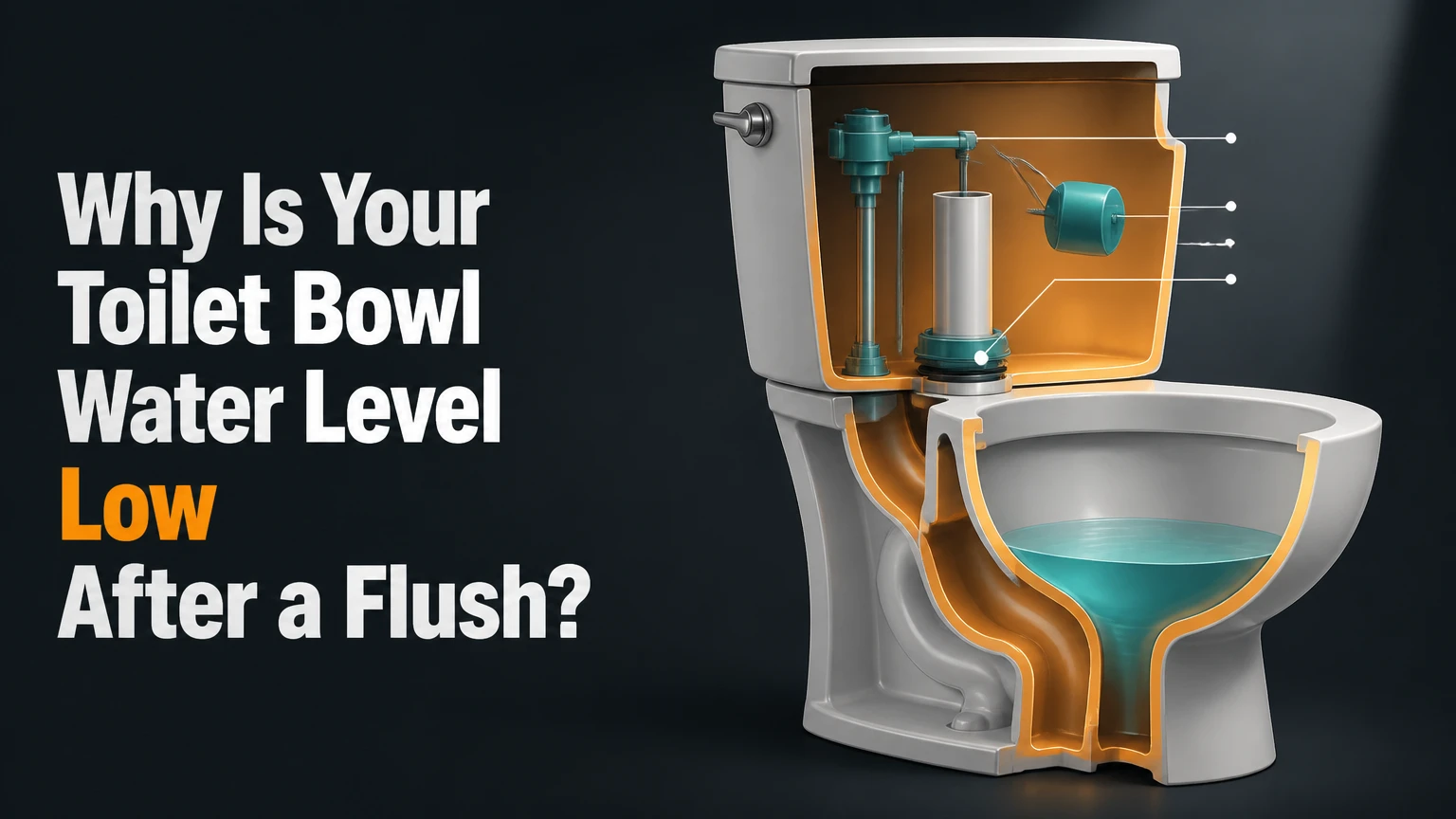
A low toilet bowl water level after a flush is caused by a misdirected refill tube, a maladjusted fill valve float, a clogged plumbing vent, or a cracked porcelain trapway. The toilet bowl relies on a precise volume of diverted tank water to seal the trap and block sewer gases. When this mechanical sequence fails, the water rests below its normal designed height.
Key Facts at a Glance
- The water in a toilet bowl acts as a protective seal against toxic sewer gases entering the home.
- The refill tube must direct roughly 20 percent of the tank water into the overflow pipe to replenish the bowl.
- A tank water level set lower than 1 inch below the top of the overflow pipe will result in a low bowl level.
- Negative air pressure from a blocked roof vent stack will actively siphon water out of the toilet bowl.
- Reattaching a loose refill tube takes exactly two minutes and requires zero tools or financial cost.
How Does the Toilet Refill Mechanism Work?
The toilet refill mechanism relies on gravity, hydraulic pressure, and a carefully balanced sequence of water diversion. Toilets utilize a siphon jet and a built-in trapway shaped like an “S” or “P”. During a flush, water rushes from the tank into the bowl, raises the water level over the internal trapway weir, and triggers a siphon effect that pulls waste into the sewer line. Once air enters the trapway, the siphon breaks, and the bowl is left nearly empty.
Once the siphon breaks, the bowl must be replenished to reestablish the water trap seal. The tank fill valve serves a dual purpose during the tank recovery phase. The main body of the valve drops water directly into the tank to prepare for the next flush. Simultaneously, a small port on the side of the fill valve shoots a thin stream of water through a flexible plastic refill tube. This tube is clipped to the open overflow pipe. The diverted water travels straight down the overflow pipe, bypasses the flapper, and enters the bowl. This secondary flow restores the standing water level in the bowl before the main tank finishes filling.
What Causes a Low Toilet Bowl Water Level?
A low toilet bowl water level is primarily caused by mechanical failures within the tank or pressure imbalances in the household plumbing system. Identifying the root cause requires understanding how water travels from the supply line to the trapway.
The Refill Tube Is Misdirected or Missing
The most frequent cause of a low bowl level is a refill tube that is spraying water inside the main tank rather than down the overflow pipe. If the metal or plastic clip holding the tube breaks, the water pressure will push the tube away from the overflow pipe. Without this diverted water stream, the bowl receives zero replenishment after the flush cycle completes, leaving the water level at the absolute bottom of the trapway.
The Tank Water Level Is Adjusted Too Low
The toilet tank dictates the duration of the bowl refill cycle. If the tank water level is set too low, the fill valve will shut off prematurely. Because the fill valve stops supplying water to both the tank and the refill tube at the exact same moment, a short tank fill cycle results in a short bowl refill cycle. The bowl will not receive enough water to reach the designed water line.
The Plumbing Vent Stack Is Blocked
Plumbing systems require atmospheric air pressure to move wastewater smoothly. The vent stack on your roof introduces this air. If a bird nest, heavy snow, or leaf debris blocks the vent stack, flushing the toilet or draining a bathtub creates negative air pressure within the pipes. This vacuum effect seeks the nearest source of air, which is often the toilet bowl. The suction pulls the standing water out of the toilet trapway, leaving the bowl visibly depleted.
The Porcelain Trapway Has a Hairline Crack
Vitreous china is incredibly durable but susceptible to stress fractures from hot water, impact, or overtightened mounting bolts. A hairline crack inside the internal S-trap will allow water to slowly leak out of the bowl and down into the sewer pipe. This is a silent failure. The toilet will flush normally and fill to the correct height, but the bowl water level will gradually drop over a period of two to four hours.
How Do You Fix a Low Toilet Bowl Water Level?
You fix a low toilet bowl water level by reconnecting the refill tube, adjusting the tank float, and clearing the rim jets. Follow these four sequential steps to isolate and resolve the root cause of the low water level.
Before You Start
- Total Time Required: 10 to 45 minutes.
- Difficulty: Beginner.
- Estimated Cost: $0 to $30.
- Tools Needed: Screwdriver, wire coat hanger, white vinegar, small bucket holding at least 2 gallons of water.
Step 1: Inspect and Reattach the Refill Tube
Remove the toilet tank lid and place it safely on a towel. Locate the small rubber or plastic tube running from the top of the tall fill valve to the open PVC overflow pipe in the center of the tank. Flush the toilet and observe the water flow.
Ensure the tube is securely clipped to the top edge of the overflow pipe, directing water entirely inside it. If the tube is missing, unclipped, or spraying water indiscriminately into the tank, reattach it using an angle adapter clip.
- Success Checkpoint: You will know this worked if you hear water trickling into the bowl while the tank is filling.
- Common Mistake: Never shove the flexible refill tube deep inside the overflow pipe. Placing the tube below the tank water line creates a continuous siphon that will secretly drain your tank and skyrocket your water bill.
Step 2: Check and Adjust the Tank Water Level
Observe the standing water level inside the tank once the fill valve shuts off completely. The water surface should rest exactly 1 inch below the open rim of the overflow pipe.
If the water is significantly lower than 1 inch, locate the adjustment mechanism on your fill valve. For modern Fluidmaster concentric cup floats, turn the long plastic adjustment screw clockwise to raise the float height. For older ballcock arms, bend the brass rod slightly upward. Flush the toilet again to test the new water level.
- Success Checkpoint: The fill valve should remain open long enough to completely fill the bowl to its normal resting height.
- Common Mistake: Raising the water level above the overflow pipe will cause the toilet to run continuously, wasting hundreds of gallons of water per day.
Step 3: Clear the Toilet Bowl Rim Jets
Look directly under the inside rim of the toilet bowl to locate the small water distribution holes known as rim jets. Hard water minerals and calcium scale frequently clog these jets, slowing the flow of water required to create a strong flush and a proper refill.
Insert a piece of wire coat hanger or a 1/16 inch Allen wrench into each jet hole to break up hardened debris. Pour one quart of heated white vinegar down the flush valve inside the tank, allowing it to flow into the rim channels. Let the vinegar sit for two hours to dissolve the remaining calcium scale before flushing.
- Success Checkpoint: Water should cascade rapidly and evenly from all holes under the rim when the toilet is flushed.
Step 4: Perform the Bucket Test for Hidden Leaks
If the mechanical components in the tank are functioning perfectly, you must test the bowl itself. Fill a bucket with exactly 2 gallons of water. Pour this water directly and rapidly into the center of the toilet bowl.
If the water level rises to the normal height and stays there indefinitely, your bowl holds water fine, proving the issue is a mechanical replenishment failure in the tank. If the water level immediately drains down past its normal resting point after pouring the bucket, a partial clog in the trapway is wicking water out. If the water level drops slowly over several hours, the porcelain bowl has a structural crack and requires full replacement.
How Do the Causes and Solutions Compare?
Different symptoms point to entirely different financial and mechanical realities. Use this comparison table to match your specific indicator to the correct permanent solution.
| Cause | Diagnostic Indicator | Primary Solution | Pros of Fixing | Cons and Challenges |
| Misplaced Refill Tube | Tube is spraying directly into the tank water. | Clip the tube properly to the overflow pipe. | Free solution taking under 60 seconds. | None. |
| Defective Fill Valve | Hissing noises from tank, low tank water line. | Replace the entire fill valve assembly. | Inexpensive part restores full flush pressure. | Requires turning off the main water supply valve. |
| Clogged Plumbing Vent | Gurgling drains, slow draining in multiple rooms. | Clear the main roof vent stack with an auger. | Resolves whole-home drainage and odor issues. | Requires climbing onto a steep roof safely. |
| Cracked Toilet Bowl | Visible water pooling on floor, slow bowl drain. | Replace the complete toilet fixture. | Permanent safety fix preventing floor rot. | High cost and requires heavy lifting. |
How Much Does It Cost to Fix a Low Water Level?
Financial investment depends entirely on the severity of the component failure. Simple adjustments cost nothing, while structural failures require significant capital.
- Refill Tube Realignment: The cost is exactly $0. If the plastic angle clip is snapped, a universal replacement clip costs $2 to $5 at any local hardware store.
- Fill Valve Replacement: Purchasing a premium universal repair kit like the Fluidmaster 400ARHR costs $15 to $20. Doing it yourself takes 20 to 40 minutes. Hiring a licensed plumber to replace the valve costs between $100 and $250 in labor.
- Plumbing Vent Cleaning: Renting a 50 foot drain auger costs $30 to $75 per day. Hiring a professional plumbing service to clear a roof stack safely ranges from $150 to $400, depending on roof pitch and height.
- Complete Toilet Replacement: A new high efficiency gravity toilet from Kohler or American Standard costs $150 to $600. Professional installation labor adds $200 to $450 to the total bill, bringing the maximum cost near $1,050.
What Are the Most Common Troubleshooting Mistakes?
Attempting plumbing repairs without understanding basic material science leads to collateral damage. Avoid these frequent errors when troubleshooting toilet water levels.
First, avoid using chemical drain cleaners. Dumping harsh chemical agents down a slow flushing toilet generates intense exothermic heat. This rapid temperature spike will easily crack a vitreous china bowl or melt the internal wax and plastic seals, turning a minor clog into a mandatory total fixture replacement.
Second, never overtighten plastic plumbing bolts. When replacing a fill valve or a complete bowl, tightening the plastic mounting nuts with heavy wrenches will strip the brittle plastic threads or crack the ceramic tank housing. You must hand tighten these components, followed by a maximum quarter turn with pliers to secure the watertight seal.
Which Solution Should You Pick?
Your approach to plumbing repairs should match your living situation and financial leverage.
The Everyday Renter or Budget DIYer
Start exclusively with zero cost mechanical checks. Verify the refill tube placement, adjust the float screw, and scrub the rim jets with household vinegar. Renters should not attempt to replace fill valves or clear roof vents. If the free adjustments fail to raise the water level, submit a formal maintenance request to your landlord detailing the steps you already checked.
The Homeowner or Long Term Investor
If your toilet is older than 15 years and experiencing frequent component failures alongside low water levels, do not piece meal the repairs. The cost of replacing the fill valve, flapper, and flush valve separately will quickly exceed the price of a modern fixture. Invest in a highly rated, water efficient gravity toilet system. Modern toilets utilize advanced trapway designs that virtually eliminate partial clogs and siphoning issues.
The Property Manager or Commercial Operator
Ensure your maintenance teams perform preventative clearings of plumbing vent stacks on the roof annually. Wind shear, bird nests, and falling leaves choke these vents, inducing negative air pressure that pulls water out of trapways across multi unit buildings. Preventative vent clearing stops widespread tenant complaints regarding low water levels and sewer gas odors before they occur.
Frequently Asked Questions
Can a clogged toilet cause the bowl water level to drop?
Yes, a partial clog in the internal trapway can cause the bowl water level to drop. Toilet paper or foreign objects stuck at the top of the S-trap act like a sponge, creating a capillary action that slowly wicks standing water out of the bowl and down into the sewer line over a few hours.
Why does my toilet water level drop when it is windy outside?
High winds blowing forcefully across the top of an open plumbing vent stack on your roof create a localized vacuum, known as the Bernoulli effect. This sudden negative pressure sucks air through the pipes, which physically pulls the standing water out of your toilet bowl to balance the atmospheric pressure inside the plumbing system.
Does a running toilet affect the bowl water level?
A running toilet typically raises the tank and bowl water levels right up to the overflow threshold. However, if the running toilet is caused by a refill tube shoved too far down the overflow pipe, it creates a continuous siphon. This siphon actively pulls water out of the tank and directly down the drain, bypassing the proper bowl filling sequence entirely.
How do I know if my toilet bowl has a hidden hairline crack?
To detect a hidden crack, turn off the water supply valve behind the toilet. Mark the current water line inside the bowl with a dry erase marker. Leave the toilet unused for 12 hours. If the water level drops below your marked line while the supply is off, water is escaping through a structural fracture in the porcelain trapway.
Will pouring water directly into the bowl fix a low water level?
Pouring water manually into the bowl from a pitcher will temporarily restore the water level and block sewer gases. However, it will not fix the mechanical failure. The very next time you flush the toilet, the defective fill valve or disconnected refill tube will fail to replenish the bowl, forcing you to pour water in manually once again.