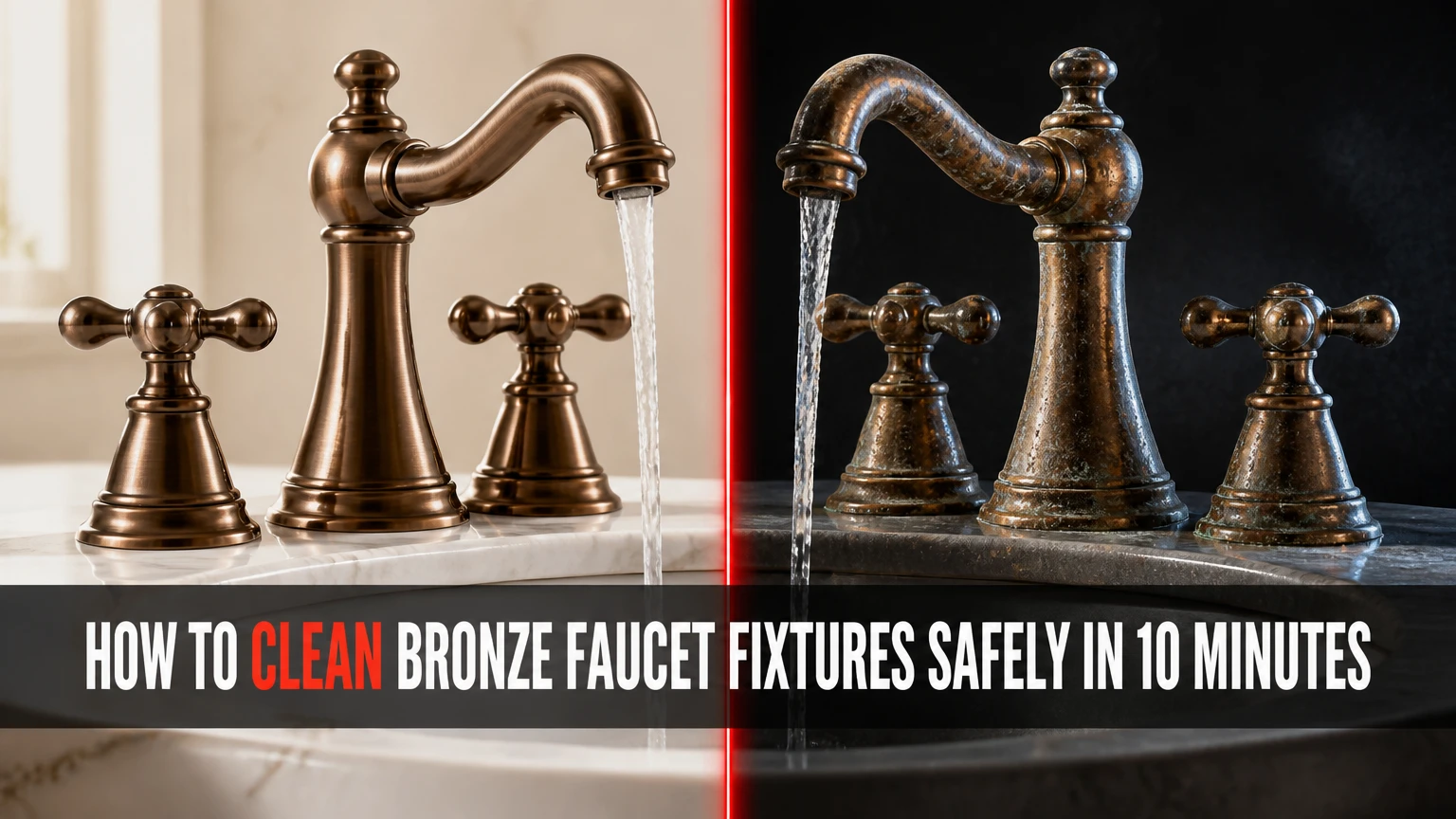
To clean bronze faucet fixtures safely, identify the finish first, then use warm water, a few drops of mild dish soap, and a soft microfiber cloth. Rinse away soap residue, dry every surface immediately, and avoid vinegar, lemon juice, bleach, ammonia, abrasive pads, and metal polish unless the manufacturer specifically approves them.
Key Facts at a Glance
Mild dish soap diluted in warm water is the safest general cleaner for bronze faucet fixtures.
Oil-rubbed bronze is often a living finish, so gradual color change and polished wear spots may be normal.
Vinegar and lemon juice can etch, dull, or strip bronze coatings, especially when left on the surface.
PVD bronze resists wear better than lacquered or living bronze, but it still requires nonabrasive cleaning.
Water spots become easier to remove when the faucet is dried after each use.
A faucet finish that is peeling, blistering, or exposing a different base color needs manufacturer or refinishing advice, not stronger cleaner.
What Bronze Faucet Finish Do You Have?
The cleaning method depends more on the surface finish than on the word bronze in the product description. Oil-rubbed bronze, lacquered bronze, and PVD bronze can look similar while reacting very differently to acids, friction, polishing compounds, and wax.
Check the faucet box, installation manual, underside of the spout, or manufacturer product page before using anything stronger than soap and water. Some products described as bronze are actually brass or zinc hardware with a bronze-colored coating, and the coating may be thinner than the underlying metal.
| Finish type | Surface behavior | Safest routine | Main risk |
|---|---|---|---|
| Oil-rubbed bronze | Often changes color through handling and moisture | Damp microfiber cloth, mild soap, immediate drying | Stripping dark color or creating bright wear marks |
| Unlacquered bronze | Develops natural oxidation and patina | Water, mild soap, controlled patina care | Uneven oxidation and green corrosion |
| Lacquered bronze | Clear coating protects the color | Mild soap, soft cloth, no soaking | Scratched, clouded, or dissolved lacquer |
| PVD bronze | Thin, hard deposited finish resists abrasion better | Mild soap, water, microfiber cloth | Damage at edges from harsh chemicals or tools |
Is Oil-Rubbed Bronze a Living Finish?
Oil-rubbed bronze is frequently a living finish, but the label alone is not proof. A living finish has little or no permanent clear coat, so skin oils, water, cleaning, and repeated contact gradually expose lighter copper or brass tones.
That color change is not ordinary dirt. Aggressive rubbing can accelerate the change and leave a sharply defined bright patch around the handle, spout, or drain. Do not try to make a living finish uniformly new by polishing it unless the manufacturer describes the fixture as polishable.
How Can You Recognize Lacquered or PVD Bronze?
Lacquered bronze often keeps a consistent color and has a smooth, sealed appearance, while PVD bronze usually has a uniform factory finish with strong resistance to ordinary scratching. Neither visual test is conclusive, so manufacturer documentation is more reliable than appearance.
A hidden-spot test helps when documentation is unavailable. Place one drop of diluted soap solution on the least visible area, leave it for two minutes, wipe with a damp cloth, and dry. Stop if the color changes, the surface turns cloudy, or the cloth picks up finish pigment.
What Cleaner Is Safest for Bronze Faucet Fixtures?
A solution of warm water and mild, pH-neutral dish soap is the safest starting cleaner for most bronze faucet fixtures. Use approximately 1 teaspoon of soap per 1 quart of water, apply it to a cloth rather than pouring it onto the faucet, and rinse away the residue within a few minutes.
Avoid products labeled polish, descaler, disinfectant, bathroom spray, or metal cleaner unless the faucet manufacturer lists the product as compatible. “Natural” does not mean finish-safe: acetic acid in vinegar and citric acid in lemon juice can attack exposed copper alloys and some clear coats.
| Cleaner or tool | Typical use | Bronze-finish risk | Recommendation |
|---|---|---|---|
| Warm water plus mild dish soap | Daily soil and fingerprints | Low when rinsed and dried | First choice |
| White vinegar, 5% acetic acid | Mineral scale on removable parts | Medium to high on finished surfaces | Use only on compatible removable parts |
| Lemon juice, approximately pH 2 | Acidic spot treatment | High for coatings and living finishes | Avoid on faucet finishes |
| Baking soda paste | Mild abrasive spot cleaning | Medium from friction and residue | Use only after manufacturer approval |
| Bleach or chlorine spray | Disinfection | High corrosion and discoloration risk | Never use routinely |
| Steel wool or abrasive sponge | Mechanical scrubbing | Permanent scratching | Never use |
Before You Start
Prepare the materials and protect the finish before cleaning. A normal maintenance clean takes 5-10 minutes and costs approximately $0.10-$0.50 in diluted soap; removing thick scale or repairing finish damage can require replacement parts or professional refinishing.
Before-you-start box
Time: 5-10 minutes for routine cleaning; 15-30 minutes for removable aerator care
Difficulty: Easy for surface cleaning; moderate for aerator removal
Cost: $0.10-$0.50 for soap and water; $5-$15 for microfiber cloths
Materials: 1 quart warm water, 1 teaspoon mild dish soap, 2 microfiber cloths, soft toothbrush
Optional tools: Aerator key, plastic bag, adjustable wrench with a cloth barrier
Prerequisite: Confirm the finish or test a hidden area
Safety: Do not mix cleaning chemicals, and keep cleaner away from drinking water openings
How to Clean Bronze Faucet Fixtures Step by Step
The following five-step process removes fingerprints, soap film, and fresh water spots without treating the bronze surface as bare, polishable metal. The finish-identification step determines whether you should stop after routine cleaning or seek a manufacturer-approved restoration method.
Step 1: Remove Loose Dust and Debris
Rinse a clean microfiber cloth with warm water, wring it until damp, and wipe the faucet from the highest point downward. Remove toothpaste, grit, hair, and loose mineral particles before applying pressure, because rubbing dry grit across bronze creates avoidable micro-scratches.
Use a soft-bristled toothbrush around the base, handle seam, and escutcheon edge. Do not use the brush on a fragile or visibly peeling coating.
You will know it worked when: the surface has no loose particles and the cloth glides without catching.
Common mistake: wiping dry dust with a dry towel, which drags grit across the finish.
Step 2: Wash With Diluted Mild Soap
Add 1 teaspoon of mild dish soap to 1 quart of warm water. Dip a microfiber cloth into the solution, wring it thoroughly, and wipe small sections of the faucet for 20-30 seconds each.
Keep the cloth damp, not dripping. Do not spray the solution directly onto the faucet, because liquid can enter the handle cartridge, seams, escutcheon, or countertop opening.
You will know it worked when: fingerprints and greasy film disappear without a change in color or sheen.
Common mistake: using concentrated soap, which leaves an alkaline film that attracts dust and creates streaks.
Step 3: Rinse Away Cleaner Residue
Use a second microfiber cloth dampened with clean water to wipe the entire fixture. Rinse the cloth repeatedly so that it removes soap instead of redistributing it.
Pay attention to the underside of the spout, the handle stem, and the joint where the faucet meets the sink. Soap left in those locations can combine with minerals and form a hard ring.
You will know it worked when: the surface feels smooth rather than tacky and no foamy residue remains.
Common mistake: skipping the rinse because the faucet looks clean after washing.
Step 4: Dry Every Surface Immediately
Buff the faucet with a fresh, dry microfiber cloth within one minute of rinsing. Fold the cloth into a dry section for each major surface, and use the corner to absorb water around seams and the base.
Drying is part of cleaning, not an optional finishing step. Evaporating water leaves calcium, magnesium, and other dissolved minerals behind, especially in hard-water areas.
You will know it worked when: no droplets remain around the aerator, handle, or mounting ring.
Common mistake: letting the faucet air-dry and then trying to remove the resulting white rings with acid.
Step 5: Apply Protection Only When Approved
Apply wax only to a compatible living or unlacquered finish after the faucet is completely clean and dry. A small amount of microcrystalline wax, such as Renaissance Wax, can reduce direct contact with moisture, but wax cannot repair stripped color or a failed lacquer coating.
Spread a very thin layer with a soft cloth, wait according to the product instructions, and buff completely. Keep wax away from the water outlet, handle grip, floor, and shower surface because residue can reduce traction.
You will know it worked when: the surface has an even, dry film with no greasy streaks.
Common mistake: applying automotive polish or wax without checking whether the faucet maker permits it.
How Should You Remove Hard-Water Deposits?
Remove heavy mineral deposits from removable faucet parts whenever possible, rather than soaking the finished bronze surface in vinegar. Unscrew the aerator, place only the metal or plastic insert in a compatible descaling solution, rinse it thoroughly, and reinstall it with the original gasket.
For deposits on the fixed faucet body, begin with a warm, wet microfiber cloth held against the spot for 5-10 minutes. Gently lift the softened residue with a fingernail covered by the cloth or a wooden toothpick, then wash, rinse, and dry the area.
Cleaning a Faucet Aerator
Turn off the faucet, protect the aerator with a cloth, and unscrew it by hand or with an aerator key. Photograph the order of screens and washers before disassembly, because reversing the parts can reduce flow or create splashing.
If the manufacturer permits vinegar, soak the removable aerator components for 15-30 minutes, brush them gently, and rinse under running water. Never assume that a 50/50 vinegar soak is safe for a bronze-plated aerator or the faucet body.
| Deposit location | First method | Typical time | Stop condition |
|---|---|---|---|
| Spout exterior | Warm wet cloth, mild soap | 5-10 minutes | Finish changes or coating lifts |
| Aerator screen | Remove and approved soak | 15-30 minutes | Screen deforms or plating darkens |
| Handle seam | Damp toothbrush and soap | 2-5 minutes | Water enters the cartridge |
| Escutcheon edge | Cloth-wrapped wooden toothpick | 5 minutes | Sealant or finish begins lifting |
Can You Use Vinegar and Baking Soda on Bronze?
Vinegar and baking soda are not a universally safe bronze-cleaning combination. Baking soda is mildly abrasive, vinegar is acidic, and combining them produces carbon dioxide while neutralizing much of the acid; the fizz may loosen soil, but it does not guarantee protection for a bronze finish.
Acid can dissolve mineral scale, but it can also attack exposed copper-alloy surfaces, alter patina, and undermine lacquer at scratches or edges. If a manufacturer explicitly approves an acidic cleaner, apply it only for the stated contact time, test first, rinse completely, and dry immediately.
For an unknown finish, use soap and water instead. The slower method is safer than repairing a discolored coating.
What Should You Never Use on Bronze Faucets?
Never use chlorine bleach, ammonia, drain cleaner, oven cleaner, powdered scouring products, steel wool, brass polish, or abrasive melamine foam on an unidentified bronze faucet finish. These products can corrode exposed alloy, soften clear coats, or remove dark pigment through chemical action and friction.
Avoid paper towels when the surface is dusty or wet with cleaner. Paper fibers are less controlled than microfiber and can carry mineral grit across a soft coating.
| Mistake | Visible result | Immediate response | Long-term repair |
|---|---|---|---|
| Leaving vinegar overnight | Dull patch or color shift | Rinse with clean water and dry | Manufacturer-approved touch-up or refinishing |
| Scrubbing with steel wool | Linear scratches | Stop rubbing; rinse loose fibers | Professional refinishing may be needed |
| Spraying bleach near the faucet | Brown, green, or cloudy discoloration | Rinse repeatedly with water | Replace damaged finish or component |
| Air-drying hard water | White rings and crust | Rewet with warm water and wipe | Routine drying; approved scale treatment |
| Using metal polish on ORB | Bright uneven spots | Remove residue with mild soap | Patina may require controlled restoration |
| Soaking the whole faucet | Swollen seals or coating failure | Dry exterior and inspect joints | Cartridge or finish replacement |
What If the Bronze Faucet Is Green, Black, or Peeling?
Green spots usually indicate verdigris or copper-alloy corrosion, while black marks can be oxidation, trapped grime, chemical staining, or damaged coating. Peeling and blistering indicate finish failure, which cleaning cannot reverse.
First stop the moisture source. Repair a leaking handle, dry the mounting area, remove salt or household chemical residue with diluted soap, and inspect the finish under bright light.
Green Verdigris
Use a damp microfiber cloth and mild soap for a small green spot. If the green material remains, do not scrape aggressively; exposed corrosion can enlarge when the protective surface is removed.
On valuable antique or unlacquered bronze, consult a conservator or the manufacturer before using acid. A living patina may be intentional, and removing it can lower the object’s historical or aesthetic value.
Black or Cloudy Stains
Wash the area once with mild soap and water, then dry it. If the mark remains but the surface is smooth, the discoloration may be chemical or finish-related rather than removable dirt.
Do not escalate directly to polish. Photograph the spot, record the cleaner used, and ask the manufacturer whether the product has a compatible touch-up or replacement part.
Peeling, Blistering, or Exposed Bright Metal
A peeling coating requires finish repair or component replacement, not stronger cleaning. Stop using chemicals, avoid lifting more coating with a fingernail, and contact the faucet brand with the model number and photographs.
Manufacturers may offer a replacement handle, spout, escutcheon, or cartridge trim. Local refinishing can restore appearance, but color matching a factory bronze finish is not guaranteed.
How Often Should Bronze Fixtures Be Cleaned?
Wipe a bronze faucet after each use when the fixture receives frequent splashing, and perform a soap-and-water clean once or twice weekly in a typical bathroom. Kitchens with hard water, cooking oils, or frequent handwashing may need daily wiping and weekly washing.
Wax intervals vary by product and finish. A typical living-finish schedule is every 2-3 months, but the manufacturer’s care sheet controls because some waxes can change sheen or interfere with future refinishing.
| Household condition | Wipe frequency | Soap clean | Wax or protection |
|---|---|---|---|
| Soft water, low use | After visible splashes | Every 1-2 weeks | Every 3-6 months if approved |
| Average bathroom | Daily | Weekly | Every 2-3 months if approved |
| Hard water bathroom | After each use | 2 times weekly | Manufacturer schedule |
| Busy kitchen | Daily | 2-3 times weekly | Avoid near food-contact openings |
| Vacation or rental property | After each turnover | Before occupancy | Document approved product |
Which Bronze Finish Is Easiest to Maintain?
PVD bronze is generally the easiest finish to maintain because the deposited surface resists ordinary abrasion and color loss better than a living finish. Lacquered bronze is also low-maintenance while its clear coat remains intact, whereas oil-rubbed and unlacquered bronze require acceptance of gradual patina.
PVD does not make a faucet immune to damage. Strong acids, chlorine, abrasive powders, and tools can still stain edges, attack adjacent materials, or scratch contaminated surfaces.
| Decision factor | Living ORB | Lacquered bronze | PVD bronze |
|---|---|---|---|
| Routine cleaning time | 5-10 minutes | 5 minutes | 5 minutes |
| Patina development | Expected | Unusual until coating fails | Minimal |
| Acid tolerance | Low | Low | Manufacturer-dependent |
| Color restoration | Difficult | Recoat or replace | Usually replace damaged part |
| Best user | Patina enthusiast | Low-touch household | Busy household or rental |
| Typical care cost | $5-$15 per year | $0-$10 per year | $0-$10 per year |
Variations for Common Situations
Kitchen Faucets
Kitchen faucets collect grease, food acids, salt, and hard-water residue more quickly than bathroom fixtures. Clean with diluted soap after food preparation, rinse the spout and handle, and keep acidic foods such as citrus or tomato away from the finish.
Do not wax the water outlet or any surface that contacts drinking water. A removable aerator can be cleaned separately according to the product instructions.
Bathroom and Shower Fixtures
Bathroom bronze fixtures need frequent drying because soap film and evaporating water remain on horizontal ledges. Use a separate microfiber cloth for the faucet, shower trim, and toilet-area surfaces to prevent abrasive grit and disinfectant residue from transferring.
Never spray bathroom cleaner onto bronze trim. Spray an approved product onto a cloth only when the manufacturer specifically permits it.
Antique or Unlacquered Bronze
Antique bronze should not be treated like a modern plated faucet. Preserve the existing patina unless the owner’s goal is deliberate restoration, and seek a conservator when the item has historical, collectible, or architectural value.
Abrasive polishing can remove surface evidence that cannot be recreated precisely. Document the original condition before any treatment.
How Much Does Bronze Faucet Cleaning Cost?
Routine bronze faucet cleaning typically costs less than $1 per session with household soap and microfiber cloths. A basic care kit costs approximately $5-$20, while an approved wax or specialty cleaner commonly costs $10-$25.
Replacement aerators and cartridges often cost $10-$60 depending on the brand. Professional refinishing is commonly a higher-cost option, often approximately $100-$300 or more for a removable component, with the final price determined by labor, shipping, and color matching.
These are typical household ranges, not guaranteed prices. A replacement part is often more predictable than refinishing a damaged factory coating.
Expert Rules That Prevent Finish Damage
- Clean the chemistry before increasing the friction. If soap and water do not remove a mark, identify whether the mark is scale, oxidation, or finish loss before scrubbing harder.
- Treat the faucet body and aerator as different materials. A removable stainless or plastic aerator may tolerate a descaler that the surrounding bronze coating cannot.
- A brighter spot is often evidence of damage. On oil-rubbed bronze, a newly polished copper-colored patch usually means the dark surface was removed, not that the fixture became cleaner.
- The least visible test area is still informative. Test near the rear of the base, but inspect after drying because clouding and color shift may appear only when the product evaporates.
- Drying reduces the need for chemicals. A 15-second wipe after use prevents many mineral rings more reliably than periodic acidic treatments.
Frequently Asked Questions
Can I clean bronze faucet fixtures with dish soap every day?
Yes. Diluted mild dish soap is suitable for frequent cleaning on most bronze faucet finishes when applied with a soft microfiber cloth, rinsed away, and dried immediately. Concentrated soap, prolonged soaking, and direct spraying into seams create avoidable residue or moisture problems.
Is CLR safe for oil-rubbed bronze faucets?
CLR and similar acidic lime-scale removers are not safe assumptions for oil-rubbed bronze. Acid can change the patina, expose lighter metal, or damage a clear coat. Remove the aerator and treat only compatible removable parts if the faucet manufacturer approves the product.
How do I remove water spots without changing the bronze color?
Start with a warm, damp microfiber cloth held against the spot for 5-10 minutes, then wipe with diluted mild dish soap, rinse, and dry. If the deposit remains, consult the manufacturer before using vinegar or another descaler on the fixed faucet surface.
Can I polish a bronze faucet to make it shiny again?
Only polish a bronze faucet when the manufacturer identifies the finish as polishable. Polishing an oil-rubbed or living bronze finish can remove intentional darkening and create uneven bright patches; polishing cannot restore a chemically darkened finish after it has been stripped.
Should I replace a bronze faucet that is turning green?
Not automatically. A small green area may be surface verdigris caused by persistent moisture, salt, or chemical residue, but widespread corrosion, leaks, peeling, or blistering suggests a larger problem. Clean gently, fix the moisture source, photograph the damage, and ask the manufacturer about parts or refinishing.
The Bottom Line
The safest way to clean bronze faucet fixtures is to identify the finish, wash with diluted mild dish soap, rinse with clean water, and dry immediately with microfiber. Avoid vinegar, lemon juice, bleach, ammonia, abrasive tools, and metal polish unless the manufacturer explicitly approves them. For oil-rubbed bronze, preserve the living patina instead of trying to polish the surface back to factory color.