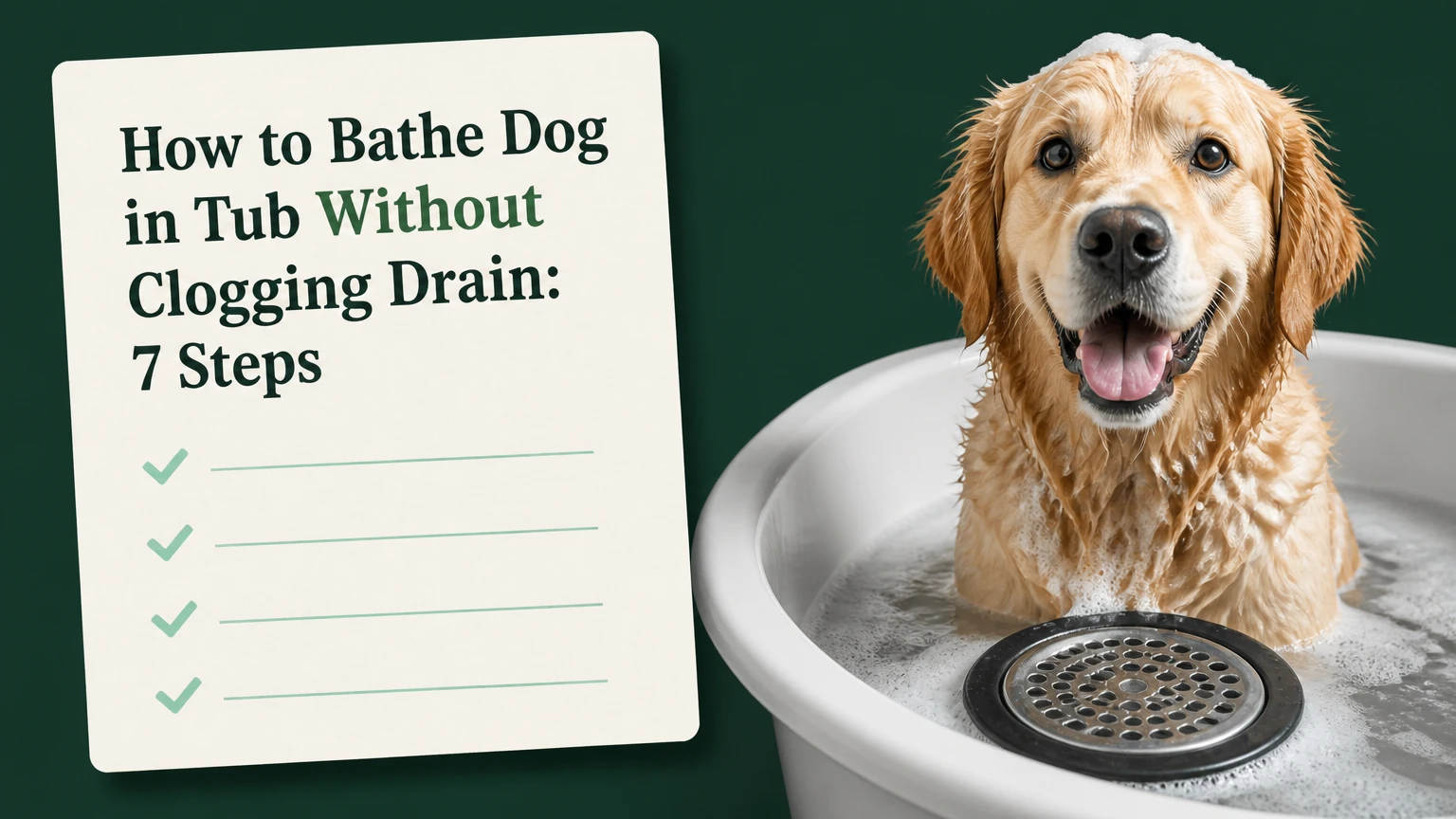
To bathe a dog in a tub without clogging the drain, brush out loose fur while the coat is dry, cover the drain with a removable hair catcher, and remove collected hair before it reaches the overflow point. Use dog shampoo sparingly, rinse thoroughly, and wipe the catcher and tub instead of flushing fur into the plumbing.
Key Facts at a Glance
Dry brushing removes loose coat before water and shampoo can carry it toward the drain.
A removable drain strainer is safer than relying on the bathtub’s built-in stopper.
Heavy-shedding dogs may require drain-catcher cleaning every 3-5 minutes.
Never place steel wool, a sponge, or a disposable wipe loosely over a drain opening.
Do not pour boiling water into a bathtub drain; very hot tap water is a safer maintenance rinse.
A professional groomer or plumber becomes the better option when the tub backs up repeatedly.
How to Bathe Dog in Tub Without Clogging Drain Safely
The reliable method takes about 30-50 minutes for a medium-sized dog, including preparation and cleanup. Dry coat removal determines success more than water pressure or drain-cleaning chemicals, because a drain guard can intercept loose hair only after the fur has already left the dog.
Dog hair becomes more troublesome when it combines with shampoo residue, sebum, skin flakes, and grit from dirty paws. Wet strands wrap around stopper mechanisms, grate openings, and the rough interior of the trap. A small amount of hair can therefore become a larger mat over several baths.
What happens inside a bathtub drain?
A bathtub drain clog usually begins at the drain cover or stopper assembly, then develops in the trap below the tub. Hair catches on crossbars or existing soap deposits, while additional strands form a flexible mesh that slows drainage and retains more residue.
The clog is not caused by hair alone. Shampoo can reduce water’s ability to carry debris cleanly, and thick coat oils can make the hair mat stickier. That is why “washing it down” with extra water usually relocates the problem rather than removing it.
Dog hair should not intentionally go down a household drain. Even short, fine hairs can collect at an obstruction that already contains lint, soap, or mineral scale.
Before You Start: Tools, Time, and Cost
Prepare the dog, tub, drain guard, and waste container before turning on the water. A typical bath requires 10-15 minutes of dry grooming, 15-25 minutes of washing, and 5-10 minutes of cleanup, although a large double-coated dog can take longer.
| Item | Typical quantity or specification | Typical cost | Purpose |
|---|---|---|---|
| Slicker brush | 1 brush sized for the dog’s coat | $8-$25 | Removes loose topcoat and undercoat |
| Undercoat rake | 1 tool for dense double coats | $10-$30 | Lifts shed undercoat before bathing |
| Drain catcher | 1 removable silicone or stainless-steel unit | $5-$25 | Intercepts fur at the drain |
| Paper towels | 8-15 sheets | $1-$4 per roll | Lifts wet hair without flushing it |
| Dog shampoo | 2-6 fluid ounces per bath | $8-$20 per bottle | Cleans skin and coat |
| Waste bag | 1 small bag | Under $1 | Holds collected fur and debris |
Check that the hair catcher fits your drain without blocking the entire outlet. Keep a non-slip bath mat outside the tub, two towels within reach, and a cup or handheld showerhead for controlled rinsing.
Do not improvise with an item that can be sucked into the pipe. A barrier must catch hair while allowing water to pass and must remain removable if the tub begins filling.
Step 1: Brush the Dog While the Coat Is Dry
Brush the dog outdoors or over a washable floor for 5-15 minutes before the bath. Work in sections from the neck toward the tail, then inspect the brush and coat until the amount of loose fur drops noticeably between passes.
Use a slicker brush for many medium or long coats, a grooming comb to check for remaining tangles, and an undercoat rake only where the coat is dense. A de-shedding tool can remove substantial undercoat, but excessive pressure or repeated passes may irritate skin.
For a short-haired dog, a rubber curry brush or grooming mitt is often sufficient. For a Husky, German Shepherd, Golden Retriever, or similar double-coated breed, spend additional time on the neck, hindquarters, chest, and tail base.
Remove mats before wetting the coat when possible. Water tightens some tangles and makes them harder to separate, while forcing a brush through a wet mat can pull skin.
Success checkpoint: The brush collects little loose fur during two final passes, and the dog no longer sheds visible tufts when gently rubbed.
Common mistake: Brushing only the back. Loose undercoat often remains concentrated around the chest, thighs, tail, and collar area.
Step 2: Install a Removable Drain Hair Catcher
Place a purpose-made bathtub hair catcher directly over the drain or inside the drain opening, depending on the product design. Test the water flow with a small amount of clean water before the dog enters, then confirm that the catcher stays flat and does not slide.
Most household options fall into four categories. No product captures every strand, especially if the catcher overflows or the drain opening has side gaps.
| Drain barrier | Installation | Typical cost | Cleaning method | Main limitation |
|---|---|---|---|---|
| Silicone cover | Sits over the drain opening | $5-$15 | Lift, rinse, wipe | May shift on textured tubs |
| Stainless mesh basket | Drops into or over the drain | $8-$25 | Empty and brush mesh | Can restrict flow when full |
| Internal cylinder trap | Fits inside a compatible drain | $10-$35 | Pull out and unwrap fur | Requires stopper compatibility |
| Disposable paper filter | Temporary surface layer | $1-$5 | Throw away after use | Can collapse or obstruct flow |
A surface catcher is usually easiest for renters because it requires no stopper removal. An internal device leaves more floor area visible, but it may not fit a tub with a fixed stopper or unusual drain dimensions.
Avoid steel wool, kitchen sponges, baby wipes, and loose cheesecloth. Those materials can shed fibers, collapse over the opening, retain water, or become a blockage themselves. A heavy washcloth placed near a drain can also move when the dog shifts position.
Success checkpoint: Water drains continuously, the catcher remains in place, and no part of the barrier can be pulled into the drain by suction.
Common mistake: Choosing a fine filter that looks effective but cannot pass bathwater quickly enough. A catcher that causes standing water is a safety problem and a flooding risk.
Step 3: Control the Water and Wet the Coat
Use lukewarm water, commonly around 95-100°F (35-38°C), and keep the stream gentle. Wet the dog from the shoulders toward the rear while avoiding the eyes, ear canals, nose, and mouth.
A handheld showerhead gives better control than filling the tub deeply. Keep the water level low, generally below the dog’s lower chest, so the dog can stand securely and you can see whether drainage is slowing.
Rinse heavy dirt from the paws before applying shampoo. Grit, sand, and small stones add sediment to hair and soap deposits, which can anchor a developing blockage.
Place a folded towel or rubber bath mat under the dog if the tub surface is slippery. A frightened dog may push against the drain guard or jump, so secure footing protects both the animal and the plumbing.
Success checkpoint: The coat is fully wet, the dog is standing securely, and the tub has no more than a shallow layer of water.
Common mistake: Starting with hot water to “loosen” dirt. Dogs have sensitive skin, and hot water can increase discomfort and make bathing resistance worse.
Step 4: Apply a Small Amount of Dog Shampoo
Apply dog shampoo to the wet coat rather than pouring a large amount directly into the tub. For a medium dog, 1-2 fluid ounces is often enough when diluted according to the product label; larger dogs may need 2-4 fluid ounces.
Massage shampoo through the coat with your fingers, working toward the direction of hair growth. Keep shampoo away from the eyes and inner ears, and use a veterinary product if the dog has a diagnosed skin condition.
More shampoo does not produce a safer or cleaner bath. Excess product creates more residue for the drain catcher and requires a longer rinse, while human shampoo may be unsuitable for canine skin because formulation and pH differ.
Use a cup to collect any fur floating around the dog before it reaches the drain. Place the fur directly into a waste bag, not on the tub rim where it can later wash back into the water.
Success checkpoint: The coat has even lather, visible dirt has lifted, and loose fur remains on the catcher or in your hand rather than entering the drain.
Common mistake: Scrubbing in circles with excessive force. Aggressive friction can loosen more hair, irritate skin, and create a larger wet mass for the drain guard to hold.
Step 5: Clear the Catcher Before It Fills
Inspect the drain barrier every 3-5 minutes for a heavy shedder and at least once during a short-haired dog’s bath. Turn off the water before lifting fur from the catcher, then use a paper towel or gloved hand to collect the mat and place it in the waste bag.
Do not wait for water to rise above the dog’s paws. A full catcher reduces drainage, and a dog may panic when water accumulates around its feet. If the tub begins filling quickly, stop washing immediately and remove the visible fur.
A practical operating threshold is to clear the barrier when roughly half its open area is covered. The exact interval depends on coat density, catcher design, water flow, and the amount of undercoat loosened during washing.
What should you do if the tub starts filling?
Turn off the faucet, keep the dog stable, and remove fur from the drain catcher without pushing it toward the opening. If the water does not recede after the catcher is clear, stop the bath and treat the situation as a pre-existing or bypassed clog.
Never add more water to test the drain while the dog is standing in the tub. Move the dog to a towel-lined, secure area if necessary, then inspect the stopper and drain opening.
Success checkpoint: The water level falls within about 30-60 seconds after the catcher is cleared, and the barrier remains open enough for steady flow.
Common mistake: Pushing collected hair through the strainer with a finger. That action defeats the barrier and packs fur into the stopper or trap.
Step 6: Rinse the Coat and Remove Every Visible Strand
Rinse until the water running from the coat feels free of slick shampoo and appears clear. Start at the neck, work toward the tail, and lift the dog’s legs one at a time to rinse paws and lower limbs without directing fur toward the drain.
Use the showerhead at low or moderate flow. High pressure can loosen additional undercoat and spread fur across the tub faster than the catcher can hold it.
Keep checking the drain barrier during the final rinse. Conditioner, medicated shampoo, and thick coat oils can make captured fur heavier and more adhesive.
Do not pour boiling water down the drain after the bath. Boiling water can burn skin, damage some plastic components, soften sealants, and stress certain tub finishes. A few minutes of hot tap water, commonly below the household water-heater setting of 120°F (49°C), is a safer rinse after all hair has been removed.
Success checkpoint: The coat feels clean rather than slippery, the catcher contains the visible fur, and the tub drains without rising water.
Common mistake: Removing the catcher before the final rinse. Stray hairs released during the last rinse can travel directly into the plumbing.
Step 7: Remove the Fur, Wipe the Tub, and Rinse the Drain
Lift the drain catcher before releasing the final tub water or operating a stopper that could sweep hair underneath the barrier. Wipe the catcher with paper towels first, because rinsing a fur-covered guard under the faucet can send loose strands into another drain.
Collect hair from the tub floor, walls, stopper, overflow plate, and silicone seams. A damp microfiber cloth works well for short hairs, while a paper towel is easier to discard after collecting a wet undercoat mat.
Throw fur into household waste. Do not flush it down a toilet, sink, shower, or outdoor storm drain. Rinse the empty catcher separately, then run hot tap water for 1-2 minutes while watching the drain.
| Cleanup stage | Typical duration | What to remove | Disposal route |
|---|---|---|---|
| Catcher wipe | 2-3 minutes | Wet fur and soap mat | Household waste |
| Tub wipe | 2-4 minutes | Stray hair and grit | Household waste |
| Catcher rinse | 1 minute | Residual shampoo | Utility sink only if clear |
| Drain rinse | 1-2 minutes | Diluted soap residue | Bathtub drain |
Clean the stopper assembly if it has visible hair. Many slow drains are obstructed above the P-trap, where a removable stopper or crossbar can be inspected without chemicals.
Success checkpoint: No visible fur remains in the tub, the catcher is clean, and water continues draining at its normal speed.
Common mistake: Spraying the whole tub and letting all loose hair wash away. Wiping first prevents the final cleanup from becoming the next clog.
Which Drain Catcher Should You Choose?
The best drain catcher depends on drain compatibility, coat volume, cleaning tolerance, and whether you can remove the existing stopper. For most dog owners, a stable silicone cover or stainless-steel basket offers the simplest balance of installation and removal.
| User situation | Recommended option | Typical price | Cleaning frequency | Reason |
|---|---|---|---|---|
| Small short-haired dog | Silicone cover | $5-$15 | Once per bath | Low fur volume and simple removal |
| Large double-coated dog | Stainless mesh basket | $8-$25 | Every 3-5 minutes | Large surface area handles dense fur |
| Apartment renter | Surface silicone cover | $5-$15 | Once or twice per bath | No permanent plumbing modification |
| Fixed bathtub stopper | Oversized surface catcher | $8-$20 | Based on flow | Internal models may not fit |
| Frequent home groomer | Removable basket plus waste scoop | $15-$35 | Several times per bath | Faster mid-bath clearing |
Internal cylinder traps can work well when the drain opening and stopper assembly are compatible. Their hidden installation does not mean they are maintenance-free, because fur still must be pulled out and unwrapped after bathing.
Manufacturers sometimes advertise near-total hair capture, but real performance varies with drain geometry, overflow, mesh size, and how promptly the guard is emptied. Treat capture percentages as product-specific test claims, not universal household results.
Are DIY drain covers safe?
A temporary DIY cover is safe only when it is designed to stay above the drain, cannot collapse into the opening, and still permits rapid drainage. Most disposable wipes, sponges, and cheesecloth fail one of those conditions, so a purpose-made catcher is preferable.
If no catcher is available, the safer emergency method is to bathe with minimal water, keep the drain visible, stop frequently, and collect loose fur by hand or with paper towels. Do not create a second obstruction in an attempt to prevent the first one.
What If the Tub Already Drains Slowly?
A slow bathtub drain should be addressed before bathing the dog. Remove the stopper if the design allows, pull out visible hair with a plastic drain tool or long-nose pliers, and test drainage with clean water before installing the catcher.
Do not force a sharp tool past a fixed stopper or damage the overflow assembly. A plastic zip-style drain tool may retrieve hair near the opening, but it will not resolve every obstruction deeper in the trap.
A manual plunger can help when the drain contains water and the overflow opening is temporarily covered with a wet cloth. Use controlled plunges rather than violent pressure, and remove the stopper if the tool cannot form a seal.
| Symptom | Likely location | First response | Escalation point |
|---|---|---|---|
| Water drains slowly but continuously | Stopper or drain grate | Remove visible hair | Plumber if unchanged after cleaning |
| Water stops immediately after fur enters | Surface catcher | Clear the catcher | Inspect stopper if flow stays slow |
| Gurgling with recurring backup | Trap or branch line | Stop using the tub | Plumber inspection |
| Multiple fixtures drain slowly | Main or shared line | Avoid chemical cleaner | Licensed plumber |
| Standing water remains overnight | Deeper obstruction | Do not bathe the dog | Plumber or building maintenance |
Chemical drain cleaners are a poor first choice for dog-hair clogs. They may fail to dissolve a compact hair-and-soap mat, can damage some plumbing materials, and leave caustic liquid in the tub where it can contact a dog’s paws or skin.
Call a plumber when the tub backs up repeatedly, several fixtures are affected, sewage odor appears, or manual removal does not restore normal flow. Renters should report recurring drainage problems to building maintenance before attempting aggressive repairs.
Which Bathing Method Fits Your Situation?
A bathtub is convenient for small and medium dogs, but the best location changes when the dog is large, fearful, or a heavy shedder. Choosing another washing station can reduce both fur volume and the chance of an overflow.
| Bathing location | Best dog size | Fur-control method | Typical cost | Plumbing risk |
|---|---|---|---|---|
| Household bathtub | 5-80 pounds | Drain catcher and wiping | $5-$25 supplies | Moderate without a barrier |
| Walk-in shower | 10-100 pounds | Removable shower drain screen | $5-$30 supplies | Moderate |
| Outdoor wash station | 10-120 pounds | Wastewater filter or collection | $0-$100 setup | Depends on local drainage rules |
| Self-service groomer | 10-150 pounds | Built-in grooming drain | $15-$35 per visit | Lower household risk |
| Professional groomer | Any size | Grooming-table collection system | $40-$150 per visit | Minimal home plumbing risk |
Outdoor washing is not automatically harmless for plumbing or the environment. Local rules may prohibit sending shampoo, hair, or contaminated water into storm drains, which commonly discharge without household wastewater treatment.
A self-service grooming facility can be economical for a large dog during shedding season. The facility usually supplies a raised tub, spray nozzle, restraint, dryer, and commercial drain system, while the owner avoids transporting a wet, anxious dog through the home.
Variations for Puppies, Thick Coats, and Sensitive Dogs
Puppies need shorter, calmer baths with secure footing and frequent reassurance. Keep the water shallow, use a mild dog-formulated shampoo, and prioritize preventing slips over completing a full grooming routine in one session.
Double-coated dogs require more pre-bath work and more frequent catcher clearing. A bath can release substantially more undercoat than brushing alone, especially during seasonal shedding, so a second person can manage the dog while the other clears the barrier.
Dogs with allergies, wounds, parasites, or persistent odor may need veterinary guidance rather than repeated household shampooing. A medicated shampoo must remain on the coat for the label-specified contact time, but the product should still be rinsed away thoroughly.
Keep water out of the ear canal. Cotton placed only at the visible outer ear can reduce splashing, but it must never be pushed into the canal and should be removed immediately after bathing.
Common Mistakes and How to Fix Them
Letting brushed fur collect beside the tub
Fur on the floor can be tracked back into the bathroom or swept toward another drain during cleanup. Brush outside, close the bathroom door, and place dry fur directly into a waste bag.
Using the bathtub stopper as the only filter
A stopper controls water level but rarely separates hair from wastewater. Add a removable catcher that can be emptied without dismantling the plumbing.
Leaving the dog unattended
A dog can slip, jump, chew a hose, or panic when water pools. Keep one hand available for stability and stop the faucet before clearing the drain.
Overloading the catcher
A full basket can become a watertight mat. Clear the barrier when half its openings are covered or whenever drainage visibly slows.
Using human shampoo or excess dog shampoo
Excess product increases residue and lengthens rinsing. Follow the canine shampoo label and ask a veterinarian about medicated or sensitive-skin products.
Reaching for caustic drain cleaner
Chemical cleaner can create a burn hazard and may not remove compacted fur. Use mechanical removal first and seek plumbing help when the obstruction is deeper.
Typical Time and Cost for a Clog-Free Bath
A short-haired small dog usually takes 25-35 minutes and $5-$15 in consumable supplies. A large double-coated dog commonly takes 45-75 minutes because dry grooming and repeated drain-catcher clearing require more labor.
| Dog and coat | Preparation time | Bath and rinse | Cleanup | Typical supply cost |
|---|---|---|---|---|
| Small short coat | 5-10 minutes | 10-15 minutes | 5 minutes | $5-$15 |
| Medium long coat | 10-20 minutes | 15-25 minutes | 5-10 minutes | $10-$25 |
| Large double coat | 20-35 minutes | 20-35 minutes | 10-15 minutes | $15-$35 |
| Professional grooming alternative | 0-10 minutes | 60-120 minutes | 0 minutes at home | $40-$150 |
These are typical household ranges, not fixed prices. Dog size, coat condition, local groomer rates, shampoo choice, and whether a drain catcher is already available change the total.
The cheapest prevention is usually dry brushing and wiping the tub. A $10-$25 catcher costs less than an emergency plumbing visit and avoids the risk of exposing a dog to drain-cleaning chemicals.
FAQ
Can dog hair go down a bathtub drain?
Dog hair should not be intentionally flushed into a bathtub drain. Hair can catch on the stopper, crossbars, mineral deposits, or existing soap residue, then form a mat that slows drainage. Collect loose fur with a catcher, paper towel, or damp cloth and discard it with household waste.
How often should I bathe a dog that sheds heavily?
Many healthy dogs need bathing about every 4-8 weeks, but the correct interval depends on coat, skin condition, activity, and veterinary advice. During shedding season, brushing several times weekly reduces the amount of undercoat released during each bath and makes drain-catcher cleaning easier.
Can I use a sink strainer in a bathtub?
A sink strainer can work if its diameter, rim, and openings match the bathtub drain and it remains stable under running water. Test it with clean water before bathing. A strainer that tips, seals the outlet, or leaves side gaps is unsuitable for dog fur.
Should I bathe my dog if the tub drain is partially clogged?
Do not bathe a dog in a tub that already drains slowly. Existing restrictions leave less flow capacity for fur and shampoo, so a normal bath can become an overflow. Clear the visible obstruction or use a groomer until the bathtub drains at its normal rate.
Is a drain snake safe for bathtub hair?
A plastic drain snake is generally appropriate for hair near the drain opening when used gently and according to its instructions. Avoid forcing tools through fixed stopper hardware, and stop if the tool meets strong resistance. Recurring or deep blockages require a plumber rather than repeated probing.
What is the safest way to clean dog hair from the tub?
Remove the drain catcher first, wipe wet fur from the tub walls and floor, and place all collected hair in household waste. Rinse the empty catcher separately, then run hot tap water for 1-2 minutes. Do not sweep fur into another drain or pour boiling water into the plumbing.
The Bottom Line
To bathe a dog in a tub without clogging the drain, remove loose fur before wetting the coat, install a stable removable catcher, clear it before it becomes half full, and wipe every remaining strand from the tub. Finish with hot tap water rather than boiling water, and never depend on chemical drain cleaner to dissolve dog hair.