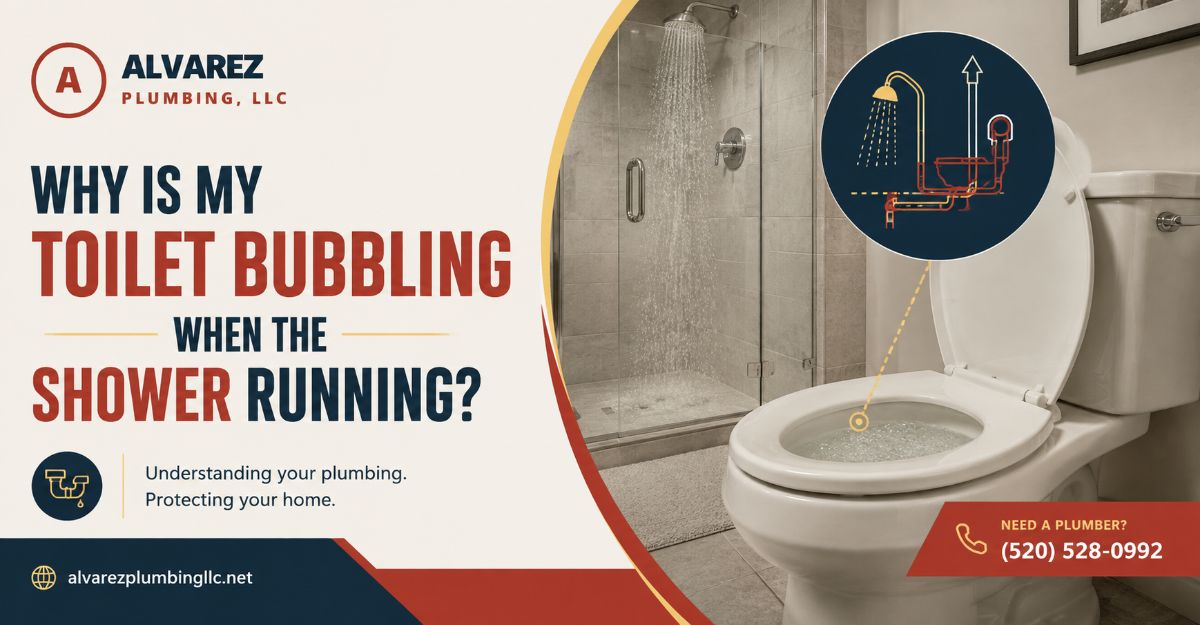
A toilet bubbling when the shower runs indicates a compromised drain-waste-vent system, caused by either a blocked sewer drain line or a clogged roof vent stack. When wastewater from the shower cannot flow freely, or when the system lacks atmospheric air, trapped air gets forced out through the nearest water seal. Your toilet bowl acts as that escape route, creating visible bubbles and gurgling sounds.
Key Facts / At a Glance
- Primary Trigger: Shower water flowing at 1.5 to 2.5 gallons per minute acts like a piston in the pipe, compressing trapped air.
- Positive Pressure (Main Drain Clog): Air is pushed ahead of the water and forces its way up into the toilet bowl, causing bubbles.
- Negative Pressure (Vent Clog): A vacuum forms behind the draining water, siphoning the water out of the toilet P-trap and causing gurgling.
- Typical Repair Cost: Expect to pay between $150 and $400 for mechanical drain snaking, or up to $800 for high-pressure hydro-jetting.
- Immediate Danger: Ignoring this symptom always leads to a raw sewage backup into the lowest point of your home, usually the shower pan.
How Does the Drain Waste Vent System Cause Bubbling?
Plumbing systems rely on a precise balance of water flow, gravity, and atmospheric air pressure to function correctly. Every residential plumbing network utilizes a drain-waste-vent configuration. The drain and waste pipes carry water away from fixtures, while the vent pipes extend upward through the roof to introduce atmospheric pressure (14.7 psi) into the system.
When you run your shower, the fixture discharges a continuous, heavy volume of water into a shared secondary drain line. This moving water completely fills the diameter of the pipe. As gravity pulls the water downward, the water pushes the air ahead of it and pulls air in behind it. If the pipes are clean and the roof vent is clear, the system remains equalized. Air ahead of the water goes into the municipal sewer, and air behind the water enters through the roof.
When an obstruction exists anywhere in this network, the air has nowhere to go. Because air compresses much faster than water, the moving shower wastewater creates massive pneumatic pressure inside the pipes. The plumbing system immediately seeks the path of least resistance to relieve this pressure. The internal P-trap of your toilet is simply a curved pipe filled with water. The trapped air physically blasts through that water seal, entering your bathroom as bubbles.
What Are the Two Main Causes of a Bubbling Toilet?
A toilet that bubbles during shower use is never a problem with the toilet itself. The symptom originates in the shared plumbing infrastructure. The location of the obstruction dictates whether you are experiencing a positive pressure event or a negative pressure vacuum.
Cause 1: Main Sewer Line Blockage (Positive Pressure)
A main sewer line blockage occurs physically inside the drain pipes beneath your floor or in your yard, preventing wastewater from reaching the municipal sewer system or your private septic tank.
When the shower runs, the water hits this downstream blockage and begins to back up. The air trapped between the incoming shower water and the physical blockage compresses. Because the air cannot push past the solid clog, it reverses direction. It travels backward up the shared branch line and forces its way up through the bottom of the toilet trap.
Specific root causes for main line blockages include the accumulation of flushable wipes (which do not degrade in water), thick layers of household grease, hair clogs binding with soap scum, or structural pipe failures. In older properties, tree root intrusion is the leading cause. Tree roots seek out the moisture and nutrients inside sewer lines, entering through microscopic cracks in clay or cast iron pipes and expanding until they block 100 percent of the flow.
Cause 2: Clogged Plumbing Vent Stack (Negative Pressure)
A clogged plumbing vent stack means the obstruction is located in the dry air ventilation piping, typically near the roof line. The drain pipes below the floor remain completely clear.
When the shower drains, the falling water creates a natural vacuum behind it. Without a clear roof vent to let atmospheric air into the pipes, the system must pull air from another source to break the vacuum. The system forcefully sucks air backward through the toilet bowl. This action pulls the water out of the toilet P-trap, creating a distinct gurgling sound and a dropping water level in the bowl.
Specific root causes for vent stack failures include bird nests built into the warm pipe opening, deceased rodents, heavy leaf accumulation, or ice dams. During extreme winter weather, moisture escaping the vent can freeze at the exit point, causing a phenomenon known as frost closure that seals the system entirely.
How to Diagnose the Exact Cause of the Bubbling
Perform these diagnostic steps in exact order to pinpoint the failure point before attempting any repairs. Identifying the correct pressure type prevents you from applying the wrong fix.
| Diagnostic Step | Action to Take | Observation | Technical Meaning | Next Action Required |
| 1. The Sustained Flow Test | Run the shower on full hot for 5 complete minutes. | Toilet bubbles instantly; water level in the toilet bowl slowly rises. | Positive Pressure Blockage. The main or branch drain line is clogged downstream. | Proceed to mechanical snaking or plunging. |
| 2. The Vacuum Test | Observe the toilet bowl closely while the shower runs. | Toilet water pulls downward, gurgles loudly, and drops in level. | Negative Pressure Vacuum. The roof vent stack is completely obstructed. | Inspect and clear the roof vent structure. |
| 3. The Junction Flush Test | Flush the toilet while the shower is completely off. | Dirty water immediately backs up into the shower pan or tub drain. | Severe Shared Line Blockage. The clog sits past the junction point of both fixtures. | Cease using all water immediately. Mainline snaking is required. |
| 4. The Global System Test | Check the kitchen sink and second bathroom drains. | Multiple distinct fixtures bubble or drain slowly at the exact same time. | Main Sewer Line Failure. The clog is near the property line or septic tank inlet. | Locate the main exterior sewer cleanout. Call a professional. |
Comparison of Remediation Methods
Choosing the correct remediation method depends entirely on the location and severity of the blockage. Using the wrong tool can result in thousands of dollars in pipe damage.
- Heavy-Duty Plunging (Flange Plunger): Best used for soft paper blockages near the toilet trap. This costs between $10 and $30 for the tool. It is completely safe for DIYers and causes zero chemical damage to the system. However, it only clears minor local clogs and remains ineffective against distant main line blocks.
- Mechanical Drain Snaking (Motorized Auger): Best used for branch lines and main sewer line blockages. This physical removal method costs $150 to $400 from a professional. The steel cable reaches up to 100 feet to cut through roots and wipes. The main drawback is that inexperienced operators can easily scrape or crack older cast-iron or clay pipes.
- Hydro-Jetting (High-Pressure Water): Best used for severe grease buildup or chronic, heavy root intrusion. Costing between $350 and $800, this method cleans the interior pipe walls back to their original diameter. The extreme water pressure (up to 4,000 psi) is highly effective but can destroy fragile, old, or structurally compromised piping.
- Vent Stack Clearing: Best used for confirmed vacuum or venting blockages. This costs $150 to $300. It restores essential systemic equilibrium and stops sewer odors from entering the home. The primary drawback is that it requires dangerous roof access and ladders, making it hazardous for homeowners.
How to Fix a Bubbling Toilet
This process outlines the exact steps to clear a positive pressure blockage located in the shared branch line between your toilet and shower.
Before You Start:
- Time Required: 15 to 30 minutes.
- Difficulty: Beginner to Intermediate.
- Tools Needed: Heavy-duty flange plunger (not a flat cup plunger), a damp towel, and heavy-duty duct tape.
Step 1: Seal the Secondary Air Escapes
Remove the metal drain cover from your shower or bathtub. Stuff the damp towel tightly into the drain opening and seal over it completely with heavy-duty duct tape. You must block this exit. If you do not seal the shower drain, the pressure from your plunging will simply push air up into the shower pan instead of down the pipe toward the clog.
Step 2: Position the Flange Plunger
Insert the flange plunger into the toilet bowl. Ensure the extended rubber flange inserts directly into the trap opening at the bottom of the bowl. You must achieve a complete 360-degree seal. A standard flat cup plunger will not work for this task because it cannot create a directional vacuum seal inside a modern toilet bowl.
Step 3: Execute the Pressure Cycle
Push down gently on the first stroke to expel the air from the plunger bell. Once the bell is filled with water, pull up sharply and push down forcefully 15 to 20 times in rapid succession. Keep the seal unbroken. The goal is not to push the clog further down, but to rock the solid blockage back and forth in the pipe using hydraulic water pressure until it breaks apart.
Step 4: The Flush Check
Remove the plunger and flush the toilet. Turn on the shower. If the toilet flushes cleanly and does not bubble when the shower runs, you have successfully cleared the branch line.
Common Mistake at This Step: Pushing down too hard on the very first stroke. This blows compressed air back up at your face, splashing toilet water out of the bowl. Always bleed the air out gently first.
Common Mistakes to Avoid When Clearing Plumbing Clogs
Avoid these frequent errors that turn minor plumbing inconveniences into catastrophic property damage.
Pouring Chemical Drain Cleaners Down the Toilet
Chemical cleaners relying on sodium hydroxide or sulfuric acid are designed for small sink traps. Toilet bowls contain a massive volume of cold water that instantly dilutes the chemical compound. The heavy, diluted chemicals sink to the bottom of the porcelain trap and sit there. As the chemicals react, they generate intense exothermic heat. This rapid localized heating expands the porcelain, causing the toilet bowl to crack in half.
Ignoring the Bubbling Symptom
A bubbling toilet represents the final warning stage before a catastrophic raw sewage backup. When the pipe finally reaches 100 percent occlusion, the wastewater has nowhere to drain. Ignoring the bubbles ensures that the next time someone takes a long shower or runs the washing machine, raw sewage will overflow out of your toilet rim or up through your shower pan, destroying baseboards and creating a category three biohazard.
Aggressive DIY Snaking on Old Pipes
Renting a heavy motorized sewer auger from a hardware store is dangerous for amateur users. If you encounter a hard blockage and force the spinning steel cable forward, the cable will kink, bind, and snap inside the line. In homes built before 1970, forcing a heavy steel auger can easily punch holes straight through brittle cast iron, degrading clay lines, or paper-based orangeburg pipes.
What Should Different Types of Homeowners Do?
The correct response to a bubbling toilet depends heavily on your living situation and the age of your property infrastructure.
The Suburban Homeowner or DIY Enthusiast
Your action plan begins with isolation. Buy a heavy-duty flange plunger and seal the shower drain with a damp cloth to concentrate the hydraulic pressure. Plunge the toilet firmly. If this fails, purchase a manual toilet closet auger (a short 3 to 6-foot cable designed not to scratch porcelain). If the obstruction sits further than 6 feet down the line, stop immediately. Do not rent a commercial sewer snake. You risk getting the cable stuck in a pipe transition fitting. Turn the diagnostic work over to a licensed professional plumber.
The Renter in an Apartment or Multi-Family Unit
Do not attempt any mechanical troubleshooting. In a multi-story building, bubbling indicates a massive systemic issue in the shared vertical building stack or the horizontal lateral lines. Take a short 10-second video of the toilet bubbling while the shower runs as concrete evidence. Contact your property management company immediately and demand an emergency plumber. Cease using your shower, dishwasher, and washing machine immediately. If you add water to a blocked building stack, you risk flooding your own unit or the neighbor living beneath you.
The Homeowner with an Older Property (Pre-1980s)
Do not waste your time plunging. Older homes feature cast iron or clay sewer pipes that are highly susceptible to interior corrosion scaling, pipe bellies (sagging), and aggressive tree root intrusion. Hire a plumbing firm to perform a specialized sewer camera inspection first. The camera will pinpoint exactly whether your pipes are simply blocked with roots or if the line has completely collapsed. Ensure the technician checks the roof vents while on-site if the camera shows a clear subterranean line.
Frequently Asked Questions
Is a bubbling toilet dangerous to my health?
Yes. When a toilet bubbles or gurgles, it indicates the water seal inside the P-trap has been broken or displaced. This water seal is the only barrier stopping toxic, flammable sewer gases (primarily hydrogen sulfide and methane) from entering your bathroom. If you smell a rotten egg odor after the bubbling stops, ventilate the room immediately.
Can heavy rain cause my toilet to bubble?
Yes, but only if your property utilizes a combined municipal sewer system or a private septic tank. In combined systems, heavy rainfall overwhelms the municipal pipes, pushing air and water backward into residential lines. If you have a septic system, heavy rain saturates the drain field, preventing the tank from expelling water and causing back-pressure inside the house.
Why does my toilet only bubble when the washing machine drains?
Washing machines discharge up to 40 gallons of water in just a few minutes using a high-velocity mechanical pump. This massive, rapid influx of water creates far more pneumatic pressure in the drain lines than a gravity-fed shower. If your system has a partial blockage, the sheer volume of washing machine water will compress the air fast enough to blow out the toilet trap.
How do I know if my plumbing vent stack is frozen?
Frozen vent stacks (frost closure) only occur during prolonged sub-freezing temperatures. You will notice multiple drains in the house gurgling simultaneously, slow draining across all fixtures, and the persistent smell of sewer gas indoors. You can often see the ice dome blocking the PVC pipe exit if you look at your roof with binoculars.
Will a toilet auger fix a bubbling toilet?
A toilet auger will only fix the bubbling if the physical blockage is located within the first three to six feet of the toilet drain. If the blockage sits further down the shared branch line where the shower connects, the short auger cable will not reach it, and the bubbling will continue when the shower runs.