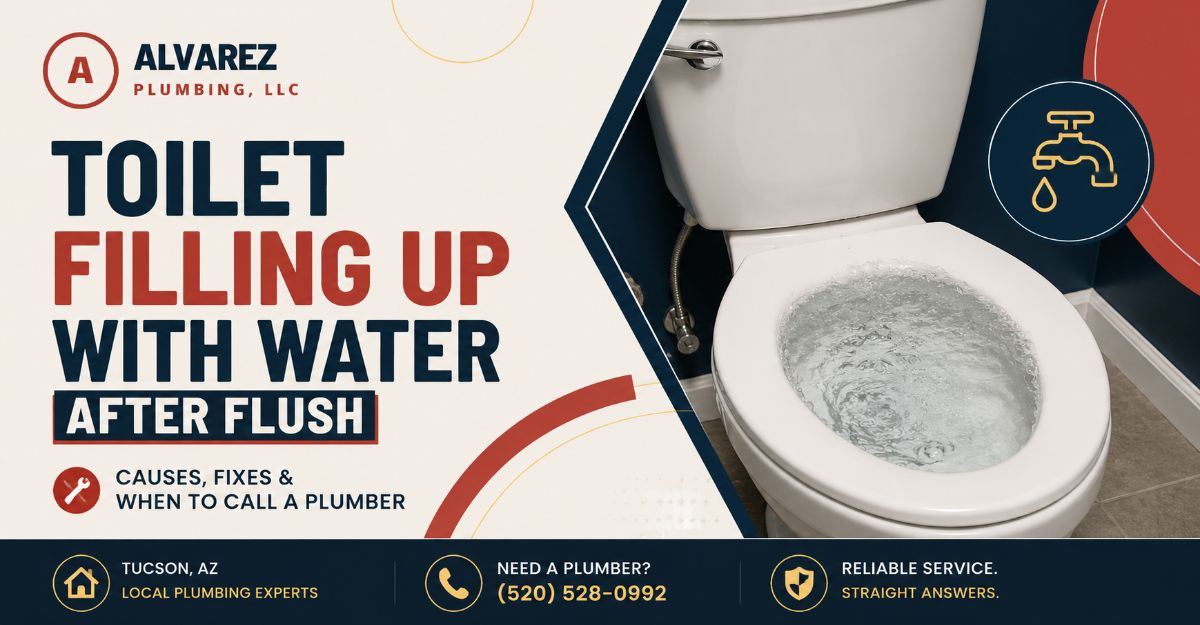
A toilet filling up with water after a flush indicates a physical blockage inside the internal trapway or the primary sewer drain. The 1.6 gallons of water rushing from the tank enter the bowl faster than the obstructed pipe can drain it, causing the water level to rise rapidly and threaten an overflow. Fixing this failure requires immediately cutting the water supply and extracting the blockage to restore siphonic action.
Key Facts at a Glance
- Standard toilet tanks release 1.28 to 1.6 gallons of water in three seconds during a flush cycle.
- Pouring boiling water into a toilet bowl will cause thermal shock and crack vitreous china porcelain instantly.
- Flat sink plungers cannot form the necessary airtight seal inside a contoured toilet bowl drain.
- A standard 3-foot closet auger clears 95 percent of localized trapway clogs without requiring toilet removal.
- Gurgling sounds in a nearby bathtub or sink during a flush indicate a deep main sewer line blockage, not a local toilet clog.
Why does a toilet fill up with water after flushing?
To understand why a toilet fills with water and refuses to drain, you must understand the relationship between siphonic action and plumbing geometry. When you press the flush lever, the internal flapper lifts, releasing pressurized tank water rapidly into the bowl through the rim jets.
This sudden influx of water forces the resting bowl water up and over the internal glass-lined trapway. The trapway is the molded S-shaped curve at the bottom of the toilet. Pushing water over this curve primes the system, creating a solid column of water. As gravity pulls this water column down into the main waste pipe, it generates a powerful vacuum siphon that extracts all waste and water completely out of the bowl.
When a blockage lodges in the trapway or the main waste line, this solid column of water cannot form. The plumbing path becomes constricted. Because the tank volume is carefully engineered to match the maximum safe capacity of the toilet bowl, a failed drain path results in the bowl filling to the very brim.
Immediate Emergency Steps to Stop an Overflow
If your toilet is actively filling up and about to crest the rim of the bowl, execute these steps immediately to prevent blackwater from destroying your bathroom flooring.
1. Shut Off the Water Supply Valve Locate the football-shaped chrome valve on the wall or the floor directly behind the toilet. Turn this valve clockwise until it stops tight. This action cuts off the pressurized municipal water supply to the toilet fill valve. Stopping the incoming water prevents further tank refills and eliminates the risk of an accidental secondary flush overflowing the bowl.
2. Open the Tank and Drop the Flapper If the wall valve is rusted, calcified, or stuck in place, you must stop the water from inside the tank. Quickly lift the heavy porcelain lid off the top of the toilet tank. Reach your hand into the clean water inside the tank and push the rubber flapper down manually over the flush valve hole at the bottom. This immediately stops the remaining tank water from draining down into the bowl.
3. Wait for the Water Level to Recede Do not attempt to flush the toilet again under any circumstances. If the pipe has a partial clog, the high water level will slowly drop over a period of 10 to 30 minutes. Allow gravity and hydrostatic head pressure to push the water slowly past the obstruction before you attempt any mechanical removal.
Before You Start: Required Tools and Timeframes
Clearing a toilet blockage requires specific plumbing tools. Attempting this repair with improper equipment often leads to structural damage to the fixture.
- Estimated Time: 15 to 45 minutes.
- Difficulty Level: Beginner to Intermediate.
- DIY Cost: 15 to 45 dollars for mechanical tools.
- Required Tools: Heavy-duty rubber flange plunger, 3-foot telescoping closet auger, heavy rubber gloves, liquid dish soap, and a bucket.
- Prerequisites: The water supply must be fully shut off at the wall valve before beginning any mechanical plunging or snaking.
How do you fix a toilet filling up with water after a flush?
Follow this diagnostic sequence from the least invasive method to the most invasive mechanical method to restore your drainage system.
Step 1: Diagnose the exact location of the blockage
Toilet backups fall into specific categories based on the material causing the blockage and where it sits in the plumbing line. Use this matrix to determine your exact failure mode before selecting a tool.
| Clog Type | Location in Plumbing | Primary Cause | Diagnostic Symptom |
|---|---|---|---|
| Simple Trapway Obstruction | Inside the toilet’s internal S-bend. | Excess toilet paper, flushable wipes, or large organic waste. | Isolated to one toilet. Water drains very slowly over 10 to 20 minutes. |
| Foreign Object Blockage | Lodged tightly in the narrowest part of the porcelain trapway. | Toys, cell phones, combs, or feminine hygiene products. | Sudden and absolute blockage. Plunger fails completely or makes a hard clinking sound. |
| Main Sewer Line Blockage | Deep in the building soil stack or exterior sewer lateral. | Tree root intrusion, collapsed cast iron pipes, or heavy grease buildup. | Gurgling in bathroom sinks or bathtubs when the toilet flushes. Backup in floor drains. |
| Vent Pipe Blockage | On the roof of the building. | Bird nests, leaves, or heavy snow covering the plumbing vent. | Slow, sluggish flushing accompanied by distinct sewer gas smells in the room. |
Step 2: Clear simple clogs with a flange plunger
A flange plunger features an extended rubber collar on the bottom, allowing it to seal tightly inside the irregularly shaped drain hole of a toilet bowl. Standard flat cup plungers are meant exclusively for flat sink drains and will fail in a toilet.
- Set the Seal: Ensure there is enough water in the bowl to completely submerge the rubber plunger head. Insert the rubber flange directly into the drain opening to form a tight, airtight seal against the porcelain.
- Bleed the Air: Push down very gently on your first motion to evacuate the air trapped inside the plunger cup. Pushing hard immediately will blast trapped air backward, causing contaminated water to splash onto you.
- Plunge Vigorously: Push and pull the plunger handle vigorously up and down for 15 to 20 continuous cycles. Maintain the airtight seal the entire time. The upward pulling motion is actually more effective at breaking up compacted toilet paper than the downward pushing motion.
- Verify the Clear: Pull the plunger away sharply. You will know it worked when the water rushes down the drain rapidly, accompanied by a distinct sucking sound.
Step 3: Extract foreign objects with a closet auger
If a plunger fails to move the water, you are likely dealing with a rigid foreign object or a highly compacted paper clog. A closet auger is a specialized plumbing snake designed specifically for toilets.
- Prepare the Auger: Pull the handle of the closet auger all the way up so the coiled metal cable tip tucks safely inside the curved plastic guard at the bottom of the shaft.
- Insert the Tool: Place the plastic boot guard directly into the bottom of the toilet bowl drain. This vinyl boot protects the delicate glass-like porcelain from permanent metal scratches.
- Crank and Push: Push the top handle down while continuously cranking it clockwise. Rotate and push concurrently until you feel the heavy cable encounter physical resistance.
- Retrieve or Break: Keep cranking clockwise to chew directly through organic material. If you suspect a solid foreign object is lodged inside, hook the object with the auger tip and pull backward firmly to retrieve it into the bowl.
Step 4: Break down organic clogs passively
If mechanical tools fail and you only suspect organic waste or toilet paper, chemical and enzymatic breakdowns offer a passive, albeit slower, solution.
Pour one-half cup of standard liquid dish soap directly into the bowl. Follow this by pouring one gallon of very hot tap water from the sink directly onto the soap. Let the mixture sit completely undisturbed for 20 minutes. The heavy soap acts as a surfactant, lubricating the porcelain walls of the trapway, while the heat expands the pipe slightly and helps emulsify trapped fats.
Alternatively, pour a biological enzyme drain cleaner into the bowl and leave it overnight. Enzymes use natural bacteria to literally digest organic matter over a 24-hour period without generating dangerous chemical heat.
Common Unclogging Mistakes to Avoid
Many homeowners inadvertently cause thousands of dollars in property damage by using incorrect diagnostic techniques. Avoid these failure modes.
Flushing a Second Time When the first flush fails to go down and fills the bowl, never press the lever a second time hoping the extra pressure will clear it. The tank holds enough water to instantly overflow an already filled bowl, dumping gallons of contaminated blackwater onto your subfloor.
Pouring Boiling Water Scalding, actively boiling water from a stove causes severe thermal shock when it contacts cold vitreous china. The rapid temperature differential will cause the porcelain bowl to crack instantly, rendering the toilet useless and requiring a full replacement.
Using a Wire Coat Hanger Shoving a bent, unprotected metal wire hanger down the toilet throat permanently scratches the glass-like porcelain glaze inside the trapway. This creates a rough, scarred surface where toilet paper and solid waste will easily catch, guaranteeing continuous clogs in the future.
Blowing the Wax Ring Seal Applying excessive, violent downward force with a heavy plunger can generate enough hydrostatic pressure to blow out the wax ring seal located under the toilet base. If you see water pooling around the base of the toilet where it meets the floor tiles during plunging, you have destroyed the seal and must pull the entire toilet up to replace it.
When should you hire a professional plumber?
If you have utilized a flange plunger and a closet auger without success, the blockage resides deeper in the plumbing system than standard DIY tools can reach. You must hire a licensed professional plumber if you experience gurgling in other drains, which indicates a main sewer line collapse or severe tree root intrusion.
Professional dispatch costs typically range from 150 to 350 dollars during standard business hours. If you require an emergency plumbing visit at midnight or on a holiday, expect to pay upward of 500 dollars just for the arrival. If the plumber determines the main exterior sewer line is blocked by heavy roots or grease, they will need to perform hydro-jetting, which blasts the pipes with high-pressure water and generally costs between 350 and 700 dollars.
Expert Recommendations Based on Property Type
The strategy for handling a backed-up toilet changes depending on the building infrastructure and your legal liability.
For Renters and Apartment Dwellers Keep a high-quality rubber flange plunger under your bathroom sink. If a gentle plunging session fails to clear the bowl, stop immediately and contact your building maintenance team. Do not attempt advanced mechanical interventions like snaking. Attempting advanced DIY plumbing fixes in a multi-family building can expose you to severe financial liability if you break a pipe and flood the units below you.
For Homeowners Invest in a professional-grade 3-foot telescoping closet auger with a thick vinyl guard. This 40-dollar tool pays for itself during its first use by preventing a 200-dollar service call. Furthermore, maintain your emergency shut-off valves by turning them off and back on once every six months. This prevents hard water lime scale from freezing the valve shut during a true plumbing emergency.
For Commercial Property Managers Standard gravity-fed siphonic toilets are highly prone to clogs in public settings due to heavy paper usage. Upgrade high-traffic public bathrooms to pressure-assisted toilets or flushometer-valve commercial units. These commercial systems use compressed air or municipal line pressure to force water through the trapway at extreme velocity, virtually eliminating daily blockages. Furthermore, install clear metal signage explicitly banning wet wipes, as they do not break down in water and remain the leading cause of commercial drainage failures.
Frequently Asked Questions
How long does it take for a backed-up toilet to drain naturally? A toilet with a partial trapway clog will usually drain naturally over 10 to 30 minutes as gravity and water weight push liquid slowly past the obstruction. A completely sealed obstruction, such as a wedged plastic toy, will never drain naturally and requires mechanical extraction.
Will a toilet unclog itself overnight? A toilet clogged exclusively by excessive toilet paper or organic human waste will often unclog itself overnight. The water saturation slowly breaks down the paper fibers until the mass loses structural integrity, allowing the weight of the water to finally push it down the pipe.
Why is my toilet backing up into the bathtub? If toilet water backs up into a bathtub, you have a severe blockage in the main sewer line, not the toilet itself. The bathtub drain sits at the lowest elevation in the bathroom, so when the main exit pipe is blocked, the flushed water takes the path of least resistance and rises out of the lowest available drain.
Does bleach help clear a toilet clog? Bleach does not clear plumbing clogs. Bleach is a chemical disinfectant designed to kill bacteria and remove stains, but it lacks the chemical properties required to dissolve dense toilet paper wads, break down fats, or clear physical obstructions inside a drainage pipe.
How do you test if the vent pipe is clogged? You can identify a clogged vent pipe by listening for a gurgling or sucking sound coming from the sink drain immediately after flushing the toilet. A blocked roof vent creates a vacuum in the plumbing system, forcing the toilet to pull necessary replacement air through the water traps of nearby fixtures.
The Bottom Line: A toilet filling up with water after a flush requires fast action at the shut-off valve to prevent water damage. By accurately diagnosing the clog type and systematically applying a flange plunger or closet auger, homeowners can resolve the vast majority of drainage failures safely and effectively without paying for an emergency service call.