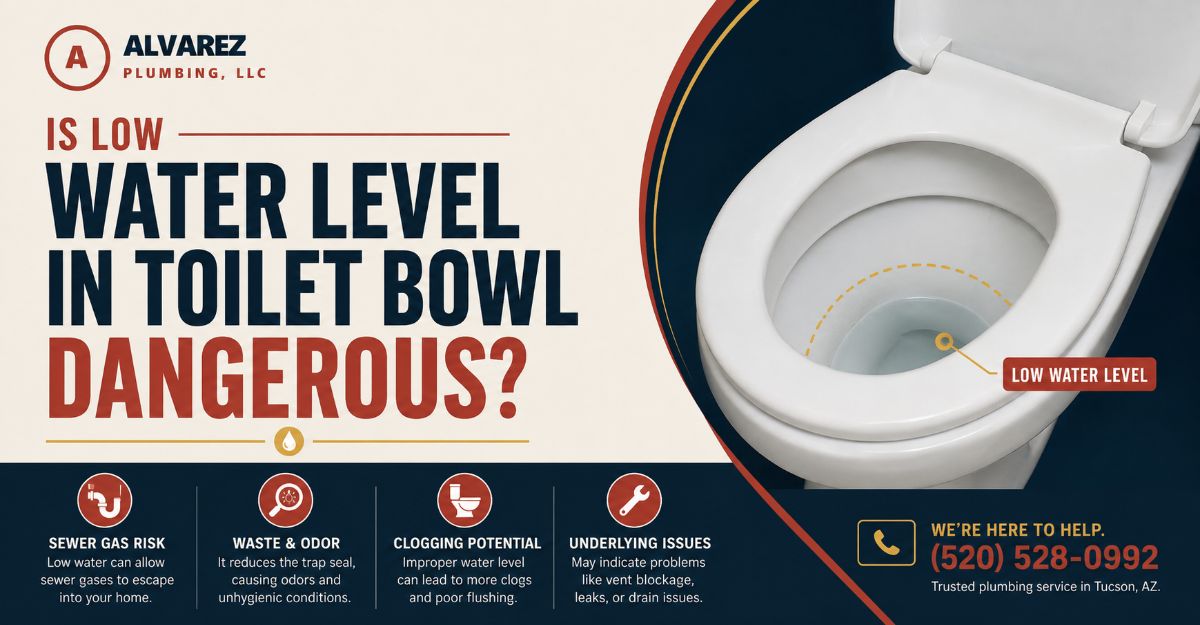
No, a low water level in a toilet bowl is not immediately lethal, but the condition poses severe health and structural risks if ignored. The standing water acts as a physical seal. When this water drops too low, toxic and highly flammable sewer gases enter your living space.
At a Glance
- The ideal water seal depth for a standard toilet bowl is 2.0 to 3.0 inches.
- Hydrogen sulfide and methane are the primary toxic gases that escape when the water seal breaks.
- A disconnected tank refill tube causes the bowl to remain empty immediately after a flush cycle.
- A clogged roof vent stack creates a vacuum that siphons water out of the bowl over several minutes.
- Hairline porcelain cracks cause the water level to drop slowly over several hours, leading to structural rot.
How high should the water level be in a toilet bowl?
The ideal water level in a toilet bowl sits 2.0 to 3.0 inches deep, completely covering the bottom curve of the internal trapway. The exact height is predetermined by the manufacturer and the physical design of the internal S-trap or P-trap molded into the porcelain.
You cannot manually adjust the bowl water height higher than the peak of this internal trap. If the water rests below the top lip of the trap hole, the barrier is broken. Homeowners can verify this seal by shining a flashlight directly into the bowl opening. A visible air gap between the resting water surface and the top arch of the porcelain drain channel indicates a failed seal. Modern high-efficiency toilets may appear to have less water than older models, but the absolute minimum depth must always physically block the air pathway to the sewer pipe.
Why does a toilet bowl need a water seal?
A toilet bowl requires a water seal to create a physical, liquid barrier that blocks the open sewer line from your bathroom atmosphere. Modern plumbing relies entirely on this trapped equilibrium to maintain sanitary indoor air quality.
The molded curving pipe at the base of the toilet naturally retains a specific volume of water after every single flush. The municipal sewer system or private septic tank holds decomposing human waste, which constantly generates upward drifting vapors. Without the 2.0 to 3.0 inches of standing liquid, the four-inch PVC drain pipe acts as an open chimney into your home. The water seal perfectly blocks these rising vapors while remaining fluid enough to allow new solid waste to pass through during a mechanical flush cycle. Once the waste passes, the bowl refills to re-establish the barrier.
Can sewer gas from a toilet make you sick?
Yes, inhaling sewer gas from a toilet can cause headaches, nausea, dizziness, and severe respiratory irritation within a few hours of exposure. Sewer gas contains a mixture of toxic and flammable compounds, primarily consisting of hydrogen sulfide, ammonia, methane, and carbon dioxide.
Hydrogen sulfide produces a distinct rotten egg odor even at highly diluted concentrations. Prolonged exposure to hydrogen sulfide actively deadens the human olfactory nerves. This biological reaction makes you think the smell has vanished while the toxicity in the room actually increases. Methane displaces oxygen in enclosed, unventilated bathrooms, creating a silent asphyxiation hazard. Furthermore, heavy methane accumulation introduces a severe fire risk if an electrical spark occurs near the bathroom exhaust fan. Property managers must treat persistent sewer odors stemming from a dry toilet bowl as an immediate health code violation.
Is it safe to flush a toilet with low water?
Yes, flushing a toilet with a low water level is mechanically safe and will not cause an immediate explosion or flood, provided the main drain line is not severely clogged. The flushing mechanism simply releases the stored tank water into the bowl to initiate the siphon action.
If the low bowl level stems from a broken refill tube, the toilet will process waste normally during the flush but will fail to refill the bowl afterward. However, users should perform a basic visual check first. If the water level is abnormally low because a severe sewer line clog is creating a slow siphon effect down the pipe, flushing a full tank of water might overwhelm the blocked passage and cause the bowl to overflow onto the floor. Always test the system by slowly pouring a small bucket of tap water into the bowl before initiating a full mechanical flush.
What causes the water level to drop in a toilet?
The water level in a toilet drops due to four main mechanical failures: a damaged refill tube, a clogged plumbing vent stack, a cracked porcelain trap, or a partial drain clog. The most frequent culprit is the refill tube.
The small flexible plastic hose inside the tank can easily slip off the hollow overflow pipe. When this disconnects, the fill valve replenishes the tank reservoir but fails to divert the required twenty percent of water back into the bowl. The second most common cause is a blocked roof vent. When the plumbing system lacks proper air intake, wastewater moving down the main sewer line creates a powerful vacuum. This vacuum physically sucks the standing water out of the toilet bowl. Hairline cracks in the porcelain allow water to slowly seep into the subfloor over time, while partial sewer clogs create a similar siphoning effect as water slowly bypasses the hidden obstruction.
Why does toilet water drop slowly over hours?
Toilet water that drops slowly over several hours strongly indicates an invisible hairline crack in the porcelain bowl or the internal trapway. Unlike a disconnected refill tube which leaves the bowl empty immediately after a flush, a slow leak drains the water equilibrium meticulously over time.
The crack is often too small to see with the naked eye and is typically located on the underside of the internal S-trap. As the water slowly seeps through the micro-fissure, the liquid bypasses the protective wax ring and pools directly on the wooden subfloor. Homeowners must inspect the base of the toilet for pooling, or examine the ceiling directly below the bathroom for brown water stains. Ignoring a slow leak guarantees catastrophic structural rot and toxic mold growth inside the floor joists, turning a cheap plumbing fix into a massive structural repair project.
Why is the toilet water level low only in winter?
A toilet water level that drops specifically during winter months is usually caused by an ice cap forming over the main plumbing vent stack on the roof. Warm, moist air constantly rises from the municipal sewer system through the household plumbing vent.
When outside temperatures drop drastically below freezing, this humid moisture condenses and freezes upon hitting the cold ambient air at the roofline exit. Over several days of sub-zero temperatures, the frost builds up until it completely seals the four-inch PVC pipe. Once the vent is choked by solid ice, the entire plumbing system loses air pressure. Every time a washing machine drains or a bathtub empties on a lower floor, the moving water creates negative pressure that siphons the protective water seal directly out of the toilet bowl. The issue usually resolves itself during a thaw, but requires manual clearing during deep freezes.
How do you troubleshoot a low toilet water level?
You troubleshoot a low toilet water level by following a strict three-step process: inspecting the tank refill mechanism, performing a bucket volume test, and checking adjacent drains for vacuum sounds.
- Inspect the Tank: Remove the heavy porcelain lid from the back of the toilet. Verify that the small rubber refill tube is securely clipped to the open top of the overflow pipe. Flush the toilet and watch to ensure water actively squirts through this tube into the pipe during the fill cycle.
- Perform the Bucket Test: Quickly pour one gallon of tap water directly into the toilet bowl. If the water level rises to the normal depth and remains stable, the plumbing lines are clear, meaning the tank components are faulty. If the water drains back down immediately, the issue lies within the drain pipes.
- Check Adjacent Drains: Turn on the bathroom sink faucet to maximum flow. Listen closely to the toilet bowl. If you hear gurgling or bubbling noises, the system is starved for air, confirming a clogged vent stack.
Will a plunger fix a low water level?
No, a plunger will not fix a low water level unless the specific cause is a partial soft clog located directly below the toilet flange. Plungers are designed strictly to force standing water downward to dislodge solid waste blockages that cause overflows.
Plungers cannot repair a disconnected refill tube, they cannot clear an ice dam on a roof vent, and they cannot patch a cracked porcelain bowl. Using a plunger on a toilet with a siphoning issue is completely ineffective because the vacuum originates high up in the main vent system, not in the local trapway. Furthermore, vigorously plunging a toilet that has a hairline crack can worsen the fracture through hydrostatic pressure, causing the porcelain base to shatter entirely and instantly flood the bathroom floor.
How do you fix a siphoning toilet drain?
You fix a siphoning toilet drain by clearing the obstruction from the main plumbing vent stack that exits through the roof of the house. Siphoning occurs entirely due to negative air pressure trapped within the closed pipe system.
To restore the air equilibrium, a homeowner or professional plumber must safely access the roof. The process involves shining a strong flashlight down the PVC vent pipe to locate bird nests, heavy leaf accumulation, or deceased pests. A standard plumber’s snake or a high-pressure water jetter is then fed down the vent pipe to physically break apart the blockage. For winter ice caps, pouring hot water down the vent or installing a commercially available copper vent heater will melt the frozen obstruction. Once the vertical air pathway is fully restored, the vacuum effect ceases, and the toilet bowl will retain its standard water volume.
What mistakes should you avoid when fixing a toilet?
The primary mistakes to avoid are pouring chemical drain openers into the bowl, incorrectly adjusting the tank float, and overtightening the floor mounting bolts.
Chemical drain openers rely on harsh caustic reactions. Pouring these volatile acids into a toilet with low water concentrates the chemicals directly against the wax ring and the PVC pipe joints, melting the crucial seals without resolving the actual venting issue. Adjusting the tank float height is another incredibly common error. While raising the float increases the volume of water stored in the upper tank, it does absolutely nothing to raise the resting bowl water level if the refill tube is detached or the bowl is cracked. Finally, DIY homeowners frequently attempt to stop slow leaks by tightening the metal T-bolts at the base of the toilet. Porcelain is brittle. Applying torque with a metal wrench will instantly crack the toilet base.
How much does it cost to fix a low toilet water level?
The cost to fix a low toilet water level ranges from absolutely free for a simple tube adjustment to over 600 dollars for a complete fixture replacement. Pricing depends entirely on the mechanical root cause.
If the internal refill tube has simply slipped off the overflow pipe, the homeowner can clip it back into place for zero dollars in under five minutes. If the entire fill valve mechanism is calcified and failing, a universal replacement kit costs 15 to 30 dollars at any local hardware store and takes 30 minutes to install. Professional interventions cost significantly more. Hiring a licensed plumber to safely climb onto a steep roof and clear a blocked vent stack typically costs 150 to 300 dollars. If diagnostic tests reveal a cracked porcelain bowl, the property owner must purchase a new toilet and pay for installation labor, averaging 250 to 600 dollars total.
When should you call a plumber for low toilet water?
You should call a licensed plumber immediately if you smell strong sewer gas, hear loud gurgling from multiple household drains simultaneously, or spot water dripping through the ceiling below the bathroom. While tank mechanism repairs are highly accessible DIY projects, systemic plumbing failures require professional intervention.
A persistent rotten egg smell indicates that toxic hydrogen sulfide is actively filling the home, requiring an immediate smoke test by a professional to locate the invisible systemic breach. Gurgling sounds across the entire house suggest a severe blockage deep in the municipal sewer lateral, which requires specialized camera inspection equipment to locate. Renters should never attempt plumbing repairs beyond clipping the internal refill tube. Tenants must document the low water level with a timestamped photograph and submit an emergency maintenance request to prevent personal liability for subfloor water damage.
The Bottom Line
A low toilet water level is a serious maintenance alert that breaks the critical sanitary seal protecting a home from toxic sewer gases. Mechanical issues inside the tank, such as a detached refill tube, require simple and cheap DIY fixes that take less than five minutes. However, systemic issues like clogged roof vents or cracked porcelain demand immediate action to prevent severe health hazards and costly structural rot. Always diagnose the root cause accurately by observing whether the water drops instantly after a flush or recedes slowly over several hours.