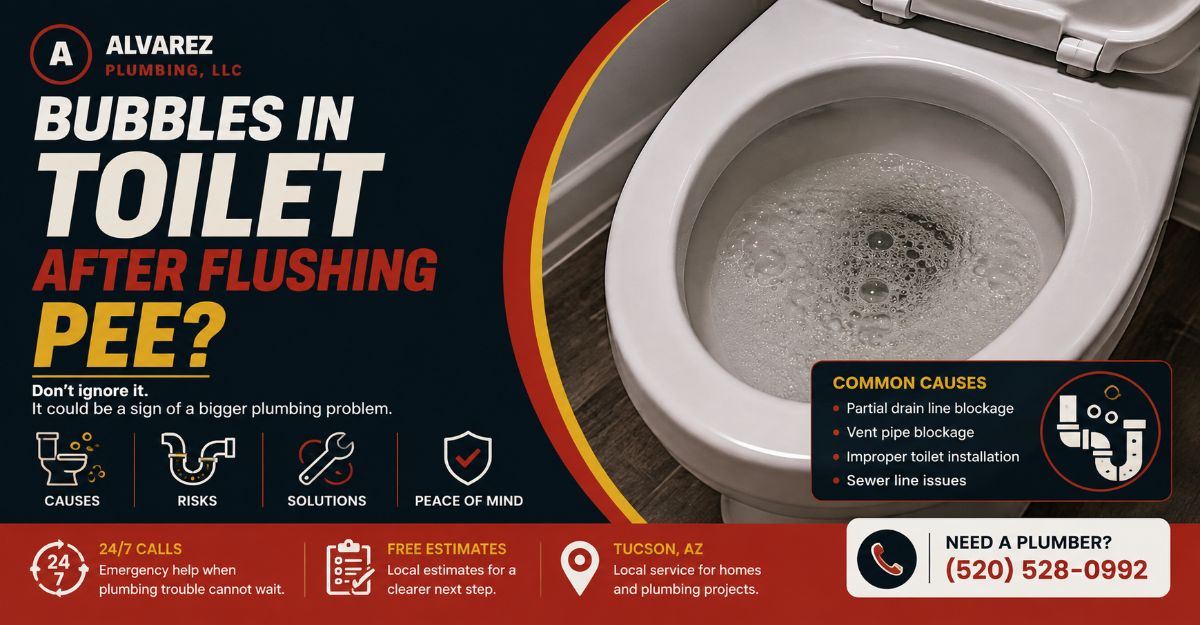
Bubbles in a toilet after flushing pee result from either a chemical change in the urine itself or a severe pressure imbalance in your household plumbing. If the bubbles appear before flushing, highly concentrated urine or protein leakage is altering the water surface tension. If the toilet gurgles during or after the flush, trapped air from a blocked drain or obstructed vent stack is forcing its way backward through the water seal.
Key Facts / At a Glance
- Clear bubbles that disappear within 30 seconds are a harmless result of rapid stream velocity or mild dehydration.
- Thick, white, shaving-cream-like foam that persists after flushing indicates proteinuria (excess protein in urine) and requires medical evaluation.
- Plumbing-related bubbles occur when wastewater compresses air against a partial pipe obstruction, forcing the air backward into the toilet bowl.
- A blocked roof vent stack creates a vacuum effect, sucking air through the toilet P-trap and causing an audible gurgling sound.
- Clearing a local toilet clog requires a flange plunger, while main sewer line obstructions often require professional hydro-jetting at 4,000 PSI.
What Causes Bubbles Before You Flush? (Urine and Chemistry)
When bubbles form immediately as urine hits the water, the issue is fluid mechanics or biological chemistry. The physical properties of the liquid are trapping ambient air upon impact.
How Does Rapid Stream Velocity Create Bubbles?
A highly pressurized bladder releases urine at an accelerated velocity, physically driving air into the standing bowl water. This mechanical force mimics running water from a fast faucet. The resulting bubbles are large, transparent, and structurally weak. They will pop and dissolve naturally within 10 to 30 seconds. This is a normal physical reaction and requires no intervention.
When Does Dehydration Increase Surface Tension?
Dehydration reduces the water content in urine, leaving a higher concentration of waste products like urea and uric acid. This high specific gravity alters the surface tension of the toilet water upon contact. The thicker fluid traps air more easily than diluted liquid. Bubbles caused by dehydration are slightly smaller than velocity bubbles and may take up to a minute to dissipate. Increasing daily water intake to standard recommended levels resolves this phenomenon immediately.
Is Foamy Urine a Sign of Kidney Disease?
Yes, thick and persistent foam in the urine is a primary clinical indicator of proteinuria, which is a warning sign of kidney dysfunction. Healthy kidneys filter waste but retain essential proteins like albumin in the blood. Damaged kidney filters allow albumin to leak into the urine. Albumin acts as a powerful surfactant, reacting with water to create dense, opaque foam that resembles shaving cream. This foam remains highly visible even after you flush the toilet. Normal protein excretion is less than 150 milligrams per day. If you consistently observe this thick foam, schedule a urinalysis to check for chronic kidney disease or diabetes.
Can Toilet Cleaners React with Urine?
Toilet bowl cleaning tablets containing sodium hypochlorite (bleach) or strong surfactants will react aggressively with the ammonia and urea present in human waste. When urine strikes water treated with blue drop-in discs or bleach blocks, the chemical interaction instantly produces a frothy, bubbling layer. This reaction is strictly chemical. Hard water conditions, which contain high levels of calcium and magnesium, can exacerbate this frothing effect. Removing the in-tank chemical cleaners will stop the bubbling immediately.
Why Does the Toilet Bubble During or After a Flush? (Plumbing Mechanics)
If the bubbling occurs while the water is draining or immediately after the bowl refills, the issue is strictly mechanical. Modern toilets operate on a delicate equilibrium of water volume and atmospheric pressure, and bubbles indicate that this equilibrium has failed.
How Do Localized Clogs Force Air Backward?
A partial obstruction in the toilet trap or the immediate drain line creates a physical barrier that slows the rushing wastewater. As the water from the flush travels down the pipe, it compresses the air trapped between the water front and the clog. Because the water cannot easily push past the blockage, the pressurized air takes the path of least resistance. It travels backward, bursting up through the water resting in the toilet bowl. This action creates visible bubbles and a distinct gurgling noise. Common culprits include excessive toilet paper, flushable wipes, and feminine hygiene products.
What Happens When the Roof Vent Stack Is Blocked?
A blocked roof vent stack prevents atmospheric air from entering the plumbing system, creating a powerful vacuum during a flush. When hundreds of gallons of water rush down a main drain line, air must follow closely behind to prevent suction. If leaves, bird nests, or ice block the primary vent on the roof, the descending wastewater pulls air from the nearest available opening. This is usually the toilet bowl or a nearby shower drain. The vacuum sucks the air straight through the water seal in the P-trap, resulting in aggressive bubbling.
Are Main Sewer Line Obstructions Dangerous?
Main sewer line obstructions are highly dangerous because they threaten to push raw sewage into the lowest elevation drains of your home. Tree root intrusion, scale buildup, or a collapsed subterranean pipe restricts the primary path to the municipal sewer. When multiple fixtures drain simultaneously, the wastewater hits this choke point. The trapped air bursts back up through your toilets. If left unresolved, the backup will escalate from air bubbles to contaminated wastewater flooding your bathrooms.
Does a Full Septic Tank Cause Toilet Bubbles?
Yes, a septic tank operating at maximum capacity forces air back into the house plumbing. A septic system relies on gravity and clear volume to accept new wastewater. When the tank is full or the external distribution field fails to drain properly, the incoming water has nowhere to go. The trapped air pockets inside the main drain line escape upward as the system reaches capacity. Constant toilet burping combined with sluggish flushing in a rural home is the primary symptom of septic failure.
How to Diagnose the Exact Cause of Toilet Bubbles
Accurate diagnosis requires observing exactly when the bubbles appear and how the rest of the house plumbing behaves. Use this symptom-mapping matrix to identify the root cause of your bubbling toilet.
| Observation Timing | Bubble Appearance | Secondary Symptoms | Primary Diagnosis |
| Before Flush | Large, clear, fast-popping | None | Rapid velocity or mild dehydration. |
| Before Flush | Thick, white, persistent foam | Strong ammonia odor | Proteinuria (Kidney protein leakage). |
| Before Flush | Blue or soapy froth | Chemical smell | Reaction with in-tank cleaning tablets. |
| During/After Flush | Large air bursts | Sluggish draining | Localized pipe clog near the toilet. |
| When Other Drains Run | Continuous gurgling | Shower drain bubbling | Blocked roof vent stack. |
| Randomly | Deep burping sounds | Sewage smell in yard | Main sewer line clog or full septic tank. |
How Much Does It Cost to Fix a Bubbling Toilet?
Fixing a bubbling toilet ranges from a $10 DIY plunger purchase to a $900 professional sewer clearing service. The exact cost depends entirely on the location and severity of the pressure imbalance.
| Service or Solution Type | Estimated Cost (USD) | Execution Time | Specific Details |
| Medical Urinalysis | $10 to $50 | 15 minutes | Clinical test for protein levels. |
| DIY Flange Plunging | $10 to $20 | 10 minutes | Requires a plunger with an extended rubber sleeve. |
| Professional Drain Snaking | $150 to $350 | 1 to 2 hours | Clears local clogs up to 100 feet deep. |
| Roof Vent Clearing | $200 to $400 | 1 hour | Requires roof access and safety gear. |
| Hydro-Jetting | $350 to $900 | 2 to 3 hours | Uses 4,000 PSI water to blast tree roots. |
| Septic Tank Pumping | $300 to $700 | 2 to 4 hours | Recommended routine maintenance every 3 to 5 years. |
Step-by-Step Guide to Fixing Plumbing Bubbles
If your diagnostic tests point to a localized plumbing clog, you can resolve the pressure imbalance using mechanical force. Follow these specific steps to clear the obstruction safely.
Step 1: Prep and Seal the System
Seal all nearby shower, bathtub, and sink drains in the affected bathroom using rubber stoppers, wet rags, or heavy-duty duct tape. Plunging relies on contained kinetic pressure. If you leave parallel drains open, the air and water pressure will escape through those secondary vents rather than pushing against the clog. A properly sealed room focuses 100 percent of the force downward.
Step 2: Apply a Flange Plunger
Insert a flange plunger into the toilet bowl at a 45-degree angle so the rubber cup fills completely with water. A standard flat sink plunger will not work. Press the plunger down firmly to create a watertight seal over the drain hole. Push and pull the handle vigorously 10 to 15 times without breaking the seal. Water does not compress like air does, so this water transfer delivers heavy kinetic energy directly against the blockage. You will know it worked when the bowl empties rapidly with a distinct suction sound.
Step 3: Deploy a Toilet Auger
Feed a specialized plumbing toilet auger into the drain if plunging fails to clear the bubbles. Crank the handle clockwise while pushing downward until you feel physical resistance. The obstruction is usually trapped in the internal ceramic P-trap. Rotate the auger handle to drive the steel cable through the clog, then pull the tool backward to snag and remove non-flushable wipes or heavy paper masses. Flush the toilet to verify the bubbling has stopped.
What Are the Most Common Mistakes to Avoid?
Homeowners often worsen plumbing issues by applying the wrong treatments to bubbling toilets. Avoid these frequent errors to protect your home infrastructure.
- Pouring Chemical Drain Cleaners: Liquid or crystal drain openers generate intense exothermic heat when mixed with water. This sudden thermal shock can crack a delicate porcelain toilet bowl or permanently warp PVC drain pipes. Furthermore, the chemicals usually sink to the bottom of the trap and fail to reach the actual clog.
- Ignoring a Gurgling Toilet: Continual bubbling is a structural warning sign of systemic pipe failure. Ignoring it guarantees that a partial clog will eventually become a full obstruction. This neglect often results in raw sewage backing up into the lowest bathtubs and floor drains in the property.
- Misinterpreting Normal Fluid Velocity: Assuming a medical emergency due to temporary bubbles caused by a strong urine stream creates unnecessary panic. Always wait one minute to see if the bubbles dissolve naturally before assuming kidney dysfunction.
Frequently Asked Questions
Does diabetes cause foamy urine?
Yes, advanced diabetes can cause foamy urine by damaging the blood vessels in the kidneys. This damage, known as diabetic nephropathy, allows protein to leak into the urine. The protein acts as a surfactant, trapping air and creating thick, persistent foam in the toilet bowl.
Why does my toilet bubble when the shower is running?
Your toilet bubbles when the shower runs because the two fixtures share a common drain line and a single roof vent. If the roof vent is blocked by debris, the draining shower water creates a vacuum in the pipes. This vacuum pulls replacement air backward through the toilet bowl, causing the bubbling sound.
How do I know if my roof vent is clogged?
A clogged roof vent presents three distinct symptoms. First, multiple toilets will gurgle simultaneously when flushed. Second, bathtubs will drain very slowly despite having no hair clogs. Third, you may smell sewer gases inside the house because the vacuum effect sucks the protective water out of your P-traps.
Can low-flow toilets cause bubbling?
Yes, modern low-flow toilets utilizing 1.28 gallons per flush lack the heavy water volume of older models. They struggle to push waste past minor partial clogs. This lack of hydraulic mass allows trapped air to easily push backward through the water seal, resulting in frequent bubbling.
Is it safe to use a drain snake in a toilet?
It is not safe to use a standard metal drain snake in a toilet because the sharp metal will permanently scratch the visible porcelain bowl. You must use a specialized toilet auger, which features a protective rubber or plastic sleeve over the metal shaft to prevent cosmetic damage.